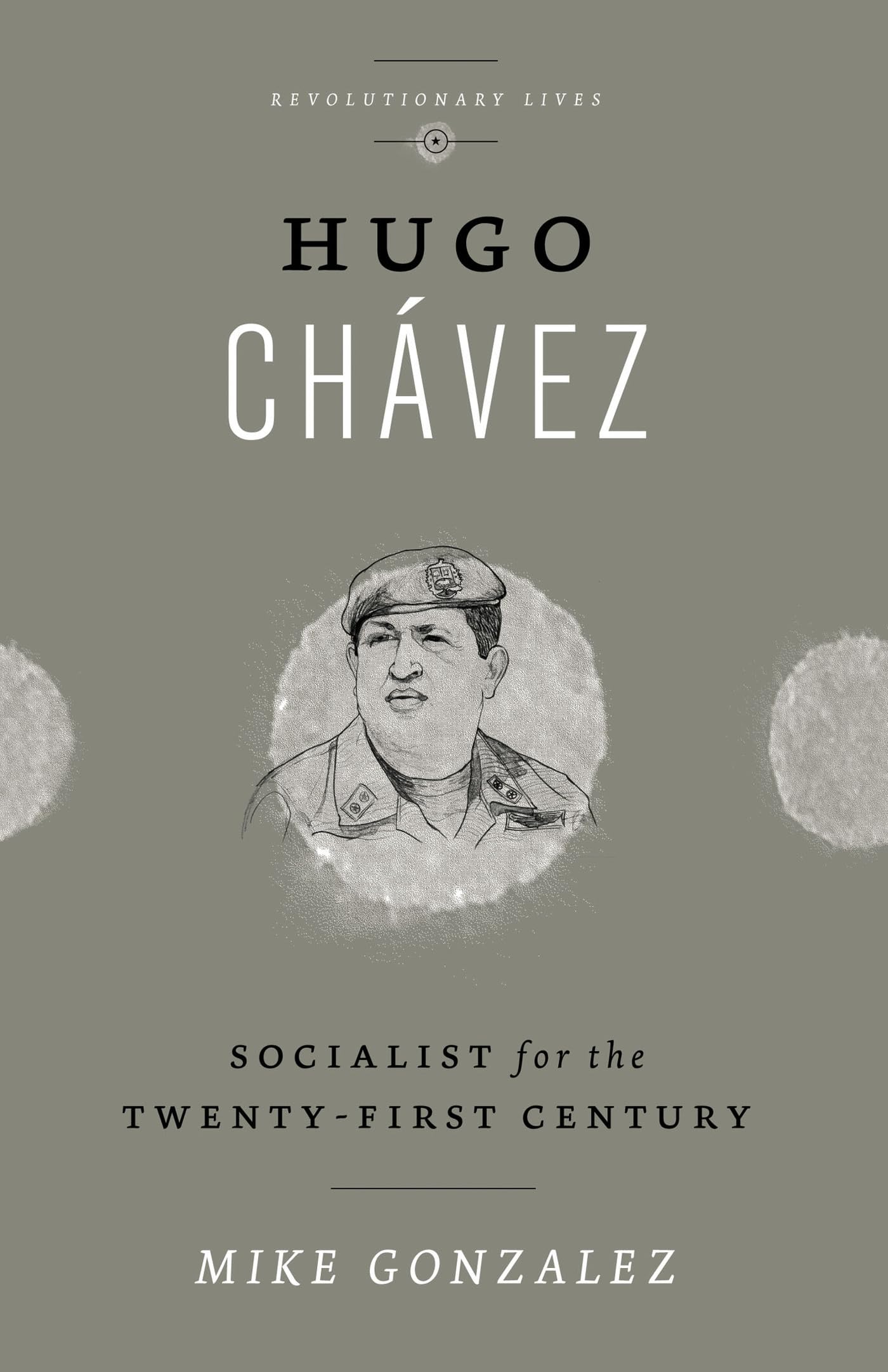
Hugo Chavez: Socialist for the Twenty-first Century (Revolutionary Lives)
$19.95
by Mike Gonzalez



When Hugo Chavez, then President of Venezuela, died in 2013, millions across the globe mourned. In an age where most politicians inspire only apathy and cynicism, Chavez's popularity, radicalism and vibrant personality were truly unique. Released one year after Chavez's unexpected death, this dramatic and intimate biography traces Chavez's life from an impoverished rural family to the Miraflores Presidential Palace in Caracas. Mike Gonzalez shows how Chavez's 'Bolivarian revolution' aimed to complete Simon Bolivar’s promise of a Latin America free from imperialism. Gonzalez details Chavez's close connection to the masses and how he enraged wealthy elites by declaring his support for 21st century socialism. He concludes that the struggle for social justice inspired by Chavez can and must continue. This is an ideal guide to Chavez's inspiring life and legacy. ""'A seminal work on the ideological and political formation of the former Venezuelan President and leading figure of twenty-first century socialism'"" - LSE Review of Books ""'For activists and scholars alike, this is an excellent biography, which mirrors in its nuances and subtleties the complexity of the Bolivarian process and the figure of Chavez himself'"" - Jeffery R. Webber, Queen Mary University of London, author of Red October: Left-Indigenous Struggles in Modern Bolivia ""'Mike Gonzalez possesses a extraordinarily rich knowledge of the Latin American left, has engaged critically with the politics of modern military institutions, and has an abiding interest in independently-minded public figures. He has brought these singular attributes together in this lucid portrait of Hugo Chavez'"" - Professor James Dunkerley, Queen Mary University 'A seminal work on the ideological and political formation of the former Venezuelan President and leading figure of twenty-first century socialism' 'For activists and scholars alike, this is an excellent biography, which mirrors in its nuances and subtleties the complexity of the Bolivarian process and the figure of Chavez himself' 'Mike Gonzalez possesses a extraordinarily rich knowledge of the Latin American left, has engaged critically with the politics of modern military institutions, and has an abiding interest in independently-minded public figures. He has brought these singular attributes together in this lucid portrait of Hugo Chavez' Mike Gonzalez is professor emeritus of Latin American studies at University of Glasgow in Scotland. Hugo Chávez Socialist for the Twenty-first Century By Mike Gonzalez Pluto Press Copyright © 2014 Mike Gonzalez All rights reserved. ISBN: 978-0-7453-3465-3 Contents List of Illustrations, viii, Glossary, ix, Timeline, xii, Introduction: A Man for Difficult Times, 1, 1. The Plainsman, 9, 2. The Dream of Simón Bolívar, 27, 3. From Insurrection to Election, 45, 4. Episodes in the Class War, 66, 5. The Bolivarian Revolution Advances, 91, 6. The Contradictions of Twenty-first-century Socialism, 113, 7. The Legacy of Hugo Chávez, 135, Notes, 142, Index, 149, CHAPTER 1 The Plainsman Local Heroes In his many long conversations with the Venezuelan people – on radio, television, in his public speeches and his writings – Hugo Chávez would always explain his political decisions by reference to some aspect of his own story. It was a constant reminder to his largely poor and working-class supporters of their shared history. In this highly political narrative, its central figure was a man who came from outside the prevailing political system and brought with him to the presidential palace a memory his adoring audience would recognise and approve. The facts are often not in question – but their significance, their resonance in the subsequent biography of Hugo Rafael Chávez Frías, coloured and dramatised those facts, until his life story became an alternative history of Venezuela. He was born near Sabaneta de Barinas in Venezuela's llanos region, the wide grasslands whose inhabitants are renowned for their horsemanship, their resistance to the authority of a distant Caracas, and their general reserve – at least until trust is established, at which stage they become voluble and generous. Hugo's father was a rural schoolteacher whose pitiful salary did not stretch to maintaining his and his wife Elena's six children. The Chávez household was poor, though not the 'mud hut' one biographer1 has attributed to him. And Hugo's father was an active member of Acción Democrática, one of Venezuela's two dominant political parties. At the age of four, Hugo and his older brother Adán were sent to Sabaneta itself into the care of his grandmother, Rosa Inés. The town had four streets and a thousand or so inhabitants. Even allowing for the exaggerations that nostalgia brings, Rosa Inés was an enduring influence on both brothers. It is often suggested that the young Hugo grew increasingly distant from his mother; what is certainly true is that his grandmother