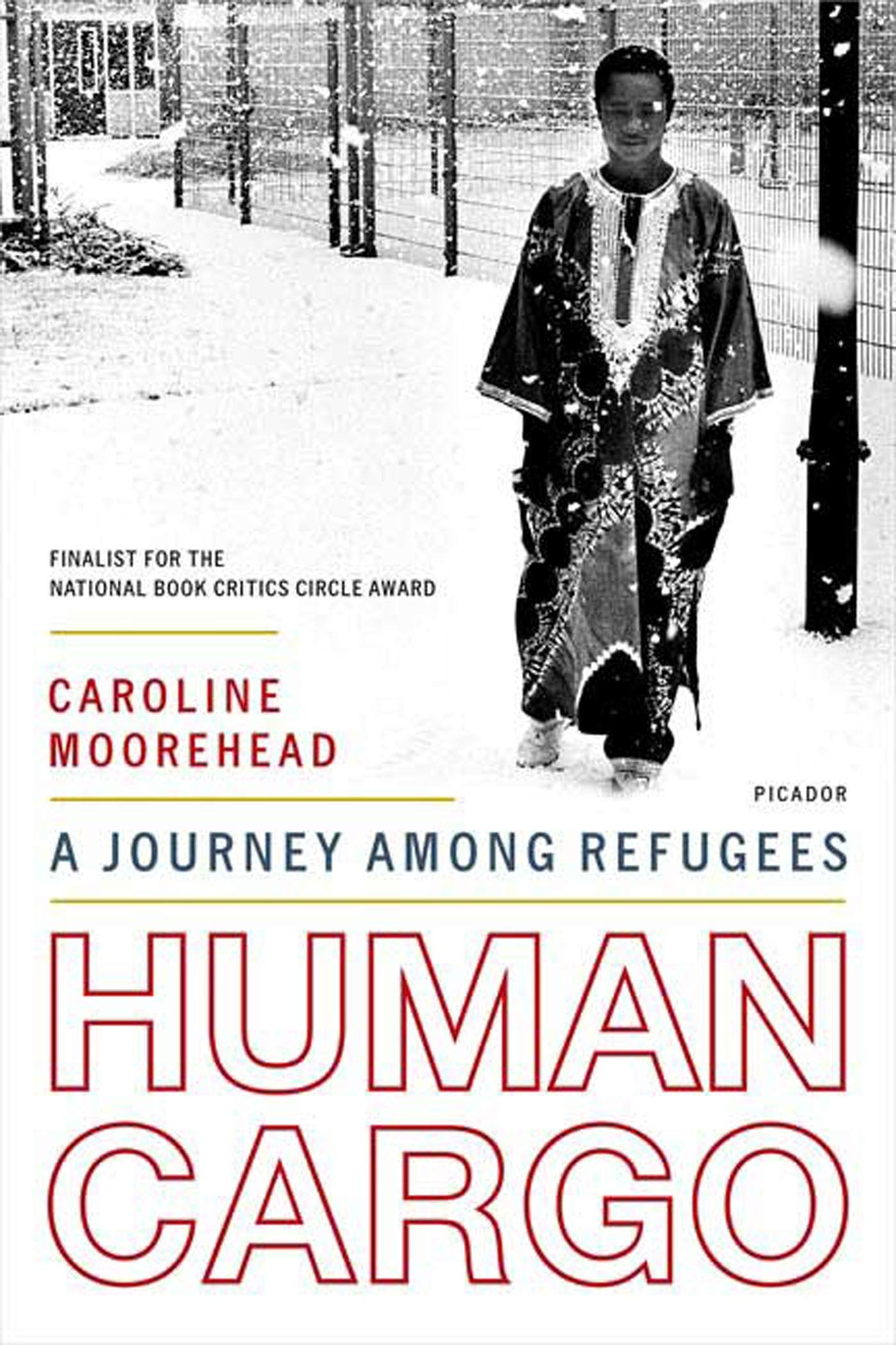



National Book Critics Circle Award Finalist Traveling for nearly two years and across four continents, Caroline Moorehead takes readers on a journey to understand why millions of people are forced to abandon their homes, possessions, and families in order to find a place where they may, quite literally, be allowed to live. Moorehead's experience living and working with refugees puts a human face on the news, providing unforgettable portraits of the refugees she meets in Cairo, Guinea, Sicily, Lebanon, England, Australia, Finland, and at the U.S.-Mexico border. Human Cargo changes our understanding of what it means to have and lose a place in the world, and reveals how the refugee "problem" is on a par with global crises such as terrorism and world hunger. “Unflinching in her reportage, Moorehead purposefully illuminates the suffering endured by refugees and all the travesties, paradoxes, and tragedies engendered by the failure to act on their behalf.” ― Booklist (starred review) “[Moorehead] knows how to grip the reader's attention and haunt their dreams. . . . [She] is unafraid to look into the darkest corners of the world and make us want to look too.” ― Daily Telegraph “The breadth of Moorehead's reporting is impressive, the intimate glimpses of struggle and resilience indelible.” ― O magazine “Humane and touching . . . Moorehead puts a human face on this determined population.” ― The Star-Ledger (Newark) Human smuggling is now said to have an annual turnover of over $7 billion -- more than revenue from smuggling drugs. Caroline Moorehead's important new book looks at 'human cargo' from Afghanistan, Liberia, Palestine and many other places. She has visited war zones, camps, prisons -- and the black Dinka families from the Sudan who were re-settled north of the Arctic Circle in Finland. She follows the fate of 57 young member of the Mandingo tribe, who fled ethnic cleansing and ended up happily in America via Egypt. She is shown the graves in Sicily of drowned boat people, and examines the fence that has been built across Texas and into the sea to keep migrants out of America. She has interviewed emigration officials in Australia and members of the United Nations High Commission for Refugees in Geneva. Is there a valid distinction between 'good' asylum seekers and 'bad' economic migrants? What happens to those whose applications are turned down? The difficult questions are asked, the horrible issues faced. But, above all, Human Cargo celebrates the courage, cheerfulness and will to survive of ordinary human beings. Caroline Moorehead 's biographies Bertrand Russell: A Life and Iris Origo: Marchesa of Val D'Orcia were both New York Times Notable Books. She lives in London. Human Cargo A Journey Among Refugees By Caroline Moorehead Picador USA Copyright © 2006 Caroline Moorehead All right reserved. ISBN: 9780312425616 Chapter One The Homeless and the Rightless Displacement is like death. One thinks it happens only to other people. Mourid Barghouti When Henri Dunant arrived home from the battle of Solferino in June 1859, full of disgust and pity at the treatment of wounded soldiers, Geneva was a small, pious, scholarly city, where people lived modestly and regarded themselves as enlightened conservatives. In the narrow streets of the fine old town, up and down the Grand Rue where the rich, established families lived, they had long felt pride not only in the number and variety of their philanthropic endeavours, but also in the welcome they extended to the people they called ‘aliens’, the foreigners and political refugees such as Voltaire and Jean-Jacques Rousseau who had come to settle along the shores of their lake, and whom they regarded as assets, not liabilities. For all their instinctive misgivings about Dunant’s impetuousness and touches of vanity, the Genevois quickly perceived that there was much lustre to be gained for their city in his impassioned pleas for humane action in the conduct of war. Soon, committees were meeting to draft articles on the laws of war, on the care of wounded soldiers, and on injuries caused by particular kinds of weapons. They were not the first proposals dealing with the regulation of warfare, but they were more ambitious than most that had gone before, and the timing was right. By 1864, the Red Cross movement was born, and the first Geneva Convention had been drafted and presented for signature to the nations of the world. The Genevois took immense pleasure in their new initiative, though by now Dunant himself was an outcast, victim of a foolish financial speculation and consigned to obscurity until unexpectedly awarded the first Nobel Peace Prize as an old man over forty years later. Geneva’s credentials for the new humanitarian movement were excellent. Switzerland was a neutral country strategically placed at the heart of Europe, its absolute neutrality sanctioned by the Treaty of Westphalia in 1648 and again by the Treat