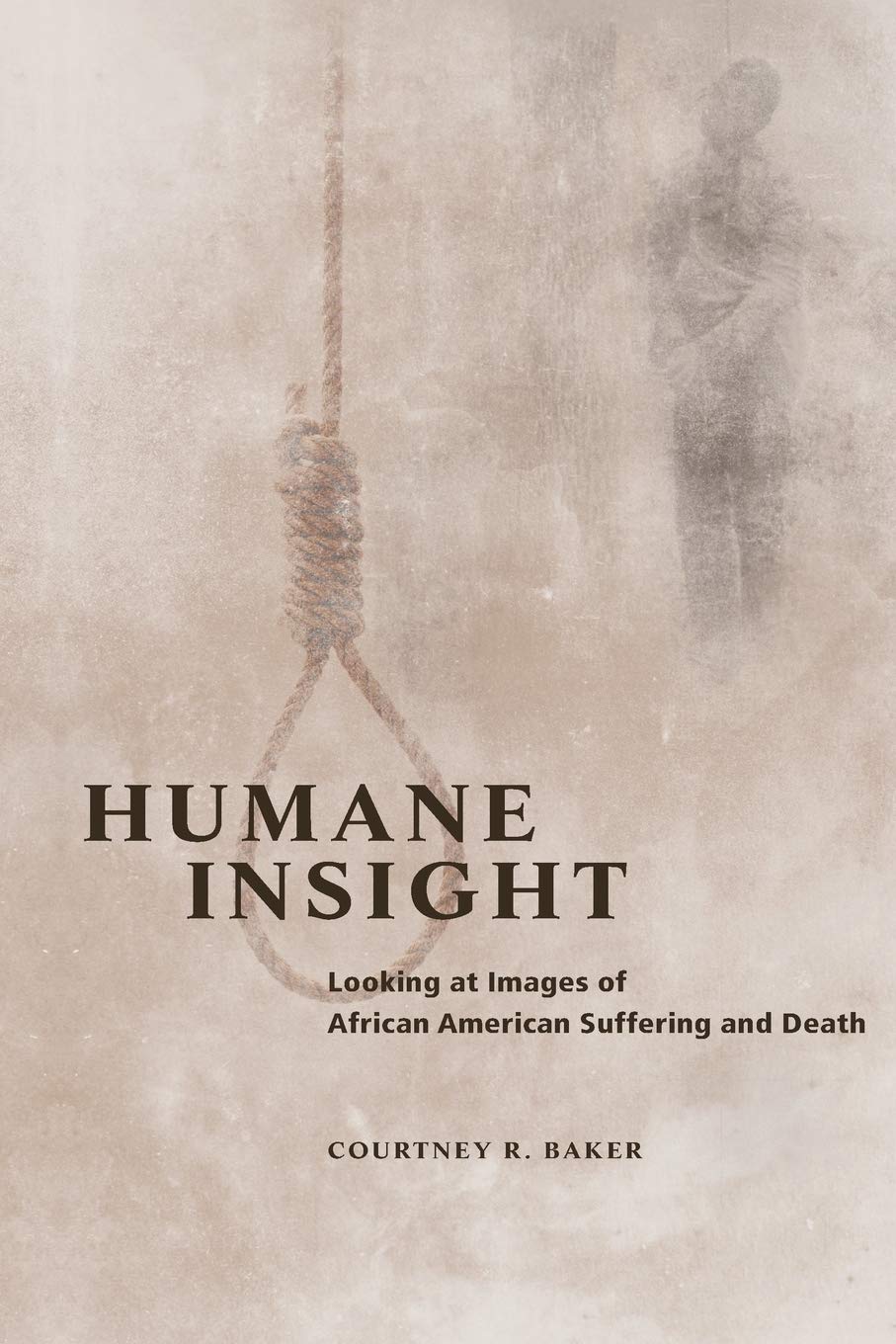
Humane Insight: Looking at Images of African American Suffering and Death (New Black Studies Series)
$25.00
by Courtney R. Baker



In the history of black America, the image of the mortal, wounded, and dead black body has long been looked at by others from a safe distance. Courtney Baker questions the relationship between the spectator and victim and urges viewers to move beyond the safety of the "gaze" to cultivate a capacity for humane insight toward representations of human suffering. Utilizing the visual studies concept termed the "look," Baker interrogates how the notion of humanity was articulated and recognized in oft-referenced moments within the African American experience: the graphic brutality of the 1834 Lalaurie affair; the photographic exhibition of lynching, Without Sanctuary ; Emmett Till's murder and funeral; and the devastation caused by Hurricane Katrina. Contemplating these and other episodes, Baker traces how proponents of black freedom and dignity used the visual display of violence against the black body to galvanize action against racial injustice. An innovative cultural study that connects visual theory to African American history, Humane Insight asserts the importance of ethics in our analysis of race and visual culture, and reveals how representations of pain can become the currency of black liberation from injustice. "With perceptive and original analysis, Baker moves us through a series of historical moments when images of black pain and death made black suffering legible to a wider public."--Amy Louise Wood, author of Lynching and Spectacle: Witnessing Racial Violence in America, 1890 -1940 "This groundbreaking book is a corrective to recent arguments that have misunderstood the role of representations of black suffering and death in empowering a people. With insight and keen observation, it illuminates how proponents of black freedom and dignity employed difficult images to alter public opinion and spur change."--Maurice Berger, University of Maryland Baltimore County "The scholarship presented by Baker is sound with expert use of various categories of criticism and philosophy, including literary criticism, psychoanalysis, and sociology. This book is a much needed contribution to African American cultural studies. Baker offers fresh insights and deft interpretations suffering and death imagery. Her discussion of the psycho-political work of Emmett Till's beaten and abused body during the Civil Rights Era, for instance, is particularly astute. I recommend this text highly."--Debra Walker King, author of African Americans and the Culture of Pain Courtney R. Baker is an associate professor of English at Connecticut College.