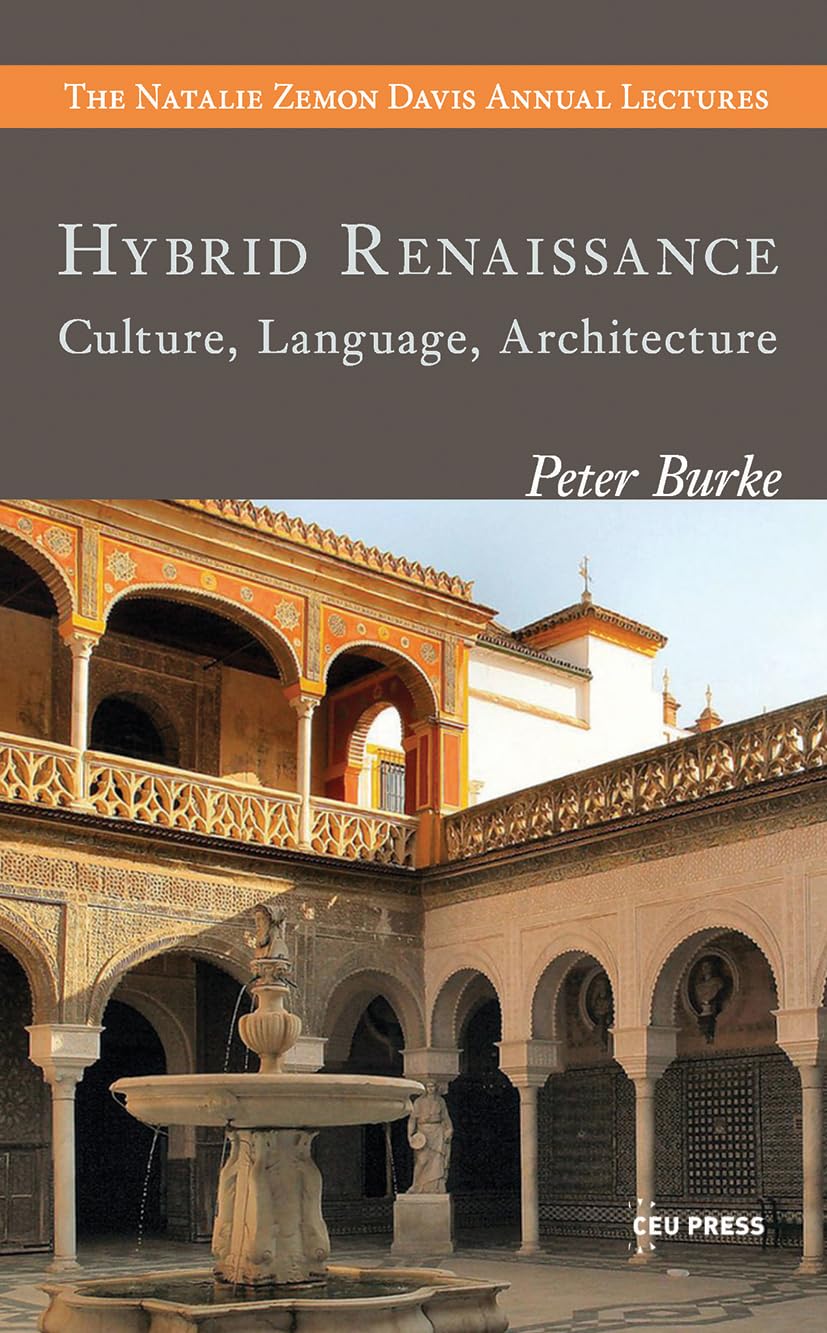
Hybrid Renaissance (The Natalie Zemon Davis Annual Lectures Series - CEU Press)
$27.99
by Peter Burke



Hybrid Renaissance introduces the idea that the Renaissance in Italy, elsewhere in Europe, and in the world beyond Europe is an example of cultural hybridization. The two key concepts used in this book are hybridization and Renaissance. Roughly speaking, hybridity refers to something new that emerges from the combination of diverse older elements. The book begins with a discussion of the concept of cultural hybridization and a cluster of other concepts related to it. Then comes a geography of cultural hybridization focusing on three locales: courts, major cities (whether ports or capitals) and frontiers. The following seven chapters describe the hybridity of the Renaissance in different fields: architecture, painting and sculpture, languages, literature, music, philosophy and law and finally religion. The essay concludes with a brief account of attempts to resist hybridization or to purify cultures or domains from what was already hybridized. "Amelang covers an impressive amount of urban territory in this short and chatty book, raising more fascinating questions than the constraints of the text allow him to answer. It is recommended reading for any scholar of early modern European cities, and would be particularly stimulating for a graduate student in search of a topic. Less of a polished argument than a wide-ranging conversation with a generous and erudite elder historian, it is sure to leave its readers anxious to explore early modern Europe’s winding streets and changing vistas on their own."―Eleanor Hubbard, Journal of Modern History Peter Burke is Professor Emeritus of Cultural History at the University of Cambridge and Life Fellow of Emmanuel College. His publications include Popular Culture in Early Modern Europe (1978), New Perspectives on Historical Writing (1991), History and Social Theory (1992), What is Cultural History? (20024), Cultural Hybridity (2009) and A Social History of Knowledge Volume II From the Encyclopaedic to Wikipedia (2012).