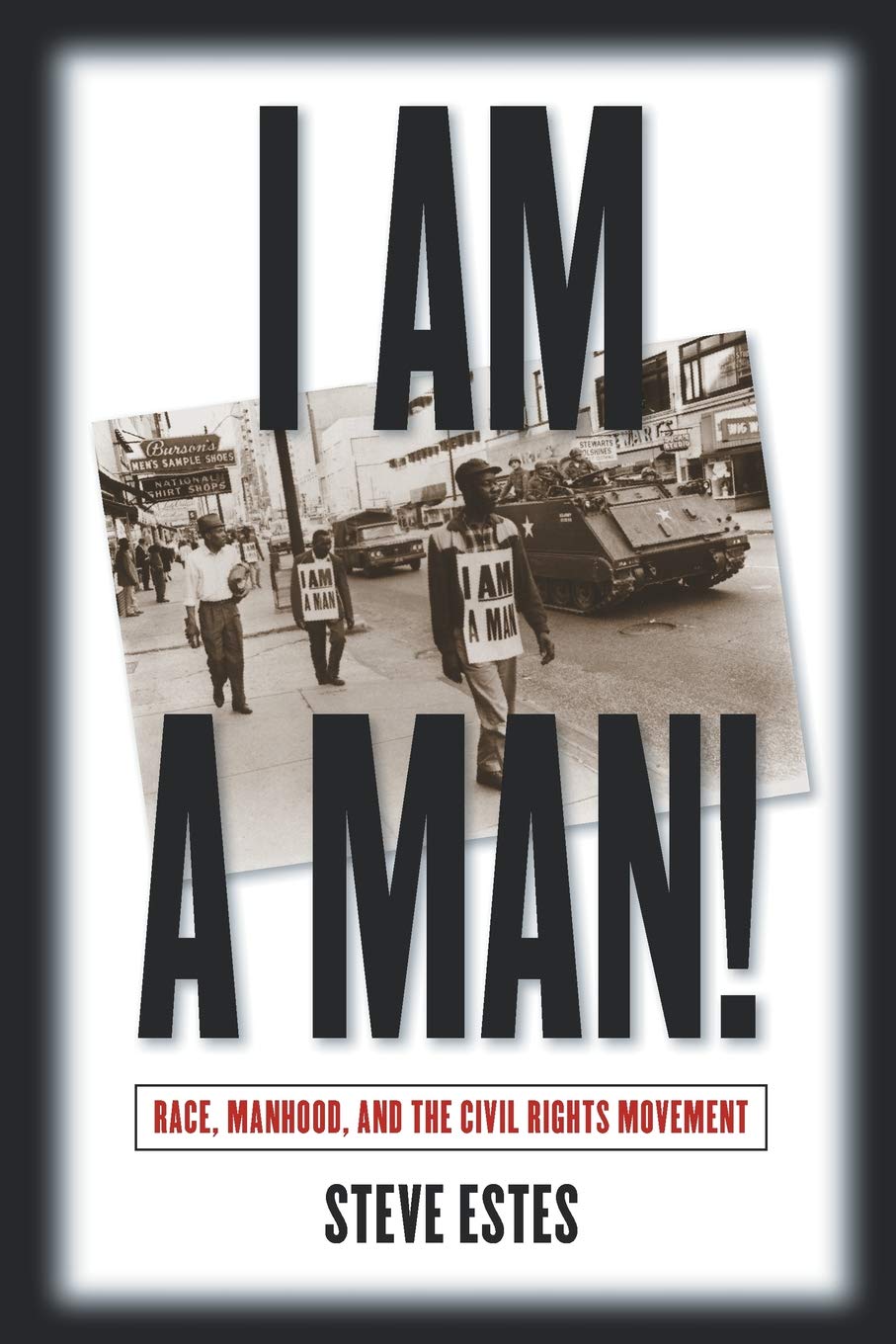



The civil rights movement was first and foremost a struggle for racial equality, but questions of gender lay deeply embedded within this struggle. Steve Estes explores key groups, leaders, and events in the movement to understand how activists used race and manhood to articulate their visions of what American society should be. Estes demonstrates that, at crucial turning points in the movement, both segregationists and civil rights activists harnessed masculinist rhetoric, tapping into implicit assumptions about race, gender, and sexuality. Estes begins with an analysis of the role of black men in World War II and then examines the segregationists, who demonized black male sexuality and galvanized white men behind the ideal of southern honor. He then explores the militant new models of manhood espoused by civil rights activists such as Malcolm X and Martin Luther King Jr., and groups such as the Nation of Islam, the Student Nonviolent Coordinating Committee, and the Black Panther Party. Reliance on masculinist organizing strategies had both positive and negative consequences, Estes concludes. Tracing these strategies from the integration of the U.S. military in the 1940s through the Million Man March in the 1990s, he shows that masculinism rallied men to action but left unchallenged many of the patriarchal assumptions that underlay American society. “Mandatory reading for anyone interested in civil rights history and African American gender history.” — The Historian “A well-conceptualized and engagingly written narrative study of the subject. . . . A welcome addition to the literature on gender and the civil rights era; it provides an insightful overview of manhood and the movement in one volume.” — Journal of American History “Estes’s particular strength is found in the richness of detail and anecdote he provides. . . . Offers a new perspective on the black freedom struggle that is well worth considering.” — Journal of Southern History “Eloquent and imaginative . . . I Am a Man! represents an indispensable contribution to civil rights historiography that, due to its breadth and style, will appeal not only to U.S. historians and specialists in the field but also laypersons and general readers.” — Alabama Review “A fresh approach that extends and deepens our understanding of the Civil Rights Movement by allowing us to see it through the gendered lens of masculinist rhetoric and tactics.” — Southern Cultures “A well-conceptualized and engagingly written narrative study. . . . It provides an insightful overview of manhood and the movement in one volume.” — Journal of American History “ I Am a Man! stands as a fascinating journey through the race and gender conflicts of the mid-twentieth-century United States and is a welcome addition to the historiography of civil rights.” — H-South “An extremely readable and provocative book. . . . Highly recommended.” — Multicultural Review “Estes adds to a discussion on the Civil Rights movement that all too often focuses exclusively on race and class. The narrative is organized in such a way that makes it useful for a lecture-style college course and should be considered mandatory reading for students of the Civil Rights movement and gender history.” — North Carolina Historical Review “A stimulating critique . . . Estes should be commended for challenging us to rethink the relationship between the civil rights struggle and masculinity and his book should lead us towards some exciting new developments in civil rights historiography.” — Ethnic and Racial Studies Estes adds to a discussion on the Civil Rights movement that all too often focuses exclusively on race and class. The narrative is organized in such a way that makes it useful for a lecture-style college course and should be considered mandatory reading for students of the Civil Rights movement and gender history.-- The North Carolina Historical Review Responding to racism with militant manhood Estes examines how civil rights activists used race and manhood to articulate their visions of what American society should be. He explores the models of manhood espoused by civil rights activists and groups such as Malcolm X, the Nation of Islam, SNCC, Martin Luther King Jr., and the Black Panther Party. Estes examines how civil rights activists used race and manhood to articulate their visions of what American society should be. He explores the models of manhood espoused by civil rights activists and groups such as Malcolm X, the Nation of Islam, SNCC, Martin Luther King Jr., and the Black Panther Party. Steve Estes is assistant professor of history at Sonoma State University.