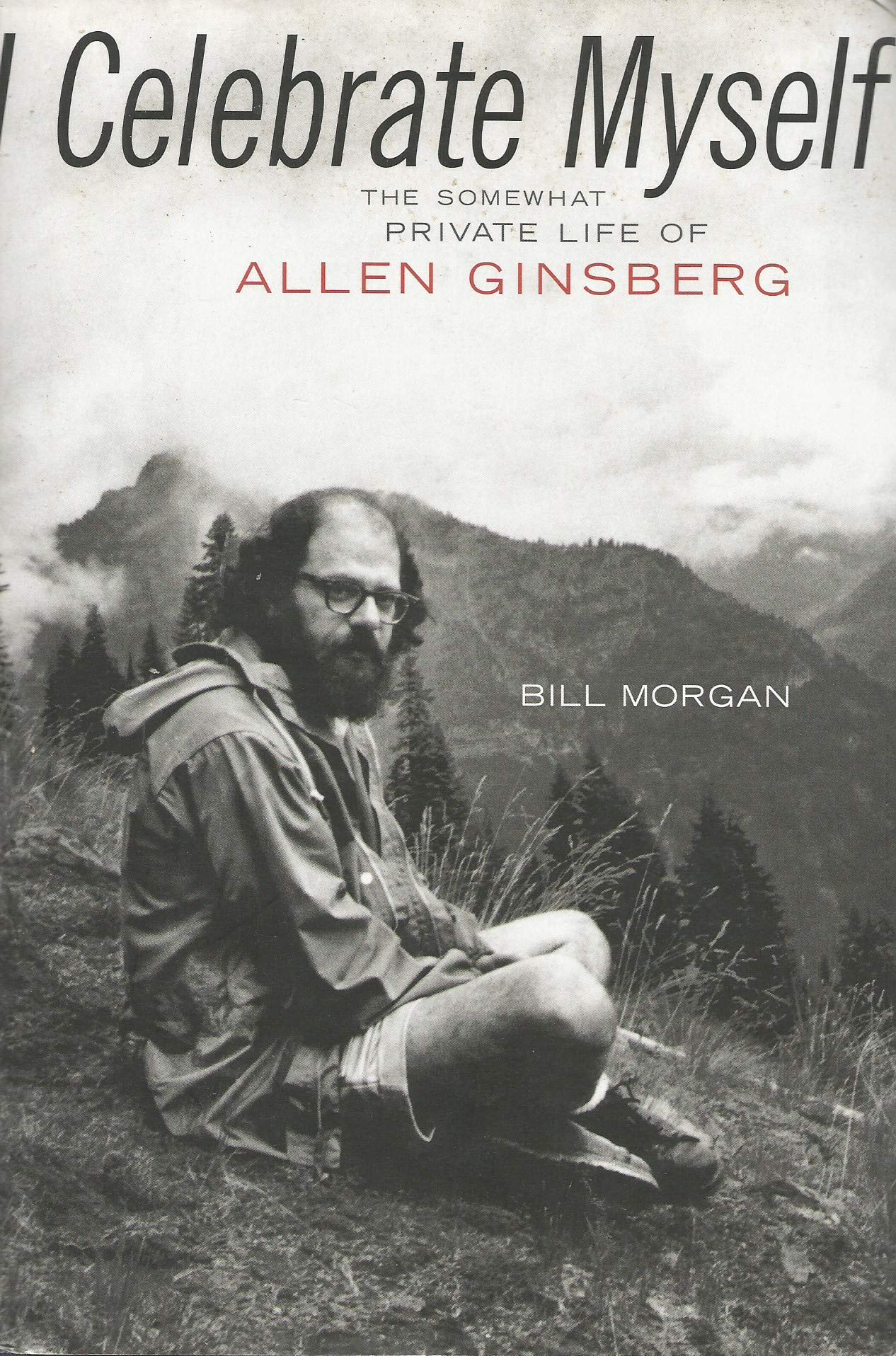



Published to coincide with the fiftieth anniversary of Howl, an all-encompassing portrait of the influential Beat-generation poet draws on interviews with members of his inner circle as well as his journals and correspondence to discuss such topics as his political views, practice of Tibetan Buddhism, and capacity for self-expression. The late Beatnik poet would have been 80 this year, and this massive life chronicle marks the occasion. Ginsberg was an indefatigable journaler, correspondent, and, especially in his latter years, photographer (he got good enough to publish, exhibit, and sell prints), which means Morgan has a rich trove of self-reportage to draw on. Morgan has also extensively interviewed Ginsberg's friends, and the resulting massive tome seems to note every movement Ginsberg ever made. Notes inserted on the margins of each page refer by title and page number to poems (in Collected Poems: 1947-1997 , which HarperCollins is issuing, also in October 2006, and at 1,000-plus pages and $39.95, relatively cheaply) written at the times of events reported in the text. This isn't a critical or interpretive biography, nor is it even fully descriptive, for Ginsberg's is virtually the only personal perspective given any expression in its pages. As a clear, exhaustive record of a very restless man's life journey, however, it will be invaluable to all future biographers. Ray Olson Copyright © American Library Association. All rights reserved Bill Morgan is a painter and archival consultant. He is the author of The Beat Generation in New York: A Walking Tour of Jack KerouacÂs City, The Beat Generation in San Francisco: A Literary Tour , and edited Deliberate Prose: Selected Essays of Allen Ginsberg 1952Â1995 . Also for October 2006 publication, he has edited GinsbergÂs The Book of Martrydom and Artifice: First Journals and Poems, 1937Â1952 , with Jaunita Lieberman-Plimpton, as well as Howl on Trial: the Battle for Free Expression. Just after his 21st birthday, Allen Ginsberg decided to kill himself. Again. This time, however, to allow for the necessary preparations, he settled on a schedule. Two years should be "just enough time," he wrote in his journal, "for me to have accomplished the first great prose work, a small body of perfect poems . . . and to have attempted some happy labor in the world, and failed." Not all of his "Dear Diary" suicide notes -- and there were many -- were graced with such panache. Of the numerous love affairs worthy of diary entries, none was so crucial to Ginsberg's imagination as his courtship with death, except perhaps his enduring commitment to the sensual and spiritual joys of living. Bill Morgan's provocative and thoroughly researched new biography of the poet, I Celebrate Myself, is a testament to the creative fruits and the personal anguish of this struggle, which spanned Ginsberg's long career as poet, literary impresario, political activist and cultural icon. As a boy, Ginsberg witnessed his mother's painful descent into schizophrenia with the same mixture of compassion and revulsion that he later felt for his own life. The Modernist poet Marianne Moore shrewdly diagnosed his predicament in an early letter: "Your disgust worries me," she wrote, reminding him of the "old hackneyed truism; affirm or die." Of course, with all of Ginsberg's best work yet to be written, Moore could not know the other self-delighting and vigorously affirmative side of his personality. This bolstering self-assurance led him to proclaim, when he was only 14: "If some future historian or biographer wants to know what the genius thought and did in his tender years, here it is." In retrospect, the real "here" of this announcement, however, was neither his journal nor his parents' home in Paterson, N.J., but the grounds of Columbia University in the 1940s. During his first few months as a student there, he met the future luminaries of the Beat generation, including the princely football star Jack Kerouac; the flirtatious and unpredictable playboy Neal Cassady; and the patron saint of awful advice, failed schemes and moral depravity William Burroughs. In "therapy" sessions to which he regularly submitted with desperate credulity, Ginsberg turned to Burroughs (who knew nothing about psychoanalysis) for help overcoming his sorrow and dread. He fled despair for months at a time with the U.S. Maritime Service. When he gravitated toward Cassady's sexual charm, though, Ginsberg slid back into a dark night of the lover's soul. Morgan recounts this affair with regrettable cliché -- "The moment Ginsberg saw Cassady, he fell in love" -- but the melodrama of romantic thralldom and heartbreak, he rightly suggests, was the young poet's favorite emotional posture. Melodrama is never far from sentimentality, and Ginsberg's conflicted affections for life and death often tumbled into the less glamorous territory of self-pity and egotism. Later, he hitchhiked to Mexico to hunt his melancholy spirit t