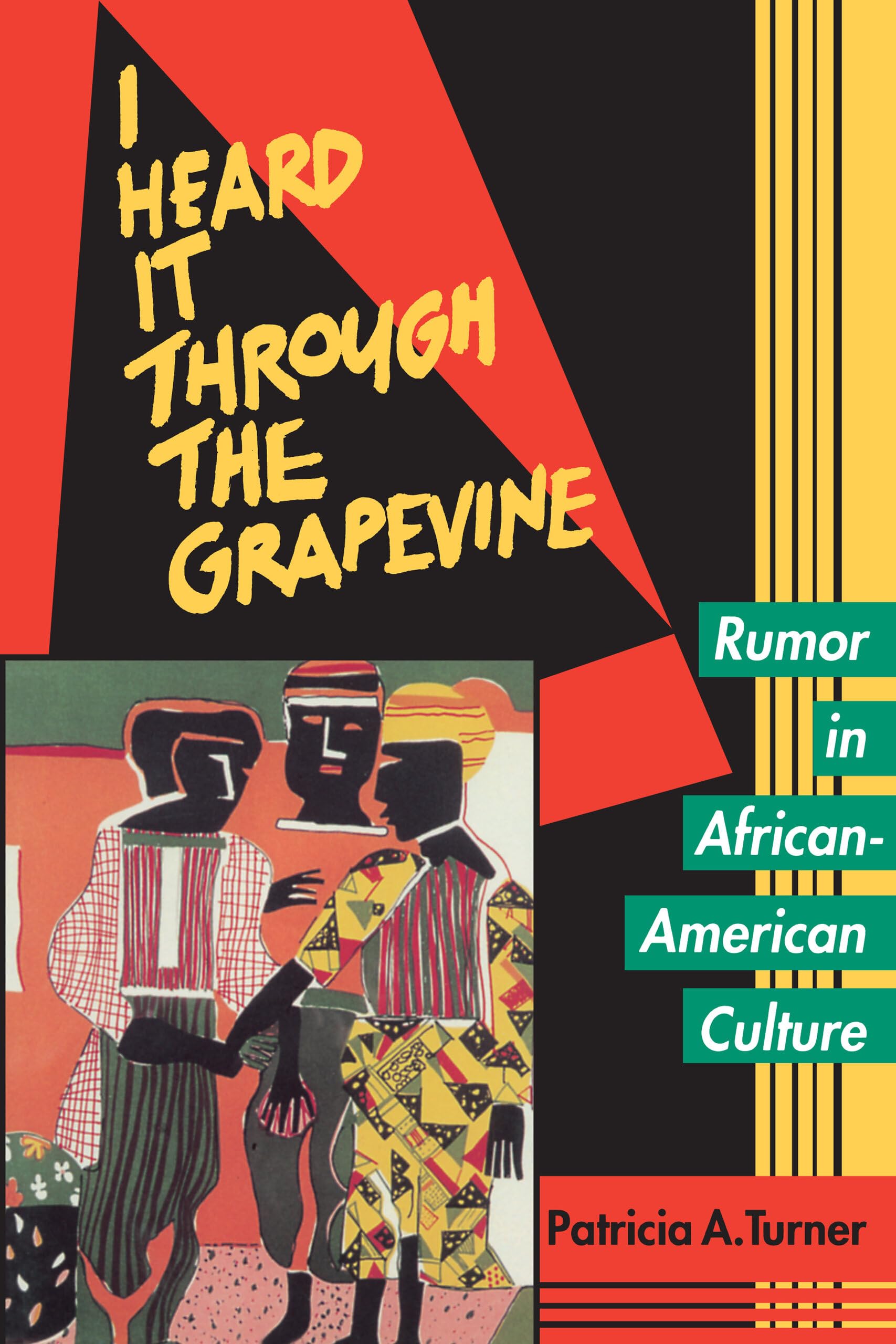
I Heard It Through the Grapevine: Rumor in African-American Culture
$27.98
by Patricia A. A. Turner



I Heard It Through the Grapevine explores how rumors that run rife in African-American communities, concerning such issues as AIDS, the Ku Klux Klan and FBI conspiracies, translate white oppression into folk warnings, and are used by the community to respond to a hostile dominant culture. "A feast for those interested in historical and modern black folklore. . . . Engaging." ― Chicago Tribune "Illuminating. . . . Although [Turner] deals primarily with some seemingly preposterous rumors circulating among blacks in the United States, her book demonstrates how and exemplary case study of folklore can reveal the positive side of these seemingly damaging rumors. Moreover, her work opens up new perspectives on black culture." ― New York Times "A necessary addition to studies of African-American culture, with insights for all races into the effects of oppression and misunderstanding." ― Boston Globe "A feast for those interested in historical and modern black folklore and for both supporters and critics of conspiracy theory." ― Quarterly Black Review of Books "Fascinating. . . . Turner explores the origins of rumors, how they spread and their sometimes devastating effect. . . as she examines everything from Atlanta child murders to Liz Claiborne's designer clothes, Kool and Marlboro cigarets, Reebok footwear and Troop sportswear." ― San Francisco Chronicle "A compelling read. . . . Through sleuth-like research of rumor and myth in African-American culture, Turner uncovers perhaps the biggest conspiracy of all: centuries of systematic racism in the United States. She traces the history of black folklore in this country from the moment the first slave ships arrived to the present day, repeatedly providing powerful evidence that the African-American fear of white America is not simply unfounded cultural paranoia." ― L.A. Reader Review "Entertaining and absorbing. . . . Information that blacks and whites have about one another is largely based upon rumors. Turner's monumental work traces the origins of rumors that have often fomented tragedies in race relations since the early encounters between Europeans and Africans."&;Ishmael Reed, author of Japanese by Spring "Entertaining and absorbing. . . . Information that blacks and whites have about one another is largely based upon rumors. Turner's monumental work traces the origins of rumors that have often fomented tragedies in race relations since the early encounters between Europeans and Africans."—Ishmael Reed, author of Japanese by Spring Patricia A. Turner is Senior Dean of the College Dean/Vice Provost of Undergraduate Education; Professor, Department of African American Studies and World Arts and Culture at the University of California at Davis, and the author of Ceramic Uncles & Celluloid Mammies: Black Images and Their Influence on Culture (1994). I Heard It Through the Grapevine Rumor African-American Cul By Patricia A. Turner University of California Press Copyright © 1994 Patricia A. Turner All right reserved. ISBN: 9780520089365 Introduction It seems from rumors I just can't get away I'll bet there will be rumors floating around on Judgment Day Timex Social Club When the Timex Social Club, a popular young singing group, lamented the pervasiveness of rumors in the mid-1980s, they meant those rumors that caused personal conflict within their own peer group: Hear that one about Michael / some say he must be gay / I try to argue but they say / if he was straight he wouldn't move that way. But these were not the only unverified orally transmitted stories circulating in African-American communities. In another type of rumor known primarily to African-Americans, the topic was not in-group discord, but rather conflict between the races. In this century, only those stories that emerged during times of domestic or international crisis garnered serious interest. During World War II, rumor clinics were established in an effort to prevent potentially adverse hearsay of all sorts from gaining credibility. Many of the most widespread rumors reflected racial discord. While African-Americans heard that black soldiers were being singled out for particularly hazardous and even suicidal war assignments, whites heard that in the communities near armed forces training camps hundreds of white women were pregnant with black men's children. Racially based rumors did not vanish following the war, of course; in the absence of crisis, however, official concern with them diminished. Only in the 1960s, when racial unrest escalated precipitously, did municipal and federal authorities again sit up and take notice. Rumor clinics and hotlines were reestablished to combat the proverbial grapevine, on which stories about acts of violence, both incidental and conspiratorial, abounded.1 After the crises of the sixties subsided, the clinics and hotlines closed down. Yet unconfirmed stories alleging bitter racial animosity still circulat