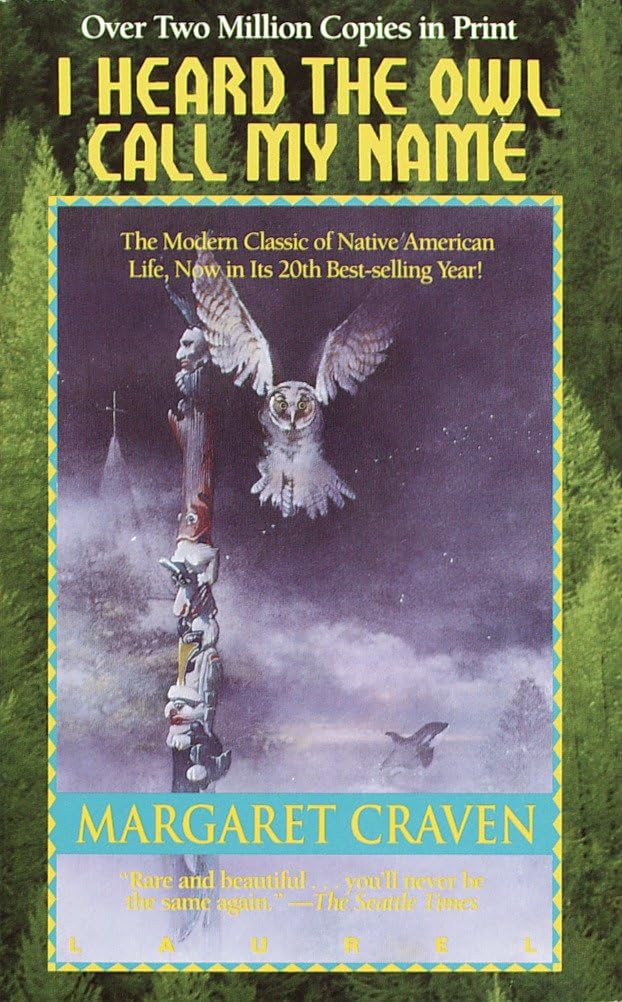



Amid the grandeur of the remote Pacific Northwest stands Kingcome, a village so ancient that, according to Kwakiutl myth, it was founded by the two brothers left on earth after the great flood. The Native Americans who still live there call it Quee, a place of such incredible natural richness that hunting and fishing remain primary food sources. But the old culture of totems and potlatch is being replaces by a new culture of prefab housing and alcoholism. Kingcome's younger generation is disenchanted and alienated from its heritage. And now, coming upriver is a young vicar, Mark Brian, on a journey of discovery that can teach him—and us—about life, death, and the transforming power of love. "Rare and beautiful...you'll never be the same again."— Seattle Times "It has an epic quality...entrancing."— New York Times Book Review "Memorable.... A shining parable about the reconciliation of two cultures and two faiths."— Christian Science Monitor . A place of salmon runs, ancient totems, and a lesson a young vicar must learn.... Amid the grandeur of the remote Pacific Northwest stands Kingcome, a village so ancient that, according to Kwakiutl myth, it was founded by the two brothers left on earth after the great flood. The Native Americans who still live there call it Quee, a place of such incredible natural richness that hunting and fishing remain primary food sources. But the old culture of totems and potlatch is being replaces by a new culture of prefab housing and alcoholism. Kingcome's younger generation is disenchanted and alienated from its heritage. And now, coming upriver is a young vicar, Mark Brian, on a journey of discovery that can teach him -- and us -- about life, death, and the transforming power of love. "Memorable.... A shining parable about the reconciliation of two cultures and two faiths." -- Christian Science Monitor . A place of salmon runs, ancient totems, and a lesson a young vicar must learn.... Amid the grandeur of the remote Pacific Northwest stands Kingcome, a village so ancient that, according to Kwakiutl myth, it was founded by the two brothers left on earth after the great flood. The Native Americans who still live there call it Quee, a place of such incredible natural richness that hunting and fishing remain primary food sources. But the old culture of totems and potlatch is being replaces by a new culture of prefab housing and alcoholism. Kingcome's younger generation is disenchanted and alienated from its heritage. And now, coming upriver is a young vicar, Mark Brian, on a journey of discovery that can teach him -- and us -- about life, death, and the transforming power of love. A place of salmon runs, ancient totems, and a lesson a young vicar must learn.... Amid the grandeur of the remote Pacific Northwest stands Kingcome, a village so ancient that, according to Kwakiutl myth, it was founded by the two brothers left on earth after the great flood. The Native Americans who still live there call it Quee, a place of such incredible natural richness that hunting and fishing remain primary food sources. But the old culture of totems and potlatch is being replaces by a new culture of prefab housing and alcoholism. Kingcome's younger generation is disenchanted and alienated from its heritage. And now, coming upriver is a young vicar, Mark Brian, on a journey of discovery that can teach him -- and us -- about life, death, and the transforming power of love. Margaret Craven (1901–1980) was the author of the much-loved American classic I Heard the Owl Call My Name . She also wrote another novel, Walk Gently This Good Earth; an autobiography, Again Calls the Owl; and a short-story collection, The Home Front . ONE He stood at the wheel, watching the current stream, and the bald eagles fishing for herring that waited until the boat was almost upon them to lift, to drop the instant it had passed. The tops of the islands were wreathed in cloud, the sides fell steeply, and the firs that covered them grew so precisely to the high tide line that now, at slack, the upcoast of British Columbia showed its bones in a straight selvage of wet, dark rock. “There’s the sign of an old village,” said the Indian boy who was his deckhand. His eyes sought a beach from which, long ago, the big stones had been removed so that the war canoes could be pulled up stern first. But there was no beach. There was nothing but clean, straight selvage, and a scattered mound of something broken and white in the gray of rain against the green of spruce, and he remembered the words Caleb had quoted him, and he repeated them now. “ ‘When you see clam shells, know it is Indian country. Leave it alone.’ ” “Queen Victoria,” the Indian boy said quickly. “Some people didn’t hear her.” Caleb had prepared him for this one, the first he was to know: “He’s been working for a year in a mill town and is eager to return to his village. You’ll not take the boat out without him