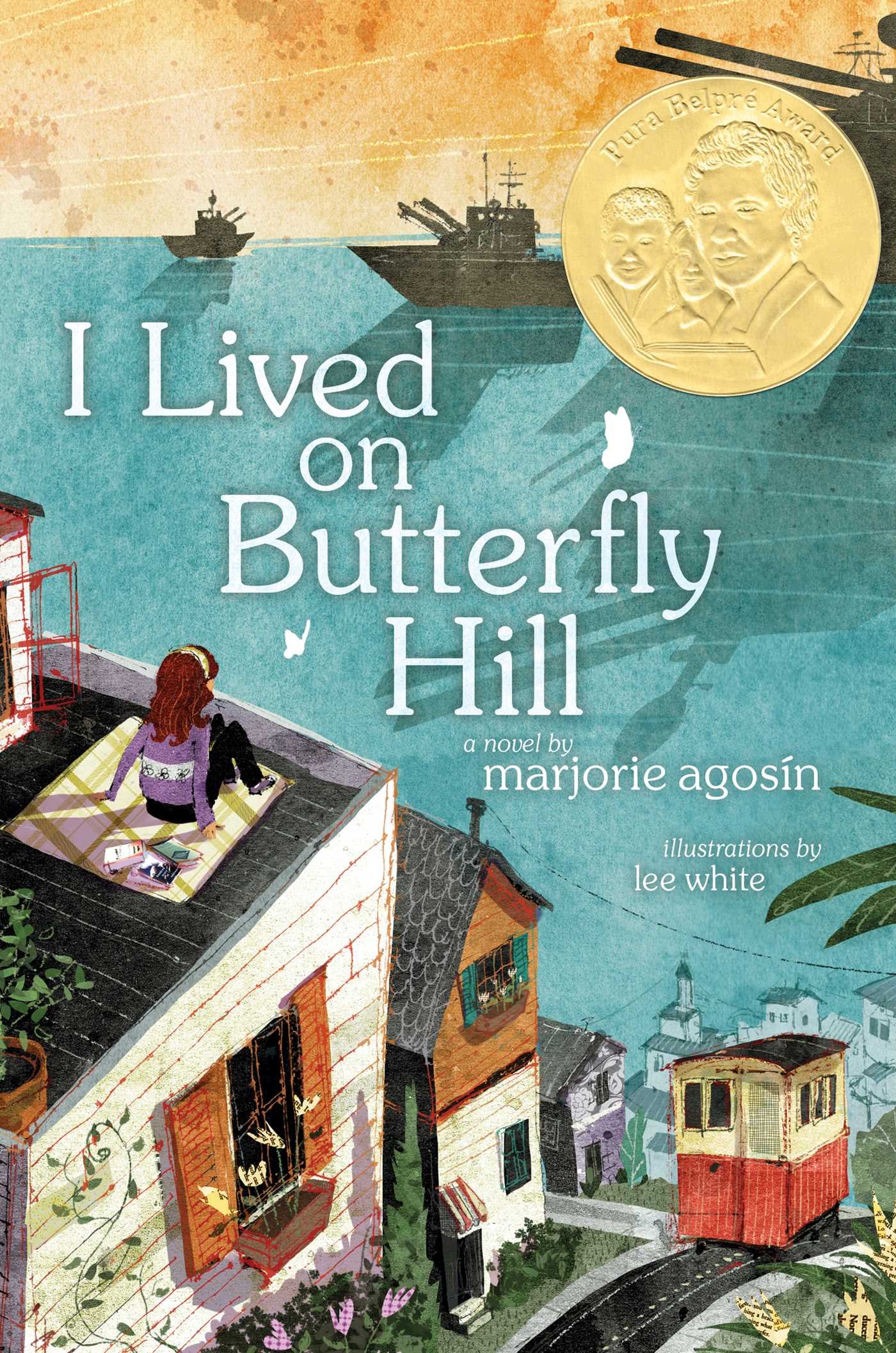



An eleven-year-old’s world is upended by political turmoil in this searing novel from an award-winning poet, based on true events in Chile. Celeste Marconi is a dreamer. She lives peacefully among friends and neighbors and family in the idyllic town of Valparaiso, Chile—until the time comes when even Celeste, with her head in the clouds, can’t deny the political unrest that is sweeping through the country. Warships are spotted in the harbor and schoolmates disappear from class without a word. Celeste doesn’t quite know what is happening, but one thing is clear: no one is safe, not anymore. The country has been taken over by a government that declares artists, protestors, and anyone who helps the needy to be considered “subversive” and dangerous to Chile’s future. So Celeste’s parents—her educated, generous, kind parents—must go into hiding before they, too, “disappear.” To protect their daughter, they send her to America. As Celeste adapts to her new life in Maine, she never stops dreaming of Chile. But even after democracy is restored to her home country, questions remain: Will her parents reemerge from hiding? Will she ever be truly safe again? Accented with interior artwork, steeped in the history of Pinochet’s catastrophic takeover of Chile, and based on many true events, this multicultural ode to the power of revolution, words, and love is both indelibly brave and heartwrenchingly graceful. Gr 5–8—Celeste is a sixth-grader living in Valparaíso, Chile. Her life is idyllic, full of a loving, multigenerational family, a home she finds inspiring, and good friends. Things take a drastic turn when Valparaíso starts being affected by what Celeste's parents call "earthquakes of the soul"—the country falls under the grip of a ruthless dictator who is determined to eliminate dissent. Friends start disappearing, and Celeste's parents, who are seen as subversives for their work helping the disadvantaged, go into hiding. Celeste is sent to live with her aunt in the United States, where she struggles to acclimate, and to understand the larger picture of what is happening at home. Agosín has woven a historical story that draws on her own life experiences, with themes of exile, the quest for justice, and the power of the written word to preserve history. The story mirrors, but does not directly reference, the dictatorship of Augusto Pinochet and its accompanying turmoil. The language is poetic and full of imagery and, while the book is long, it moves at a smooth pace. Occasional illustrations reflect the mood of each phase of the story. This is Agosín's first book for a younger audience, and she has managed to capture the wide-eyed curiosity and confusion of her narrator. Given its length and weighty themes, this book is best suited for serious readers.—Jenna Lanterman, formerly at The Calhoun School and Mary McDowell Friends School, New York City *Starred Review* Observant, curious 11-year-old dreamer Celeste Marconi wants to be a writer when she grows up. She embraces everything about her peaceful, magical harbor city of Valparaiso, Chile, from the pelicans who greet her every morning to the colors and flowers of the gardens. But when small things start to change—neighbors and classmates begin to disappear, and military ships crowd the harbor—she knows trouble of some kind is on the horizon. Words like subversive and dictatorship are whispered in conversation. Books are burned. Artists, educators, and those believing in equality for all are removed from society. No one feels safe. During the government takeover, Celeste’s parents—gentle and compassionate doctors who care for the poor—go into hiding and send her to live in America with her aunt. Like her Jewish grandmother who escaped Austria just before the Holocaust, Celeste learns to cope with exile, never allowing her homeland to fade from her heart. Agosín, an award-winning author, lived a similar multicultural, multigenerational story set around the Pinochet coup in the 1970s, and she writes of it with beauty and grace, telling a compelling tale that both enchants and haunts. Illustrations unseen. Grades 5-8. --Jeanne Fredriksen Marjorie Agosín is the Pura Belpré Award–winning author of I Lived on Butterfly Hill and The Maps of Memory . Raised in Chile, her family moved to the United States to escape the horrors of the Pinochet takeover of their country. She has received the Letras de Oro Prize for her poetry, and her writings about—and humanitarian work for—women in Chile have been the focus of feature articles in The New York Times , The Christian Science Monitor , and Ms. magazine. She has also won the Latino Literature Prize for her poetry. She is a Spanish professor at Wellesley College. Lee White lives with his wife and their three crazy cats in Portland, Oregon, and you can visit him online at LeeWhiteIllustration.com. I Lived on Butterfly Hill Celeste Like the Sky The blue cloud finally opens—just when the bell rings to let the Juana