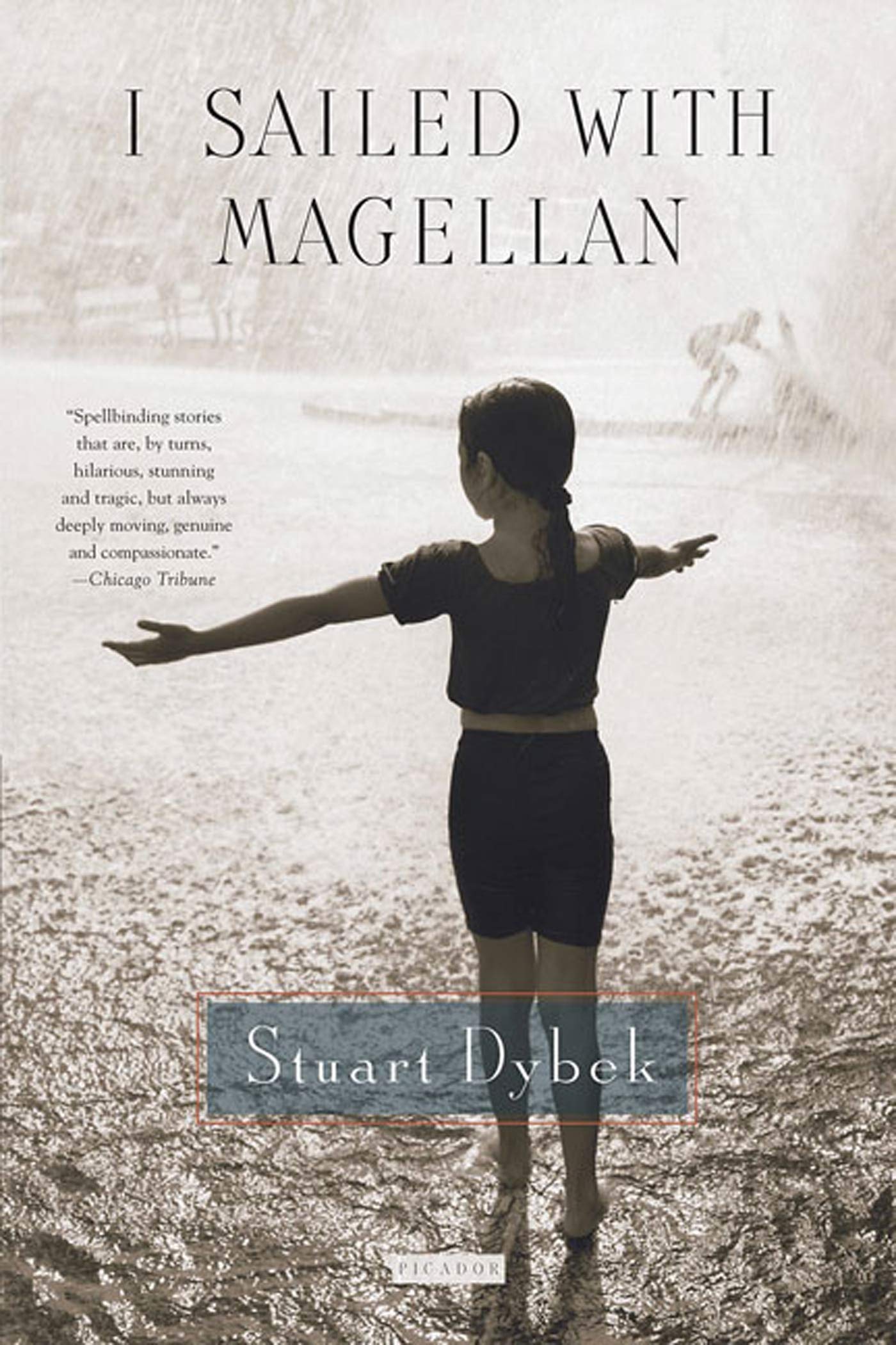



Following his renowned The Coast of Chicago and Childhood, story writer Stuart Dybek returns with eleven masterful and masterfully linked stories about Chicago's fabled and harrowing South Side. United, they comprise the story of Perry Katzek and his widening, endearing clan. Through these streets walk butchers, hitmen, mothers and factory workers, boys turned men and men turned to urban myth. I Sailed With Magellan solidifies Dybek's standing as one of our finest chroniclers of urban America. “Spellbinding stories that are, by turns, hilarious, stunning and tragic, but always deeply moving, genuine and compassionate.” ― Chicago Tribune “Dream and memory, humor and pathos, song and silence: At his best Dybek combines these disparate elements in a shimmering web.” ― Newsday “All are gems; each glistens with Dybek's spare poetry; combined, they form a vibrant mosaic about a boy's coming of age.... By Magellan 's end, you'll never want to leave... [An] A.” ― Entertainment Weekly “Vivid...With I Sailed With Magellan Dybek solidifies his reputation as the rightful heir to Farrell's gritty realism.” ― The New York Times Book Review Stuart Dybek is the author of five books of fiction- -Ecstatic Cahoots , Paper Lantern , I Sailed with Magellan , The Coast of Chicago , and Childhood and Other Neighborhoods --as well as two collections of poetry, Brass Knuckles and Streets in Their Own Ink . Dybek is the recipient of many prizes and awards, including the PEN/Malamud Award, an Arts and Letters Award from the American Academy of Arts and Letters, a Whiting Writers' Award, four O. Henry Awards, a MacArthur Fellowship, and a Guggenheim Fellowship. He is distinguished writer-in-residence at Northwestern University. I Sailed with Magellan By Stuart Dybek Picador USA Copyright © 2004 Stuart Dybek All right reserved. ISBN: 9780312424114 Chapter One Song Once I was a great singer. Caruso Junior they called me, and Little der Bingle . Crooners like Bing Crosby and Sinatra were stillbig in those days. My repertoire included "Clang, Clang, ClangWent the Trolley," the song behind my ambition to become astreetcar conductor. I knew the nameless tune my mother sangwhen we waited for the El: "Down by the station early in themorning, see the little puffer-billies all in a row"; and my uncleLefty had taught me a version of "Popeye the Sailor Man" thatwent, "I'm Popeye the Sailor Man, I live in a garbage can, I eatall the junk and smell like a skunk, I'm Popeye the Sailor Man,I am." But none of those was the song for which I was famous, thesong requested over and over. They'd hoist me onto the bar,where I'd carefully plant my feet among the beer bottles, steins,and shot glasses, and, taking a breath of whiskey air, belt out"Old Man River." I'd learned the song by listening to my father'smournful baritone while he shaved for work. It wasn't a popularsong of the time, not one you'd find on the mob-owned jukeboxesin those taverns where "That's Amore" or the "Too FatPolka" were as likely to be thumping from the speakers as"Hound Dog." But the men drinking there had all toted thatbarge and lifted that bale and got a little drunk and landed in jail,too, and had the scars to prove it. The noisy bar would quiet,small talk deferring to lyrics. "He's sure got a deep voice for his age," someone would invariablycomment. When I finished the song, holding the last note as if I dovedown to the dark river bottom for it, they cheered and showeredme with loose change and sometimes a few dollar bills. "What's the little man drinking?" they asked Uncle Lefty. "What'll it be, champ?" Lefty would relay to me. "Root beer" I'd shout, and root beer it was. I'd sit with my feet dangling over the bar, slugging from aheavy stein. Singing gave one a thirst. Then Uncle Lefty, who'dalso had a few on the house, would comb his nicotine-stainedfingers through my hair, straighten my buttons as if tuning meup, and lift me from the bar, gently, like a musical instrument hewas packing away, an instrument that he carried with him-onethat sometimes rode his shoulders-as he made the rounds fromtavern to tavern. We'd go from Deuces Wild on Twenty-second to the PulaskiClub across from St. Kasmir, and from there we'd hit the ZipInn, where Zip, who'd lost his right arm in the Big War, tendedbar. Zip always kept the empty sleeve of his white shirt neatlyfolded and clamped with a plastic clothespin-red, blue, yellow,green-he changed the colors the way some guys changed theirties. The walls of his bar were hung with framed photographs ofthe softball teams he'd sponsored, and there was also a photo of ayoung Uncle Lefty with his boxing gloves cocked, taken when hefought in the Golden Gloves tournament. "Ah, my fellow Left-wingers," Zip would greet us. "Quit trying to pass yourself off as a genuine southpaw," Leftywould tell him. "You ain't fooling nobody." "I admit it. I'm a convert, but hey, converts are the true believers.Fact