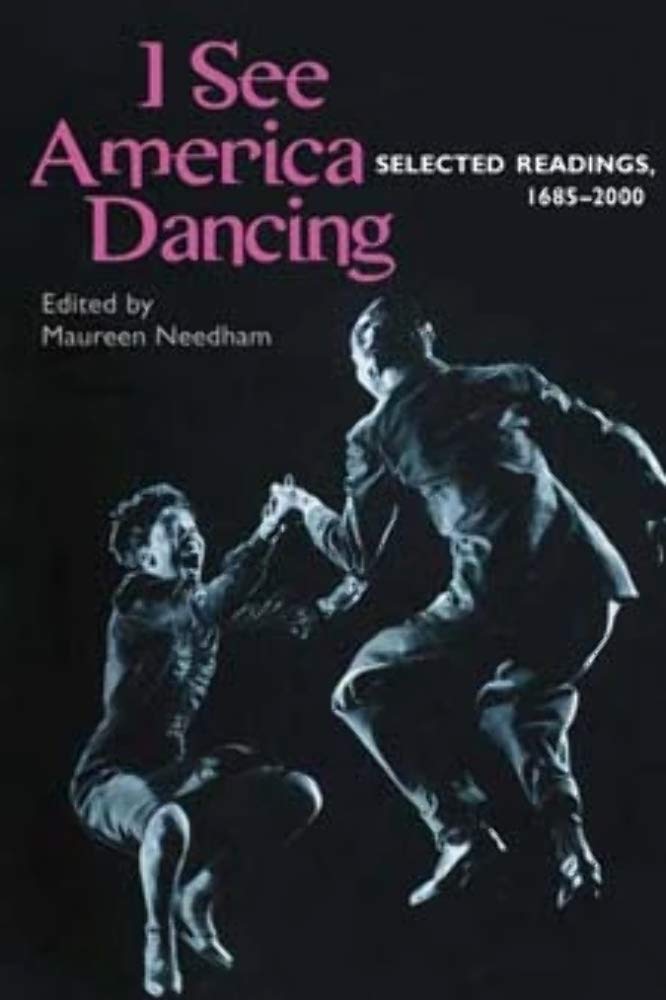



Representing dancers, scholars, admirers, and critics, I See America Dancing is a diverse collection of primary documents and articles about the place and shape of dance in the United States from colonial times to the present. This volume offers a lively counterpoint between observers of the dance and dancers' views of what they do when they dance. Dance traditions represented include the Native American pow-wow; tribal music and dance activities on Sunday afternoons in New Orlean's Congo Square; the colonial Playford Balls and their modern offspring, country line dancing; and the Buddhist-inspired Japanese Bon dances in Hawaii. Anti-dance perspectives include government injunctions against Native American dancing and essays from a range of speakers who have declared the waltz, the twist, or the senior prom to be a careless quick-step away from hell or the brothel. I See America Dancing examines the styles that have marked theatrical dance in America, from French ballet to minstrel shows, and presents the views of influential dancers, choreographers, and the pioneers of early modern dance in America. Specific pieces examined include George Ballanchine's ballet Stars and Stripes, Yvonne Rainer's protest piece "Flag Dance, 1970," and Sonjé Mayo's "Naked in America." Covering historical social attitudes toward the dance as well as the performers and their works, I See America Dancing is a comprehensive, scholarly sourcebook that captures the energy and passion of this vital artform. Needham (dance history, Vanderbilt Univ.) has assembled an array of essays and librettos as colorful and diverse as the history of dance in America. Dance as religious ritual, theatrical presentation, and social function are among the topics addressed in this rich sourcebook for dance and social historians. The book opens with six chapters on Native American dances and continues with considerations of other dance traditions in America, from early English country dances to the quadrilles of 19th-century New Orleans and today's country line-dancing and the revival of swing. A number of primary sources are featured here, from turn-of-the-last-century Indian Bureau Regulations and Increase Mather's 17th-century tract against dancing to excerpts from Thomas A. Faulkner's From the Ball-room to Hell (circa 1894). Contemporary reviews of some of the pioneers of theatrical dance in America include Emerson's reaction to a Boston appearance of the inimitable Fanny Elssler. In the last and largest of the book's five sections a number of American dance visionaries are represented in excerpts from their writings or librettos of their works. Here you will find essays by Isadora Duncan, Ted Shawn, and Doris Humphrey and librettos by Katherine Dunham, Bill T. Jones, and Sonje Mayo. The grande dame of modern American dance, Martha Graham, is represented by both an essay and a libretto. Extensive notes and a wealth of appended material round out the work. Dance scholars will revel in these primary sources and find this work a worthy companion to Selma Jeanne Cohen's more Eurocentric Dance As a Theatre Art: Source Readings in Dance History from 1581 to the Present. This carefully crafted production will be best featured in research collections in the performing arts as well as the social sciences. Carolyn M. Mulac, Chicago P.L. Copyright 2002 Cahners Business Information, Inc. A CHOICE Outstanding Academic Title, 2003. Maureen Needham is an associate professor of dance history at the Blair School of Music, Vanderbilt University.