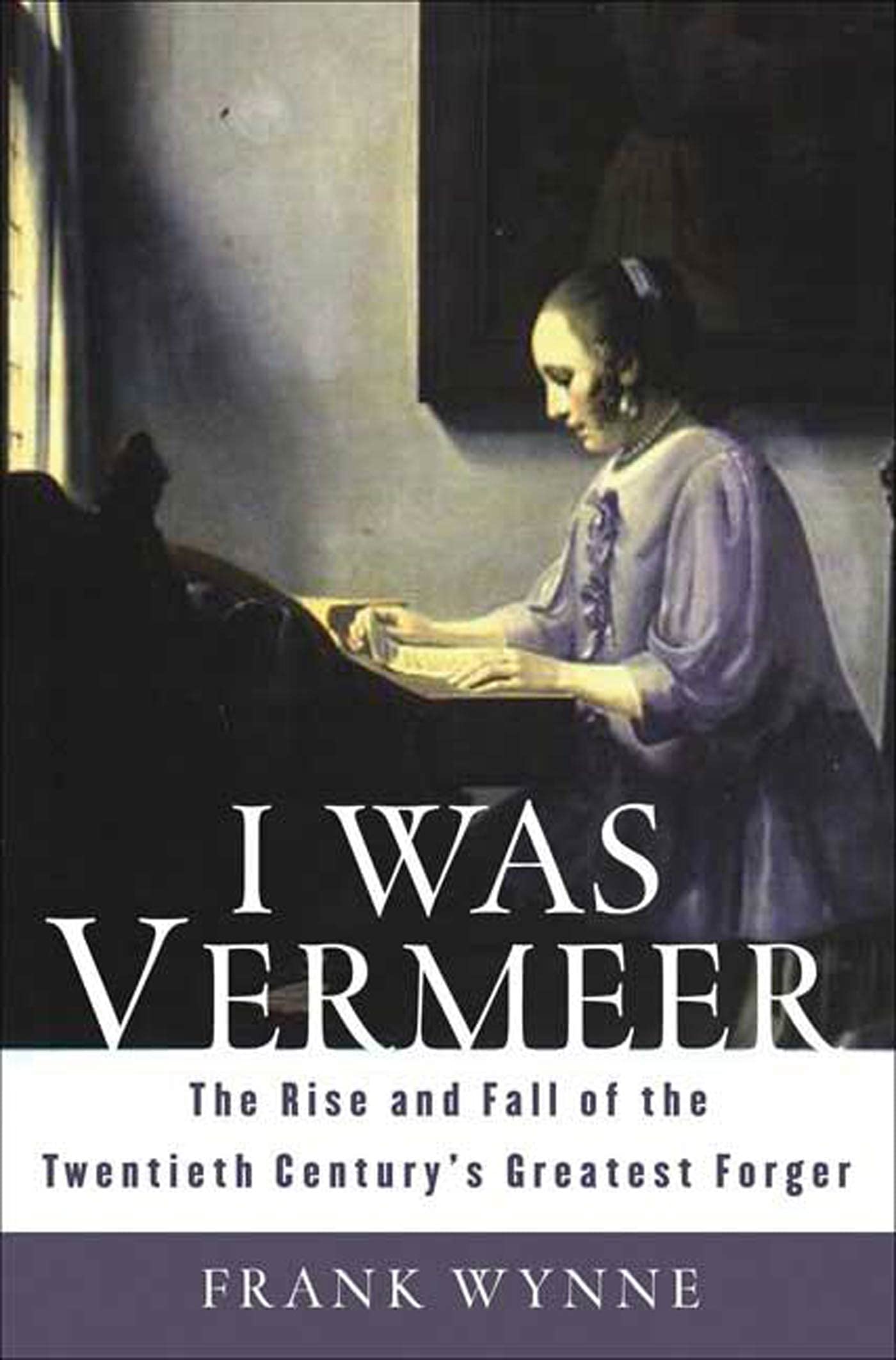
I Was Vermeer: The Rise and Fall of the Twentieth Century's Greatest Forger
$22.60
by Frank Wynne



Frank Wynne's remarkable book tells the story of Han van Meegeren, a paranoid, drug-addicted, second-rate painter whose Vermeer forgeries made him a secret superstar of the art world―and along the way, it reveals the collusion and ego that, even today, allow art forgery to thrive. During van Meegeren's heyday as a forger of Vermeers, he earned 50 million dollars, the acclamation of the world's press, and the satisfaction of swindling the Nazis. His canvases were so nearly authentic that they would almost certainly be prized among the catalogue of Vermeers if he had not confessed. And, no doubt, he never would have confessed at all if he hadn't been trapped in a catch-22: he had thrived so noticably during the war that when it ended, he was quickly arrested as a Nazi collaborator. His only defense was to admit that he himself had painted the remarkable "Vermeers" that had passed through his hands―a confession the public refused to believe, until, in a huge media event, the courts staged the public painting of what would be van Meegeren's last "Vermeer." I Was Vermeer is an utterly gripping real-life mystery, capturing both the life of the consummate art forger, phenomenally skilled and yet necessarily unrecognized, and the equally fascinating work of the experts who identify forgeries and track down their perpetrators. Wry, amoral, irreverent, and plotted like a thriller, it is the first major book in forty years on this astonishing episode in history. The police tracked down Han van Meegeren in 1945 after learning of his connection to a "Vermeer" stashed in the loot of Hermann Goring. Bursting with malevolent pride, van Meegeren made the astonishing admission that he, not Johannes Vermeer van Delft, was the painter--and one of the great art-world scandals was off and running. Wynne's account of van Meegeren's fraud, the first book-length account in English in four decades, contains insights into the mind of a forger as well as narrative verve about van Meegeren's methods of foisting his deceptions upon the Dutch art-history elite. Born in 1889, the youthful van Meegeren began a painting career and received accolades, but his Old Masters style was considered passe. Expert in seventeenth-century technique, Van Meegeren cunningly plotted vengeance by exploiting critics' belief that Christ-themed Vermeers awaited discovery; mirabile dictu , the theorized "Vermeers" turned up in the 1930s and 1940s. An astutely rendered and delicious tale of an infamous forger. Gilbert Taylor Copyright © American Library Association. All rights reserved “Wynne blends reportorial skill with a love of irony to tell van Meegeren's life story…Crime thriller or forgery primer, this intriguing read also proves another epigram: Beauty is in the eye of the beholder.” ― Bookpage “A spectacular story of vengeance and fraud told with verve and style by British journalist Wynne…The incredible story of how Dutch painter Han van Meegeren avenged himself on supercilious art critics by becoming an expert forger of Vermeer and fooling the Nazis conveys a valuable lesson in how we see, notes Wynne in this methodical, suspenseful tale…The forger's trajectory from wealthy charlatan to national hero makes for delicious reading. Wynne employs all the devices of an expert roman policier. ” ― Kirkus Reviews Frank Wynne has translated the work of numerous French and Hispanic authors, including Michel Houellebecq, Patrick Modiano, Javier Cercas, and Virginie Despentes. His work has earned him many prizes, including the Scott Moncrieff Prize, the Premio Valle Inclán, and the IMPAC Dublin Literary Award with Houellebecq for The Elementary Particles . Most recently, his translation of Jean-Baptiste Del Amo’s Animalia won the 2020 Republic of Consciousness Prize. Used Book in Good Condition