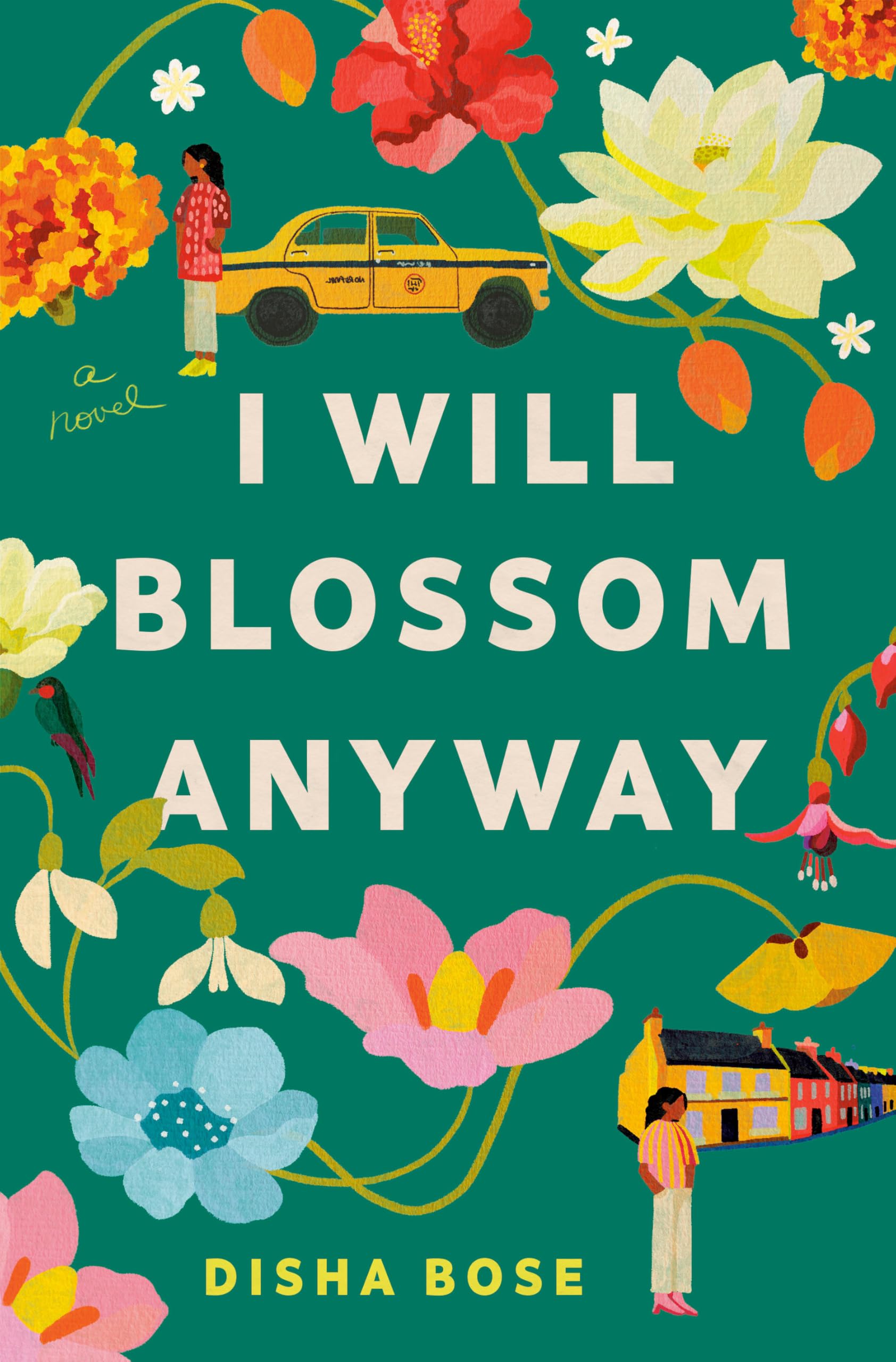



A romantic coming-of-age story about one woman’s inspiring journey to find self-love, reconnect with family, and forge a new path for her future, from the author of the Good Morning America Book Club pick Dirty Laundry Durga is named after the Bengali goddess—pure of heart, filled with goodness. But the goddess has an alter ego—fearless Kali, of fire and crackling with energy. The third of four children born to a middle-class Calcutta family, quiet Durga is surprisingly the first to leave the nest of her loving, overbearing family. She is not as charming as her older sister, Tia, as lighthearted as her brother, Arjun, or as clever as her younger sister, Parul. But when she arrives in Ireland to work at a tech company, she finds that for the first time ever she is free—to have fun, to stay out, to sample everything that life has to offer. Suddenly, Durga can be whoever she wants to be. And she wants it all. But freedom comes at a price. Durga falls in love with handsome, charismatic Jacob, and grows close with his sister, Joy, now Durga’s flatmate and best friend. But when Jacob breaks up with Durga, she’s unmoored. Will she stay in Ireland with her newfound identity and livelihood, or will she return to India, where she is comfortable? Perhaps neither option is enough. Durga must summon her inner Kali, the brave and fearless warrior, and fight for the life she truly desires. Modern, thought-provoking, and mirthful, I Will Blossom Anyway is a story about what it means to be caught between opposing worlds and the pressures and freedoms of millennial life, and what it really means to be a modern woman today—anywhere. Praise for Disha Bose “Bose masterfully creates deeply drawn and utterly human characters.” —Liv Constantine, New York Times bestselling author of The Next Mrs. Parrish “Disha Bose is a writer to watch.” —Joshilyn Jackson, New York Times bestselling author of Mother May I “An enormously talented author.” —Elizabeth Little, author of Dear Daughter “Disha writes stunning prose and her characters jump off the page.” —Nikki Smith, author of Look What You Made Me Do Disha Bose is the author of Dirty Laundry, which was a Good Morning America Book Club pick and named one of the best books of the year by Harper’s Bazaar and Elle . She received a master’s in creative writing at University College Dublin, where she was mentored by Booker Prize winner Anne Enright. She has been shortlisted for the DNA Short Story Prize, and her poetry and short stories have appeared in The Incubator Journal, The Galway Review, Cultured Vultures, and HeadStuff . Her travel pieces have appeared in The Economic Times and Coldnoon . Bose was born and raised in India and now lives in Ireland with her husband and daughter. Chapter 1 Bengal has always been ruled by goddesses. According to Hindu mythology, the all-forgiving Goddess Durga, pure of heart, became ensnared in a losing battle against a demon who was set to destroy all of humankind. When Goddess Durga stopped to look around the battlefield, she found nothing but death and destruction. She became frenzied with fury, at her own weakness against the demon, at the futility of this battle. That was when Kali appeared. Durga’s other form, her dark alter ego. Kali emerged right out of Durga’s forehead wielding a sword, wearing nothing but a sari made of a tiger’s skin. Kali was invincible. By the end of the battle, she had not only defeated the demon but had a garland of men’s skulls around her neck. She was on the warpath now, and in her anger couldn’t distinguish between good and evil anymore. So enraged was she that she wanted everyone and everything dead. So, while Durga gets her own ten-day celebration, we worship Kali in Bengal too, with hibiscus flowers and offerings of sweets. Durga is worshipped for the victory of good over evil, while Kali is worshipped for her strength. My parents named me Durga, perhaps in the hope that I might embody the Goddess’s virtues of integrity and goodness. But I yearned to feel the full force of Kali, for her to make my toes tingle, straining to be let out. My mind seems predisposed to expect decay too, the way Kali did. For instance, in autumn, all I notice is how leaves are so exhausted with life that they give up and fall to the ground. That animals begin to panic; gathering their food, hiding it, preparing to hibernate. The seasonal lattes are only a distraction; the hollowness of winter is forever looming in my background. I’ve always been an overthinker, allowing the possibility of complications to dampen my mood. I stopped getting manicures because I’d worry about chips and lifting from the moment I walked out of the nail salon. I’d spend all of Sunday feeling gloomy, anxious about sleeping through the Monday morning alarm. I found it impossible to enjoy the changing colors of autumn, or the relief of the crisp air after a muggy summer, only agonizing over a dark winter ahead. For