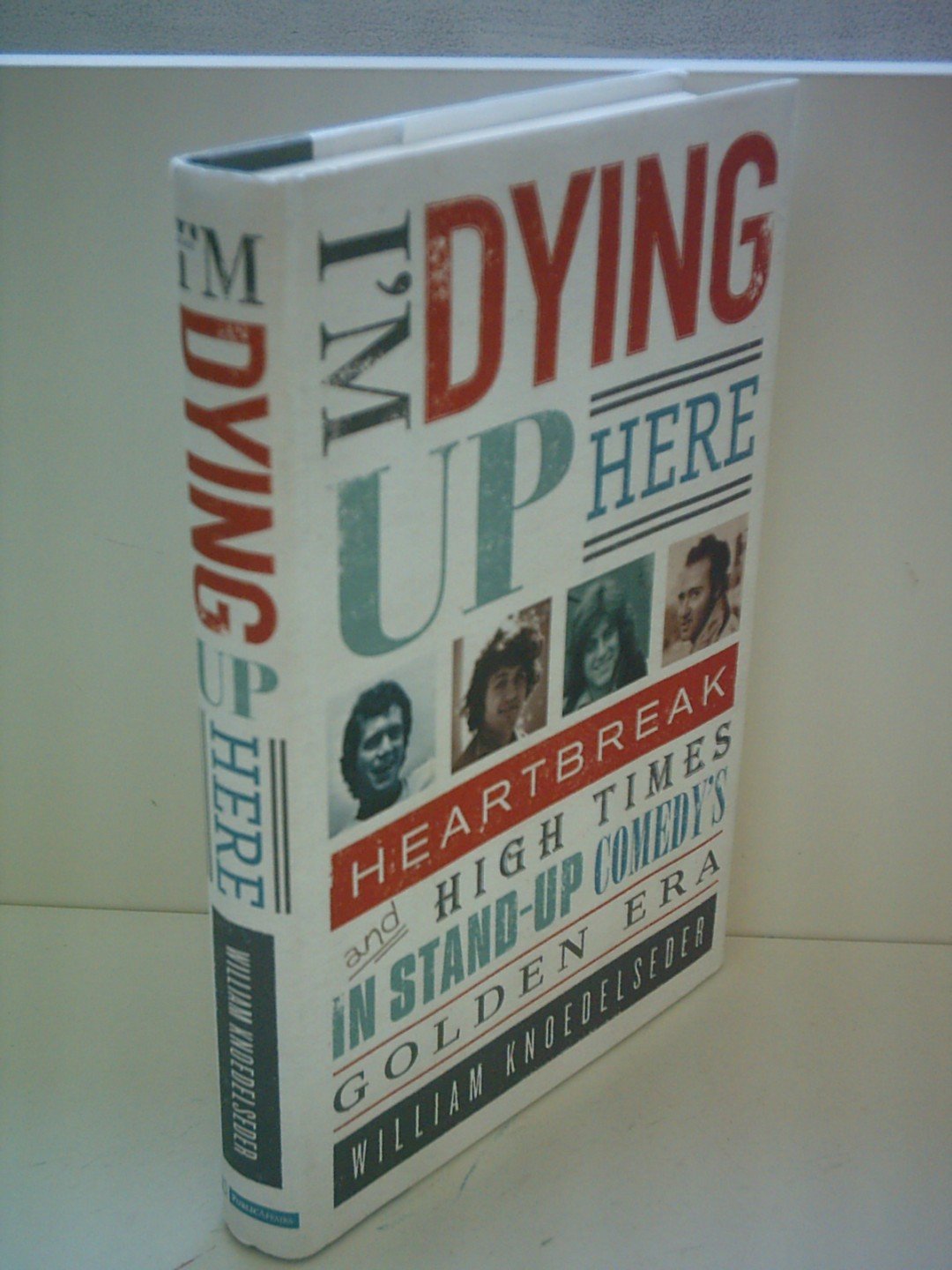
I'm Dying Up Here: Heartbreak and High Times in Stand-up Comedy's Golden Era
$26.99
by William Knoedelseder



In the mid-1970s, Jay Leno, David Letterman, Andy Kaufman, Richard Lewis, Robin Williams, Elayne Boosler, Tom Dreesen, and several hundred other shameless showoffs and incorrigible cutups from across the country migrated en masse to Los Angeles, the new home of Johnny Carson's Tonight Show . There, in a late-night world of sex, drugs, dreams and laughter, they created an artistic community unlike any before or since. It was Comedy Camelotbut it couldn't last. William Knoedelseder was then a cub reporter covering the burgeoning local comedy scene for the Los Angeles Times . He wrote the first major newspaper profiles of several of the future stars. And he was there when the comedianswho were not paid by the clubs where they performed tried to change the system and incidentally tore apart their own close-knit community. In I'm Dying Up Here he tells the whole story of that golden age, of the strike that ended it, and of how those days still resonate in the lives of those who were there. As comedy clubs and cable TV began to boom, many would achieve stardom.... but success had its price. Publishers Weekly, STARRED review “Knoedelseder skillfully layers powerful dramatic details, and readers will shelve the book alongside those other key classics on comedy.” Shelf Awareness “A revealing and entertaining look at the 1970s Los Angeles comedy scene and the labor dispute that ended its most glorious era.” Booklist “Fact-packed, highly readable history… peppered with plenty of portraits of struggling young comics, some destined for national fame, others headed to obscurity and, in a few cases, early death.” Buffalo News “One of the most eye-opening and informative books ever written about standup comedy…One of the books of the year for any student of American television and pop culture…A little-known story has now been told very well in perfect context. And when you finish the book you may feel as if you finally understand every comedian you see on TV for the first time.” Daily Variety “A lively new book…Knoedelseder reminds us that comedy is a dicey calling.” New York Times Book Review “Illuminating” William Knoedelseder has been a journalist with The Los Angeles Times , executive producer of Fox Entertainment News and of the Philadelphia Inquirer 's television news program Inquirer News Tonight,” and vice president of news at USA Broadcasting. He is the author of Stiffed: A True Story of MCA, The Music Business, and the Mafia , and In Eddie's Name . Born in St. Louis, Missouri, he lives near Los Angeles. From The Washington Post's Book World/washingtonpost.com Reviewed by Stephen Reiss In April 1972, a moderately successful comic named Sammy Shore opened a small club in Los Angeles called the Comedy Store. Fellow comics would hang out, perform -- unpaid -- and often drink free. At the end of the year, Shore left for several months to perform in Las Vegas and asked his wife, Mitzi, to run the club. Soon after he returned to L.A., though, the couple divorced and Mitzi got the Store. Over the next few years, her previously unrecognized talents as a businesswoman and impresario transformed it from what had been a hobby into one of the most important showcases for stand-up comedy in the country. One thing she didn't change was the club's policy of not paying its comics. The Comedy Store was billed as a workshop, a place for experimenting and trying out new material. Shore's practice of putting on scores of acts over the course of a week provided lots of opportunity for both established names and newbies who wanted to test themselves on a real stage before a paying audience. (There's a taste of this onstage mixology in the new Adam Sandler movie, "Funny People.") The roster of comics that Mitzi Shore helped develop is an impressive one by any measure: Jay Leno, David Letterman, Richard Pryor, Robin Williams, Richard Lewis, Andy Kaufman, Elayne Boosler. (To be fair, we also have to lay Gallagher and his fruit-smashing act at her door, as well as her son, Pauly, of which nothing more shall be said.) The Store's growing reputation attracted crowds -- both the public and industry insiders scouting for the next breakout star. Shore was making a bundle. The waitresses, the bartenders and the delivery guys were earning a living, too. The only people not getting paid were the comics. And eventually, they got fed up with starving for their art. This conflict forms the core of "I'm Dying Up Here." The author, William Knoedelseder, was a young reporter covering the comedy scene for the Los Angeles Times when all this was going on, and his book, forthcoming at the end of the month, is full of dishy, I-was-there detail about people who went on to become famous -- and occasionally rich -- being funny on TV. (Budd Friedman, the owner of the Improv, hired Les Moonves, now president and CEO of CBS, as his first bartender! Letterman played power forward on a Comedy Store basketball team along with Jimmie Walker