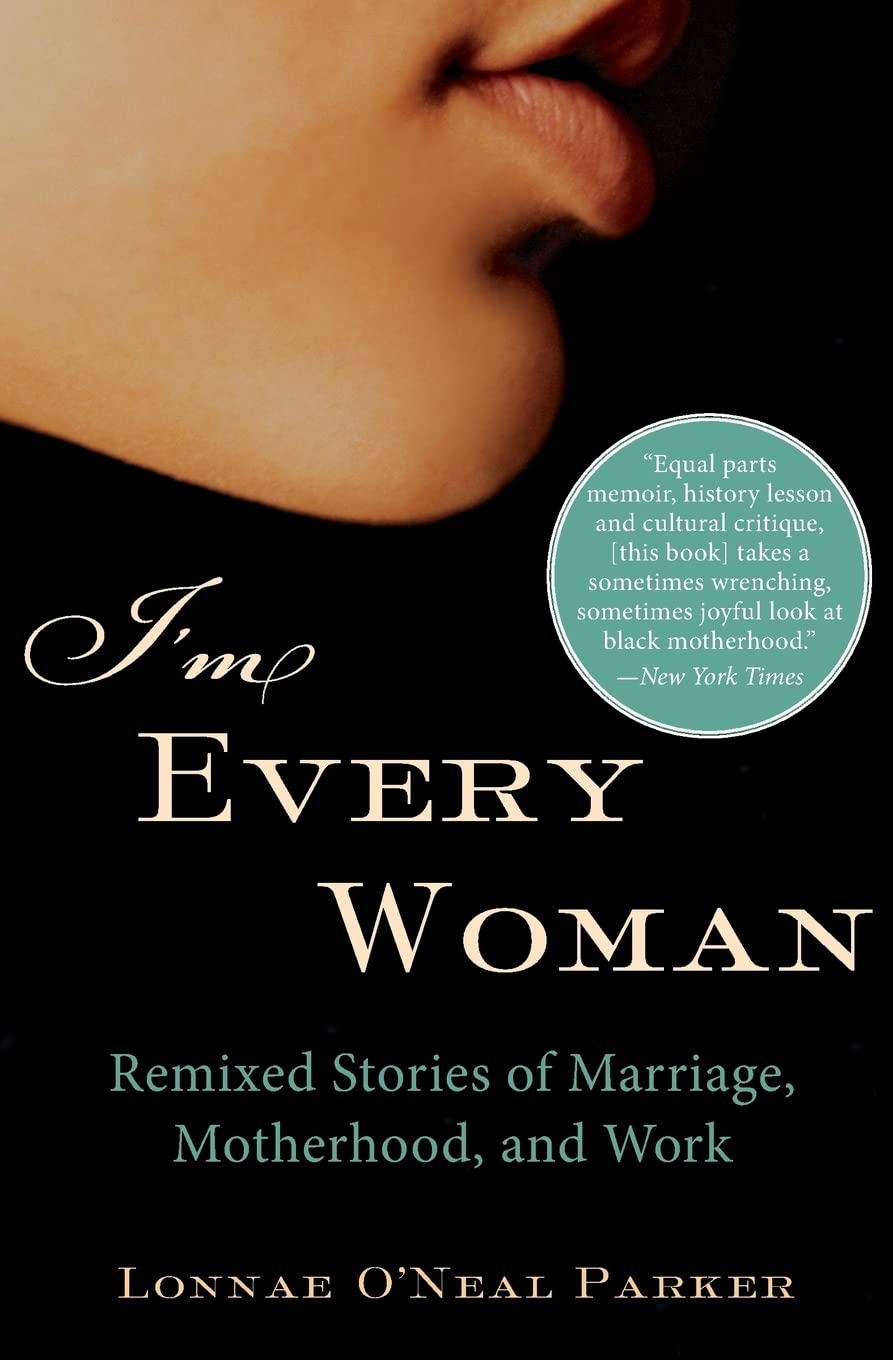
I'm Every Woman: Remixed Stories of Marriage, Motherhood, and Work – A Smart Memoir and Reportage on Black Women
$11.99
by Lonnae O'Neal Parker



Black women have been balancing the competing demands of work and home since before women even won the right to vote. But black voices are barely acknowledged in the mainstream "mommy wars" dialogue. Lonnae O'Neal Parker is determined to change that, in this uncommonly smart, highly acclaimed, and often witty examination—part memoir, part reportage—of how today's black women meet the challenges of marriage, motherhood, and work. “Equal parts memoir, history lesson and cultural critique [this book] takes a sometimes wrenching, sometimes joyful look at black motherhood.” - New York Times “A heartfelt and probing look at issues of race and gender” - Booklist “A provocative new book that takes a modern-day approach to Black motherhood.” - Essence ―“Adds gratifying complexity to the current literature about the experiences of American women of color.” - Naomi Wolf “Sharp insights into balancing the multiple roles that engage contemporary women.” - Publishers Weekly “Brilliant, humorous, and painfully honest….With pitiless self-examination and analytical acuity, Lonnae O’Neal Parker offers us a searing portrait of the demanding, yet rewarding, lives of black women. - Michael Eric Dyson Black women have been balancing the competing demands of work and home since before women even won the right to vote. But black voices are barely acknowledged in the mainstream "mommy wars" dialogue. Lonnae O'Neal Parker is determined to change that, in this uncommonly smart, highly acclaimed, and often witty examination—part memoir, part reportage—of how today's black women meet the challenges of marriage, motherhood, and work. Lonnae O'Neal Parker is a Pulitzer Prize–nominated reporter for the Washington Post and a contributing editor to Essence . She lives in Prince George's County, Maryland. I'm Every Woman Remixed Stories of Marriage, Motherhood, and Work By Lonnae Parker HarperCollins Publishers, Inc. Copyright © 2006 Lonnae Parker All right reserved. ISBN: 0060592931 Chapter One It's All in Me Anything you want done baby, I'll do it naturally . . . —Chaka Khan Not long ago, my husband, Ralph, and I were visiting good friends, a college buddy of Ralph's and his new wife, when they decided to break out their wedding DVD from the year before. We eagerly gathered around their family room television as they cued the disc. This should be delightful, I thought, because I had had more fun at Thomas and Ebony's wedding, on a small island off the coast of North Carolina, than any I'd ever been to. The reception was every bit as raucous as I remembered. Ebony's father boogied down a makeshift Soul Train line. The groom, my husband, and all the other brothers from their Omega Psi Phi fraternity performed their Nasty Que Dog hops with the same enthusiasm (if not elevation) as their undergraduate days at Duke. And then, caught on tape, there I was along with two other partygoers, dancing onstage with the lead singer from the band. He was shirtless under his shiny dark suit, like Butch Lewis at those old Sphinx Brother's prizefights you used to be able to catch on network television. Sweat dripped from his forehead and ran down his chest. The brother was hot, and we were doing our best to mop up after him. The three of us were professional women?an obstetrician with a thriving private practice, a financial analyst for a Fortune 500 company, and me, a reporter for a major metropolitan newspaper. Except that night, we were more like Oaktown 357. We fanned the singer's forehead. We blew deep, cooling breaths on his face and we wiggled him from behind as the video rolled, my husband snapped photos, and the band played on. In that moment captured for posterity, it didn't seem to matter that all of us had reached a certain status in our lives. That we had three husbands and nine children and performed more than 120 hours a week of highly compensated work between us. Of course, come to think of it, perhaps that is precisely why we danced with such abandon and clapped our hands with so much joy. My Lord, who the ones that don't know why the caged bird sings? Later in the video, the camera caught me doing a solo. By that time, it had begun to rain heavily. The warm, humid air mixed with the languid moves of a couple of hundred dancing black people to make my hair 1982-big just in time for my rendition of "We Are Family." I mouthed the words and pointed to all the wine-drinking women I had come to care for so deeply that weekend. Like I said, it was a real good time. And watching that video I was transported to another time. A mid-1970s time when I was a little girl and the whole world was the segregated South Side of Chicago. There is no discernible occasion to those old videos. Just my parents and grandparents, neighbors and cousins, loud-talking, hard-drinking, and card-playing; celebrating being together or fighting because they're in too close. Hammy children, shooed from the presence of "grown folks," dart in