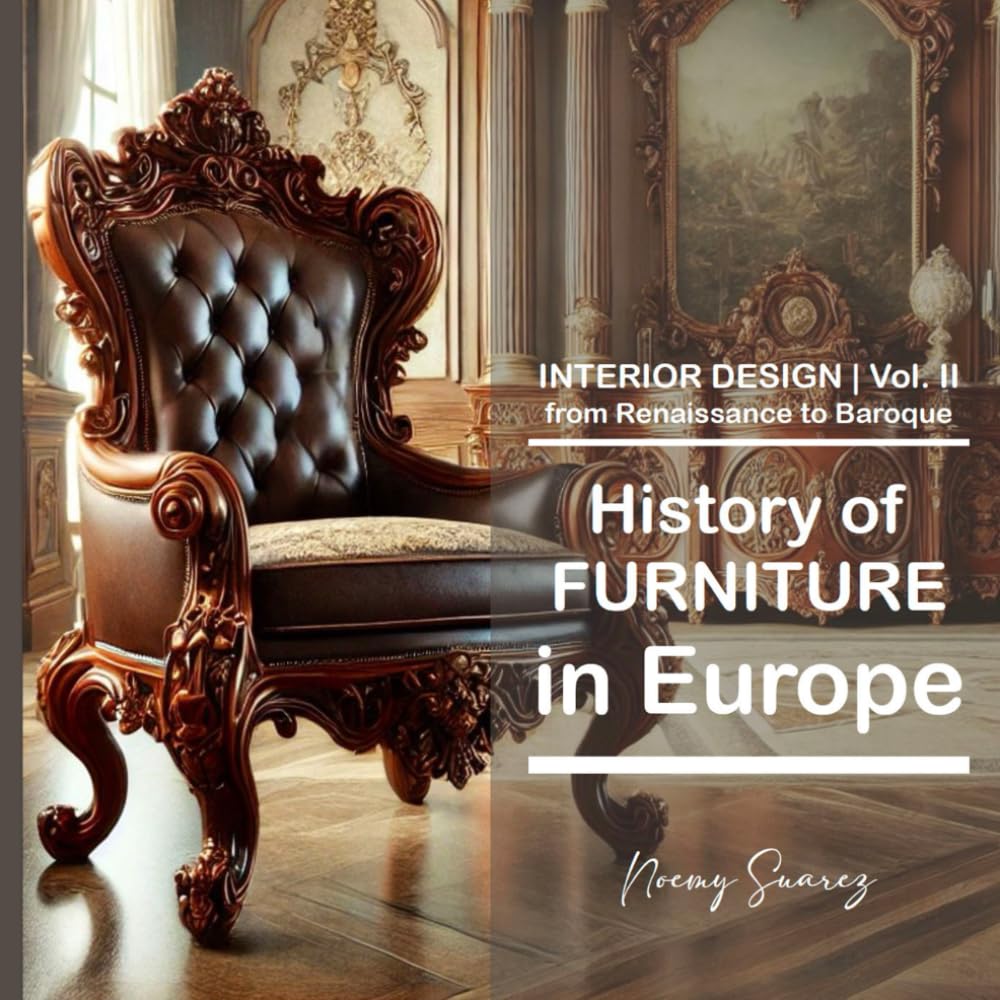
II History of FURNITURE in Europe:: from Renaissance to Baroque (History of Furniture and Interior Design in Europe)
$45.00
by Noemy Suárez



This volume explores European furniture during the Renaissance and Baroque periods as a central discipline of decorative arts and European art history. Furniture is analyzed not as isolated objects, but as cultural, architectural, and symbolic elements shaping interior space across Europe. In the first volume, we explore the evolution of furniture from its earliest manifestations in ancient civilisations to the ornamental richness of the Gothic period in the late Middle Ages. Throughout this journey, each piece and each style reflected the spiritual, social and aesthetic values of its time, leaving a tangible mark of history on European furniture. This second volume takes us into a new chapter of transformation: the Renaissance and the Baroque. With the advent of Humanism and the revival of classical art, European furniture begins to embrace harmonious proportions, meticulous detailing and new materials that elevate functionality to the status of art. As we move into the Baroque, we encounter an even more elaborate and decorative style, defining and embellishing palaces, churches and noble homes, giving furniture a central role in the expression of power and beauty. This volume delves into the styles and techniques developed during the Renaissance and Baroque periods, from Italian cabinetmakers to decorators of the French court, revealing the ornamental details and the art of decoration that define each era. Furniture from this time marks a shift toward greater sophistication and functionality, reflecting a rich cultural heritage showcased in every chapter. Each chapter in this volume is designed to connect history and technique, inviting you to immerse yourself in the details of an era of artistic splendour and to learn how European furniture flourished and reinvented itself with the Renaissance and Baroque. Volume II of History of Furniture in Europe explores one of the most decisive periods in the evolution of European furniture and interior design : from the Renaissance to the Baroque . This volume examines how power, representation, craftsmanship and artistic ambition transformed furniture into a symbolic and architectural element within European interiors. Through a rigorous historical and design-based approach , the book analyses the development of cabinetmaking, ornamentation, materials and techniques , revealing how furniture evolved alongside architecture, painting and the decorative arts. Renaissance rationality and Baroque exuberance are studied not as isolated styles, but as cultural systems that shaped the way spaces were conceived and inhabited . This volume places special emphasis on Italian, French and European workshops , court furniture, porcelain, decorative ceramics, textiles and pictorial techniques, highlighting their role in the construction of luxury, status and spatial hierarchy . Furniture becomes a key witness to social, political and artistic change. An essential reference for interior designers, architects, historians and design professionals seeking to understand the historical foundations of European interior culture , this second volume offers a clear, visual and structured reading of how Renaissance and Baroque furniture laid the groundwork for modern interior design. This book was born from a personal curiosity that has accompanied me for years: the desire to understand how furniture, interiors and everyday objects shape the way we live . European furniture history is rarely told from this perspective, yet it has a profound influence on our daily habits, our homes and our relationship with space. While researching the Renaissance and Baroque periods , I was especially drawn to the way furniture reflects social rituals, power structures and ways of inhabiting . These were not merely decorative objects, but witnesses to how people lived, gathered, celebrated and expressed identity through space. As an interior designer , I approach history not with nostalgia, but with professional curiosity and analytical intent . Understanding proportions, materials, craftsmanship and symbolism allows us to read furniture as a language — one that connects architecture, culture and interior design across centuries. This volume is part of a broader journey through European furniture history , where each period builds upon the previous one. Writing it has been a way of connecting past and present , and of rediscovering how many of today's design principles were already being explored during the Renaissance and Baroque. My aim is simple : to offer a clear, rigorous and emotionally engaging perspective for interior designers, architects and design-focused readers who want to understand not only how furniture looked, but why it became the way it is . This book was born from a personal curiosity that has accompanied me for years: the desire to understand how furniture, interiors and everyday objects shape the way we live . European furniture history is rarely