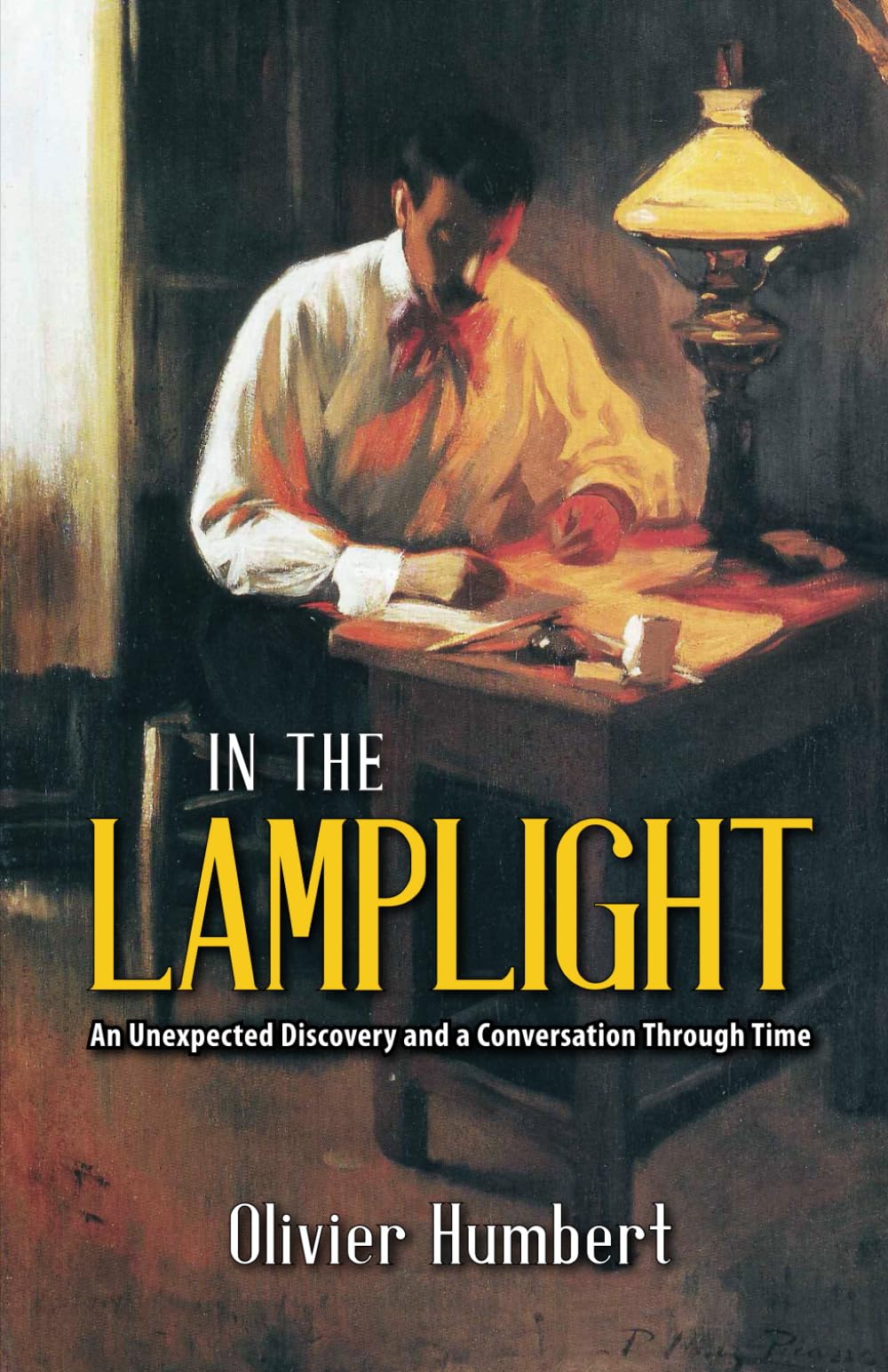
IN THE LAMPLIGHT: AN UNEXPECTED DISCOVERY and a CONVERSATION THROUGH TIME
$12.95
by OLIVIER HUMBERT



In the Lamplight reawakens the voice of Félix Le Molt, the author’s great-grandfather, through the rediscovery of his book of poems La Vie qui passe written one hundred years ago. The poet lived in an era of French history referred to as La Belle Époque, a fascinating time of great artistic and technological achievement, social and cultural change, and political turmoil. Importantly, its promise, potential, and perils are a reflection of our era and can serve as both guide and warning. How we understand our past determines our future. Published in 1922, La Vie qui passe consists of 84 poems that capture and preserve Félix Le Molt’s thoughts on nature, religion, society, the law (he was a judge), family, and our passage through time. Laureate of the 1952 Nobel Prize in literature François Mauriac, a family friend, provided a letter of introduction . This translation of his poetry affords the opportunity to examine the historical context of his life and times and offers an interpretation of his character, influences, and philosophy of life. His poetry gives us a valuable, relevant perspective on how to live. In the Lamplight , inspired by the poetry of La Vie qui passe , is a collection of essays, poems, and personal meditations woven together to create a philosophical, historical, cultural, and familial journey. BOOK LIFE PRIZE CRITIC'S REPORT Humbert forges an intriguing blend of French history, poetry, and family legacy in this expressive memoir, offering readers interpretations of his great-grandfather, Félix Le Molt's, poetry collection, La Vie qui passe. While exploring the meaning and purpose behind his poems, Humbert also probes his great-grandfather's daily life, holding it up as a mirror, of sorts, to contemporary life in America. Humbert presents his great-grandfather's poems in both French and English, writing in flush, descriptive prose that imagines rich conversations with his ancestor and probes cultural nuances from the customs of the time. This is a refreshing approach to a memoir: a combination of family history, cultural insight, and poetry that gives readers a fascinating slice of history. Le Molt is vividly developed through his writing as well as through Humbert's interpretation of his feelings and life philosophy. The speculative conversations Humbert pens between himself and his great-grandfather add depth to the book's cultural and historical overtones. BOOKLIFE Humbert presents and examines a vital piece of family and cultural history as he recounts his surprise encounter with a literary legacy and then takes the steps to share it with the world. After the death of his mother, Humbert discovered, in an antique secretary desk in her home, a 1922 collection of poetry written by his great-grandfather, Félix Le Molt, entitled La Vie qui passe . He has been given a gift—"a rare opportunity to learn, think, and converse with an ancestor"—Humbert was moved to translate Le Molt's poetry for future family generations. Through reading, translating, and interpreting these verses, Humbert conjures up his great-grandfather in this volume that shares the poems themselves, in French and English, but also an emotional family memoir alive with insights into history and heritage. Drawing parallels between his great-grandfather's life over a century apart, Humbert envisions conversations with Le Molt himself—"America!" he muses, "What an enigma. Admired, feared, respected, and resented all at once." This imagined Le Molt offers welcome, at times amusing, interpretive guidance. The poems illuminate a tumultuous period of French history, politics, and culture. Le Molt's verses burst with passion, lyricism, vivid imagery ("Autumn makes its entrance / Sowing gold on the hill's gradient"), and captivating metaphors whose meanings get teased out by Humbert. Humbert honors not only Le Molt but a long line of relations whose stories power the prose passages. Fans of classic poetry and cross-generational connections will find this compelling, moving, and full of insight into art, time, and inheritance. Takeaway: Moving, lovely encounter with a forebear's 1920s French poetry.