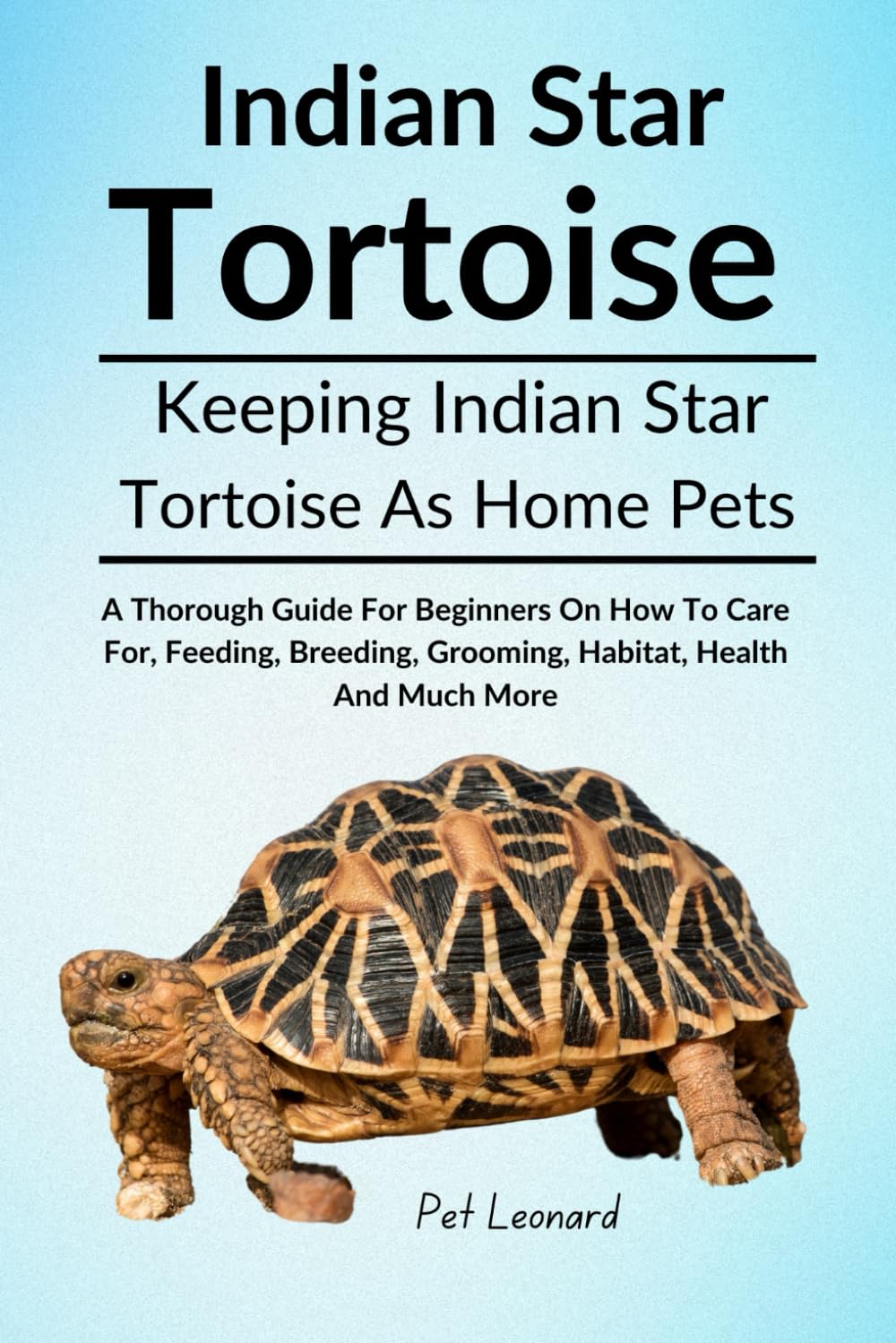
INDIAN STAR TORTOISE: A Thorough Guide For Beginners On How To Care For, Feeding, Breeding, Grooming, Habitat, Health And Much More
$12.99
by Pet Leonard



The Indian Star Tortoise (Geochelone elegans) is a small to medium-sized tortoise species native to South Asia. It is named for the star-like radiating patterns on its domed shell, which provide natural camouflage in its arid and grassy habitats. This unique appearance makes it highly sought after in the pet trade, though it also plays a role in its natural survival. Indian Star Tortoises are known for their gentle and shy demeanor. They are non-aggressive and are generally solitary in the wild, coming together only during mating season. Their lifespan can range from 35 to 80 years when properly cared for, making them a long-term commitment for pet owners. Physical Characteristics: Shell: The shell features a dark brown or black base color with bright yellow radiating lines, creating the "star" effect. Size: Adults typically measure 7–10 inches in length, with females being larger than males. Weight: They weigh between 1.5 to 3 pounds, depending on their age and gender. Limbs: Their legs are sturdy and well-adapted for walking on uneven terrain. Distribution: The species is native to India, Sri Lanka, and parts of Pakistan. It is primarily found in semi-arid and dry environments, often inhabiting scrublands, grasslands, and thorny forests. Natural Habitat and Behavior Habitat: In the wild, Indian Star Tortoises inhabit regions with seasonal rainfall, where they rely on the monsoon season for hydration and food availability. Their natural habitat includes: Arid Grasslands: These provide open areas for grazing on grasses and small plants. Scrub Forests: Offer shelter from predators and harsh weather. Rocky Terrain: Useful for basking and avoiding excessive heat. They are highly adapted to environments with fluctuating temperatures and rely on shaded areas and burrows to regulate their body temperature. Behavior: Daily Activity: Indian Star Tortoises are generally crepuscular, meaning they are most active during the cooler parts of the day—early morning and late afternoon. Diet: They are herbivorous, primarily feeding on grasses, leafy greens, flowers, and fruits in their natural environment. Reclusive Nature: Known for being shy and reserved, these tortoises often retreat into their shells when they feel threatened. Basking: They require sunlight or warm surfaces to regulate their body temperature, spending a significant amount of time basking during cooler seasons. Seasonal Behavior: During the dry season, they are less active and may retreat to burrows or shaded areas to conserve energy and hydration. They become more active during the monsoon season, which provides an abundance of food and water. Social Interaction: In the wild, Indian Star Tortoises are largely solitary. However, during the breeding season, males may display competitive behaviors, including nudging or flipping each other, to establish dominance for mating rights. The adaptability and resilience of the Indian Star Tortoise in its natural environment make it a fascinating species, though replicating these conditions in captivity requires careful attention to detail and commitment.