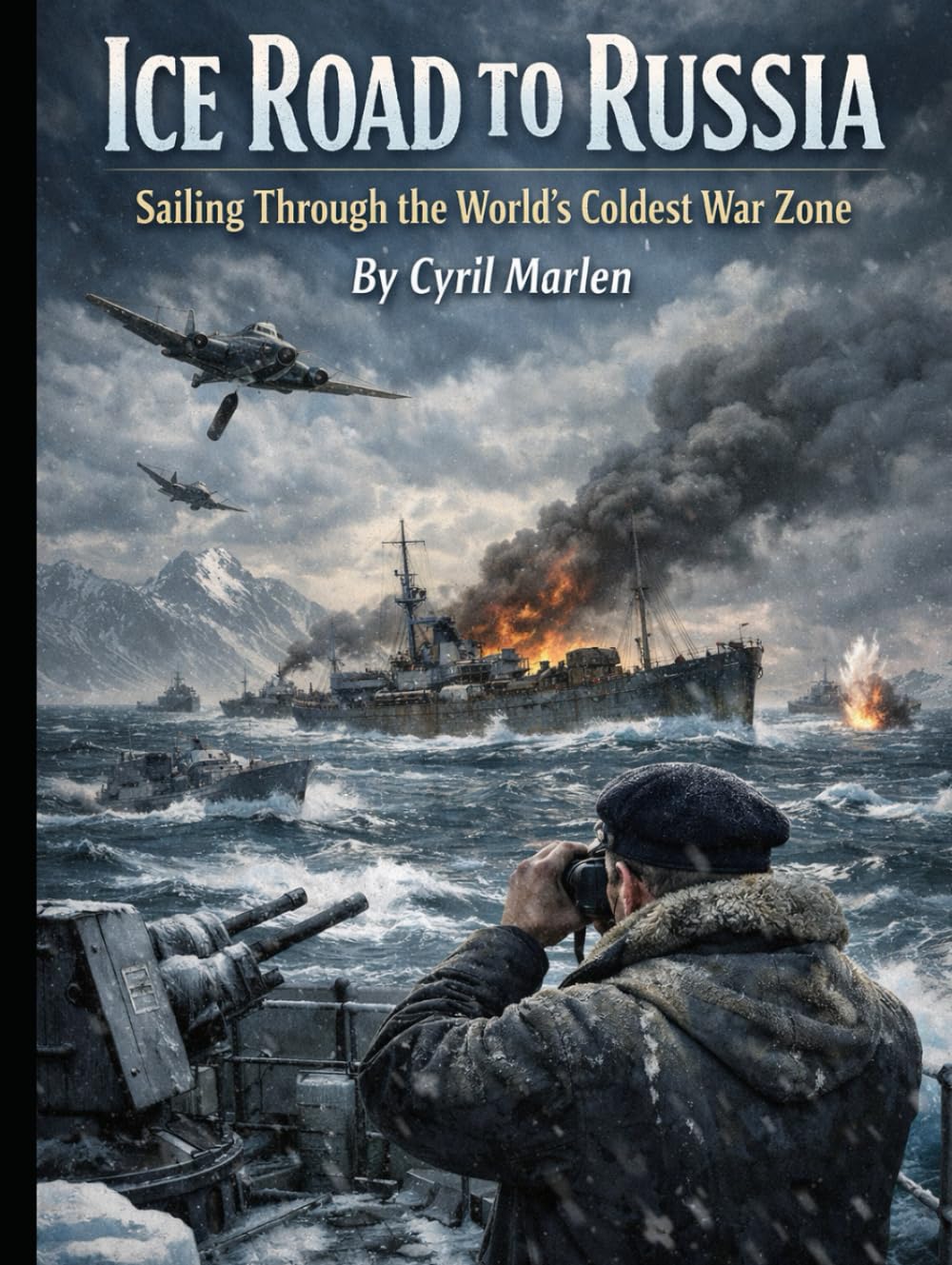
Ice Road to Russia: Sailing Through the World’s Coldest War Zone (Everything World War 2 - WWII)
$24.99
by Cyril Marlen



Ice Road to Russia is a gripping, true account of the British Arctic Convoys of the Second World War, told in a clear, narrative style that brings the reader onto the freezing decks and into the tense silence between attacks. These were not routine supply runs. They were a lifeline drawn across the top of the world, carrying tanks, aircraft, trucks, fuel, food, and raw materials to the Soviet Union at the moment it was fighting for survival. The route was short on the map, but it ran beneath the enemy’s balcony in occupied Norway, where German aircraft, U-boats, and heavy warships waited to strike. Cyril Marlen traces the convoys from their urgent beginnings in 1941, when strategy and desperation fused into action, through the day to day realities of life in a world where the cold could be as deadly as a torpedo. Steel decks became skating rinks. Salt spray turned to armour. Men chipped ice for hours to keep ships stable. In blackout conditions, columns held formation by instinct and discipline, knowing that a single light could betray them. The Arctic itself was a constant threat, narrowing the margin for error until even simple tasks became dangerous. This is also the story of escort warfare at its most unforgiving. Destroyers, corvettes, and trawlers hunted unseen predators with sonar and depth charges while also fighting storms, fuel limits, exhaustion, and the relentless pressure of keeping vulnerable merchant ships alive. The book explains what these escorts could do, and what they could not, without losing sight of the human cost behind every technical detail. At the heart of the narrative is the convoy experience, long stretches of tense endurance punctured by sudden violence, and the knowledge that rescue in Arctic waters could be heartbreakingly uncertain. The book explores the enemy in layers, reconnaissance aircraft that seemed to watch without blinking, bombers and torpedo planes skimming in under cloud, submarines working in packs, and the looming possibility of heavy ships appearing out of the grey like moving fortresses. It also confronts one of the darkest episodes of the campaign, PQ 17, where fear and imperfect information led to decisions that scattered ships into catastrophe, leaving a lasting mark on morale and trust. Arrival in Murmansk and Archangel is shown as a new phase of strain rather than a simple ending, with mined approaches, ice, air raids, and the pressured reality of Soviet harbour life. Alongside the hard history, the book includes brief, humane moments that reveal the strange warmth that can exist in wartime, a shared cigarette, a nod across language barriers, a quiet recognition between allies who did not always understand each other. Ice Road to Russia is both a historical account and a tribute to the men who sailed one of the most dangerous routes of the war. It shows what the convoys achieved in practical terms, what they cost in ships and lives, and why their story matters beyond naval history. This is endurance written in cold water and steel, a reminder that victory was built not only by grand battles, but by repeated journeys into a place where the sea, the sky, and the enemy all seemed determined to erase you, and where the only option was to keep going.