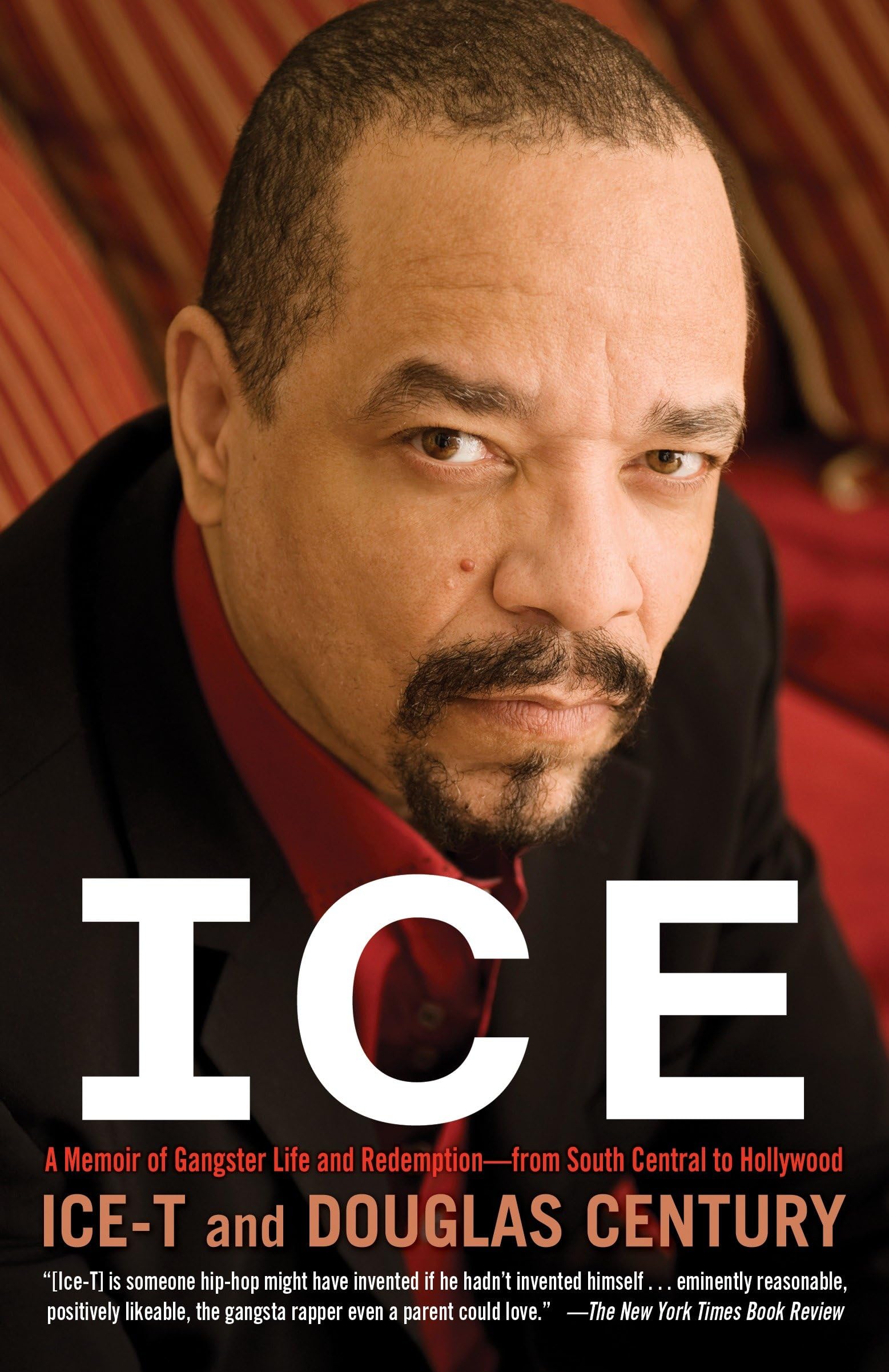



He’s a hip-hop icon credited with single-handedly creating gangsta rap. Television viewers know him as Detective Odafin “Fin” Tutuola on the top-rated drama Law & Order: SVU . But where the hype and the headlines end, the real story of Ice-T—the one few of his millions of fans have ever heard—truly begins. Ice is Ice-T in his own words—raw, uncensored, and unafraid to speak his mind. About his orphan upbringing on the gang-infested streets of South Central, his four-year stint in the U.S. Army, his successful career as a hustler and thief, and his fateful decision to turn away from a life of crime and forge his own path to international stardom. Along the way, Ice shares never-before-told stories about friends such as Tupac, Dick Wolf, Chris Rock, and Flavor Flav, among others. And he offers up candid observations on marriage and monogamy, the current state of hip-hop, and his latest passion: mentoring at-risk youths around the country. With insights into the cutthroat world of the street—and the cutthroat world of Hollywood— Ice is the unforgettable story of a true American original. “In his spare, plainspoken autobiography, Ice-T speaks freely and unapologetically. . . . Ice is a good name for this memoir—its writer is a cool cat.”— Los Angeles Times “Ice-T, in short, is someone hip-hop might have invented if he hadn’t invented himself. . . . Ice showcases an eminently reasonable, positively likeable guy, the gangsta rapper even a parent could love.”— The New York Times Book Review “A fascinating memoir, the pages of which are jam-packed with tales of a guy who ‘actively did everything I rhymed about.’ ”—Associated Press “A boldly opinionated, bracingly street-tough memoir.”— Kirkus Reviews “[An] inspiring story.”— Booklist Tracy Marrow a/k/a Ice-T was born in New Jersey. As an only child whose parents died when he was very young, Ice-T became involved in Los Angeles gangs before spending four years in the army. He released a string of groundbreaking West Coast rap records and formed the thrash-metal band Body Count, whose 1991 self-titled debut contained the controversial single “Cop Killer.” He currently stars as Detective Fin Tutuola on Law & Order: SVU . Douglas Century is the author of Barney Ross: The Life of a Jewish Fighter and Street Kingdom: Five Years Inside the Franklin Avenue Posse , and is the co-author of the New York Times bestsellers Takedown and Under and Alone . He has written frequently for The New York Times , among many other publications, and is a contributing editor at Tablet Magazine. part one Cold as Ice “It’s hell to be an orphan at an early age This impressionable stage No love breeds rage.” —“I Must Stand” 1. because I first made my name as a rapper claiming South Central L.A., people often assume I’m strictly a West Coast cat. But my family was actually from back East. I was born in Newark, New Jersey, and grew up in Summit, an upscale town in north Jersey. There was this tiny area of Summit where most of the black families lived. My parents and I lived in a duplex house on Williams Street. And on the street right behind us—backyard to backyard—was my aunt, my father’s sister. For my first few years, it was just a real middle-American life. I don’t remember taking any trips or anything exciting. One thing I do remember, when my dad would take me places, he would get White Castle burgers and throw me in the backseat, and he expected me to eat my White Castles and be quiet. My dad and I spent a lot of time together not saying anything. I went to the YMCA, where I learned how to swim and do gymnastics. It was kind of a big deal to have a membership to the Y, because it meant your Pops had money to spend on you. I remember going from Pollywog to Dolphin, then graduating to Shark and Lifesaver, and I’m pretty proud of the fact that I learned to be a good swimmer. There wasn’t any violence or trauma. It was quiet, simple, and suburban. An almost perfect childhood—except, for me, every couple years, losing a parent . . . My father’s family came from Virginia and Philadelphia. He wasn’t a brother who talked a lot. He was a workingman, a quiet, blue-collar dude. For years—decades—he worked at the same job. He was a skilled mechanic at the Rapistan Conveyer Company in Mountainside, fixing conveyer belts. Despite the fact that Summit is predominantly white, I can’t say there was overt prejudice in the town, at least not within the adult world as I observed it. All my father’s friends, all the guys he worked with, were white working-class dudes. Lunch-bucket dudes. Black and white, they were all cool with one another. My father was a dark-skinned brother, but my mother was a very fair-skinned lady. From what I understand she was Creole; we think her people originally came from New Orleans. She looked almost like a white woman, which meant she could pass—as folks used to say back then. Her hair was jet-black. She was slim and very attracti