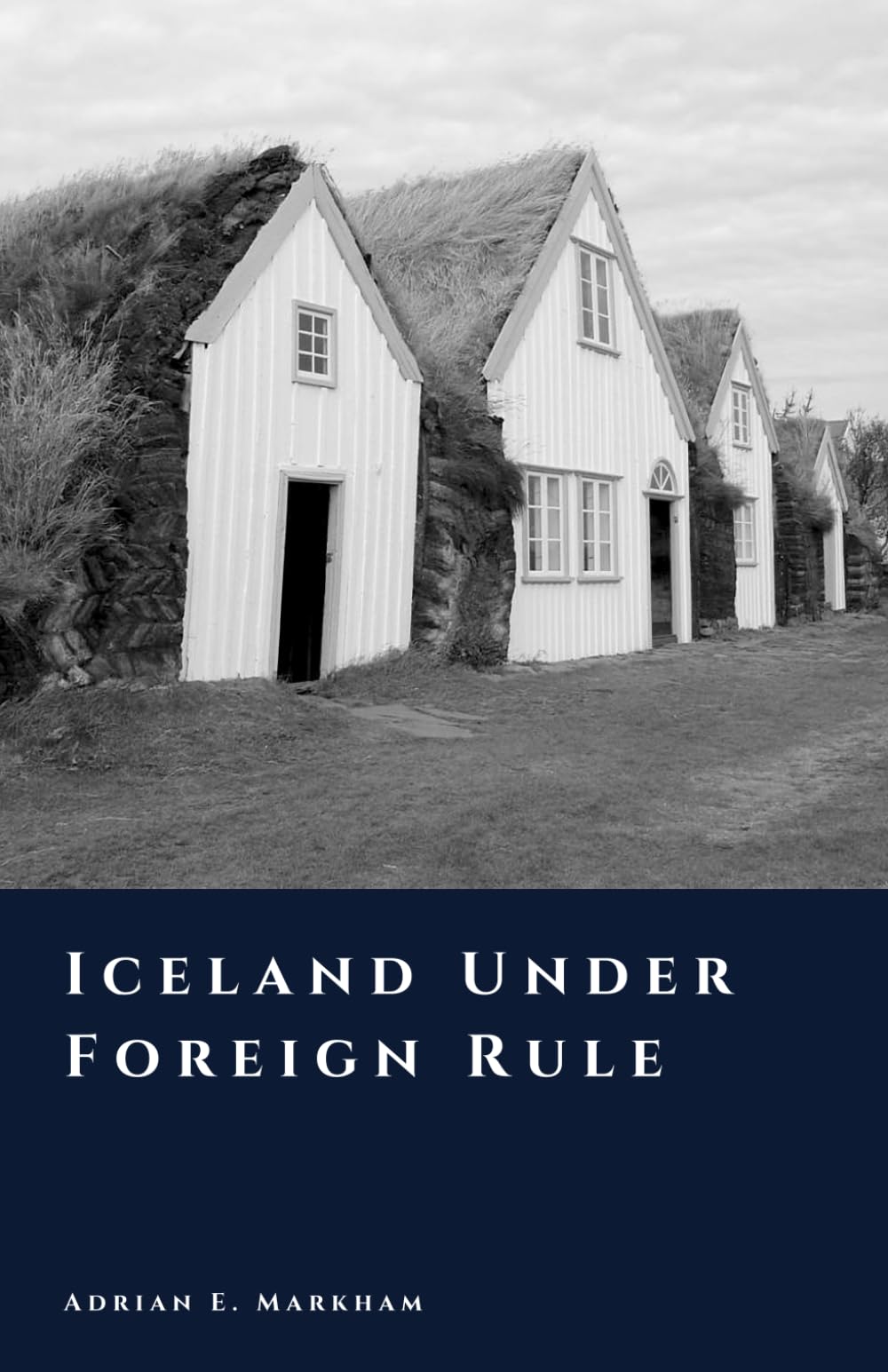
Iceland Under Foreign Rule: Norway, Denmark, and Dependency (The Story of Iceland)
$14.99
by Adrian E. Markham



Iceland Under Foreign Rule: Norway, Denmark, and Dependency by Adrian E. Markham traces six centuries of quiet endurance under distant kings. From the island’s negotiated submission to Norway in the 1260s to the grant of autonomy in 1874, it follows how Iceland’s people survived foreign rule through law, literacy, and faith. Markham reveals a society governed from afar yet rich in inner discipline, where dependence became a moral art and endurance a way of life. The book explores the realities of administration and trade under Norway and Denmark, the rise of the Church as both landlord and guardian of learning, and the long struggles with famine, disease, and volcanic catastrophe. Amid these hardships, Iceland’s cultural continuity never faltered. The old law code Jónsbók , the saga manuscripts, and the persistence of the Icelandic language preserved a sense of nationhood long before independence became possible. Drawing on chronicles, letters, and reform records, Markham brings to life bishops, merchants, and farmers who quietly prepared their country for freedom. Figures such as Skúli Magnússon and Jón Sigurðsson stand at the threshold of renewal, linking patience to progress. Clear, reflective, and grounded in history, Iceland Under Foreign Rule reveals how sovereignty can grow not through conquest but through endurance.