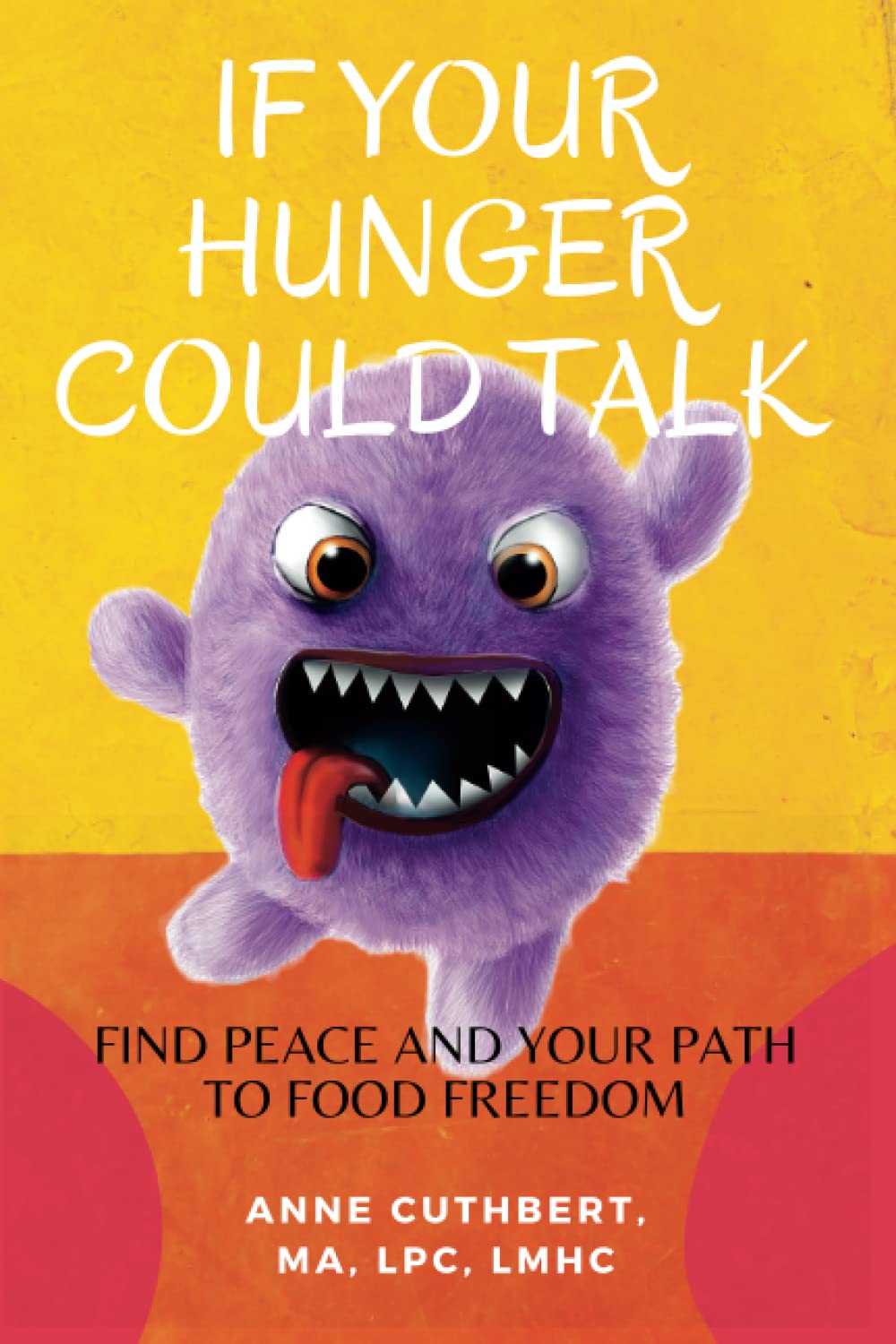
If Your Hunger Could Talk: Find Peace and Your Path to Food Freedom
$9.99
by Anne Cuthbert MA, LPC, LMHC



If you’ve picked up this book, you’re likely tired of the yo-yo feelings that come from dieting and restricting. More and more you may be experiencing episodes of overeating, eating what you don’t want, and possibly bingeing. You feel depressed and anxious. You don’t know how to stop this obsessive thinking about food and your body, and you feel afraid to try. You’ve been doing this for so long that you wonder whether it’s even possible to stop; you fear that, if you don’t, your life will never improve. You feel as if you’re going crazy and you’re the only one with these problems. You feel ashamed, alone, and desperate. You need help, but you feel so afraid to talk about it. You feel bad about yourself, you shy away from any discussion about body issues or you talk about diet and weight all the time. You live in a secret world, distanced from those you love. You’ve had it, you want to make a change, you’re ready to take one small step. You did it. You picked up this book! You’re on your way to changing your eating disorder behaviors and gaining your life back. Picking up this book is the first small step to making changes in yourself. Now all you need to do is take another small step. All these small steps, no matter how small they seem, will get you where you want to go. You’ll find true happiness when you get there. Most people who come to see me feel desperate. They’re in pain because of their disordered eating and they don’t know how to stop. Unfortunately, their efforts to change—for example, dieting—take them further into the pain of disordered eating. Sound familiar? Dieting and restricting only increase thoughts about food and can lead to bingeing. Over time, the restrictive behaviors worsen and you feel more and more out of control. What is an eating disorder, and do you have one? Although I’ll use the words “eating disorder behaviors” in different order and in different ways throughout this book, I don’t necessarily mean behaviors that fit nicely into the categories of anorexia, bulimia, or binge-eating disorder. There are many activities that constitute eating disorder behaviors. Bingeing, vomiting, over-exercising, under-exercising, restricting food intake, eating “diet” foods, cruel self-criticism, feeling bad about eating certain foods, hating your body, obsessing about food, and constantly talking about food and about how you look are all examples of eating disorder behaviors. Please don’t be scared off by the phrase “eating disorder.” All it means is that you experience a disordered relationship with food and your body, and that you engage in certain behaviors to cope with challenges in your life. Put a checkmark next to each action you engage in: Dieting - Restricting food intake - Eating the same foods day after day, especially if you fear adding in more - Binge eating - Compulsive eating - Emotional eating - Eating when you’re not hungry - Continuing to eat when you’re full - Eating food you don’t like - Vomiting to get rid of eating too much food or “bad” foods - Exercising to get rid of eating too much food or “bad” foods - Going to sleep to get rid of eating too much food or “bad” foods - Criticizing yourself to get rid of eating too much food or “bad” foods