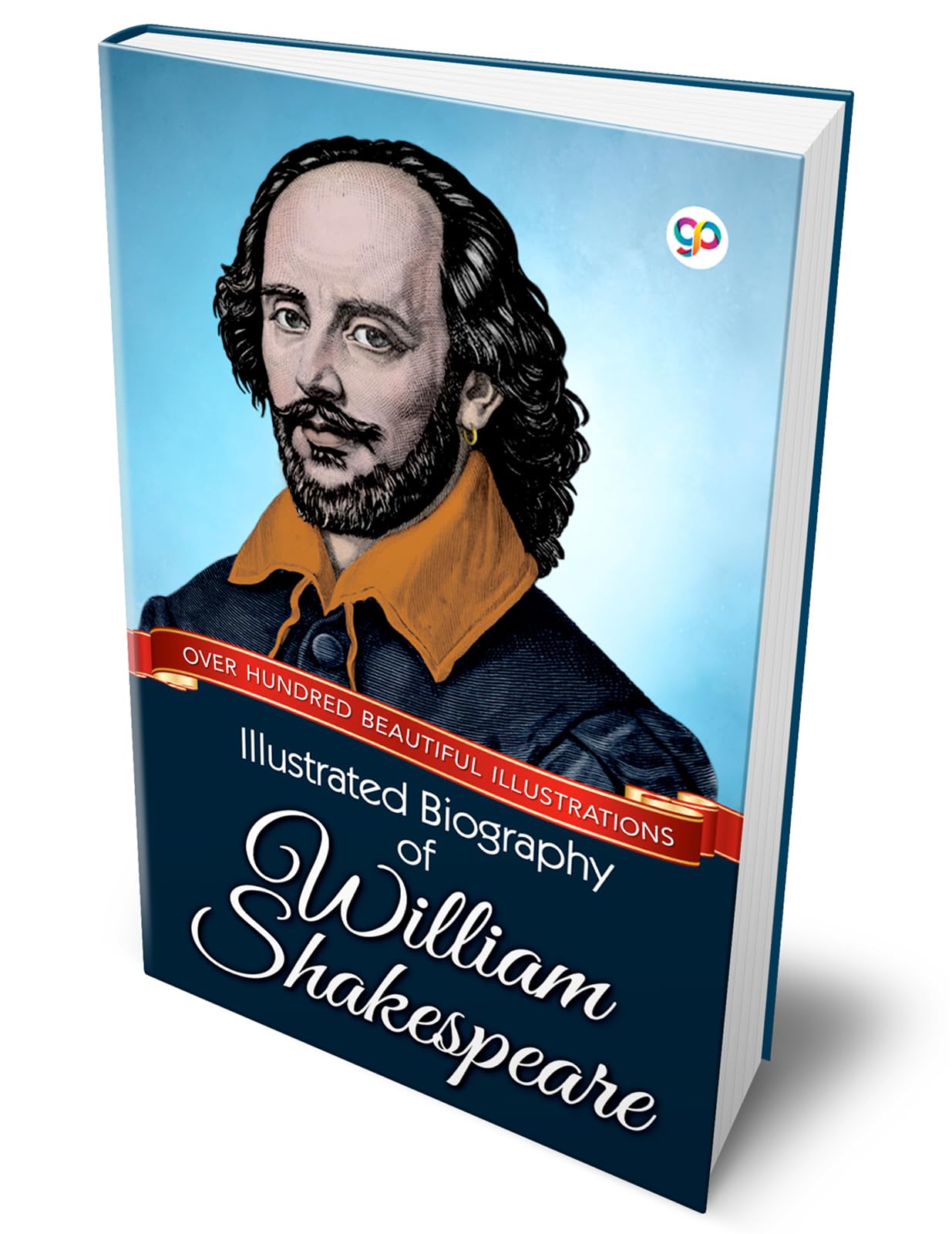
Illustrated Biography of William Shakespeare (General Press POD Books)
$9.99
by Manju Gupta



Illustrated Biography of William Shakespeare by Manju Gupta book pdf
Published by General Press
Buy from Amazon Books
Hardcover Book 9789387669246, 9387669246 Hundreds of years have passed since William Shakespeare's time. He has left behind nearly a million words of text, but his life is still a mystery. This book is an engaging introduction to a subject that students will certainly encounter many times throughout their education—and their lives. Lucid language and dramatic illustrations re-create the Bard's world of kings and queens, fairies and potions, and bloody beheadings. It imparts an amazing amount of vivid, interesting material about place, period and background of Shakespeare. This sweeping account is a biography, a history, and a retelling of some of Shakespeare’s most famous plays—all in one approachable volume. Salient Features: • Shakespeare's Early Life • Life as Playwright and Actor • Theatre Companies • Style of Presentation • Last Years of Life • England of Shakespeare's Days • Drama in Shakespeare's Days • Shakespeare's Greatness as a Poet • Shakespeare's Influence • Works of Shakespeare in detail • Principal Facts of Shakespeare's Life www.generalpress.in High quality POD book William Shakespeare, often hailed as the "Bard of Avon" and the greatest writer in the English language, stands as an unparalleled figure in world literature. Born in Stratford-upon-Avon, his life bridged the Elizabethan and Jacobean eras, a period of immense cultural and social transformation in England. While many details of his private life remain shrouded in mystery, the surviving records and his prodigious body of work—comprising approximately 39 plays, 154 sonnets, and several long narrative poems—provide a compelling narrative of a man who rose from a small market town to become an international literary titan. William Shakespeare was baptized on April 26, 1564, and his birthday is traditionally celebrated on April 23rd, Saint George's Day, a fitting tribute for England’s national poet. He was the third of eight children born to John Shakespeare and Mary Arden. His father, a successful glover and wool dealer, was a prominent citizen in Stratford-upon-Avon, holding various public offices, including that of bailiff (similar to a mayor). Mary Arden came from a family of wealthy landowners, giving the young William a comfortable, if not luxurious, upbringing. It is widely believed that Shakespeare attended the King's New School in Stratford, a grammar school that would have provided him with a rigorous classical education. The curriculum was centered on Latin and classical literature, including the works of Roman dramatists like Terence and Plautus and poets like Ovid. This foundational knowledge would later become evident in the plots, characters, and rhetorical devices of his plays. At the age of 18, in November 1582, Shakespeare married Anne Hathaway, a woman from the nearby village of Shottery, who was eight years his senior and already pregnant. Their first child, a daughter named Susanna, was born six months later in May 1583. Two years after that, in 1585, the couple had twins, Hamnet and Judith. Following the birth of his twins, Shakespeare disappears from the historical record for a period of about seven years, from 1585 to 1592. These years, often referred to as "the lost years," are a source of great speculation and debate among scholars. Theories range from him working as a schoolmaster, a lawyer's clerk, or even a traveling actor. The most plausible theory is that he went to London to begin his apprenticeship in the theater, a move that would ultimately change his life and the course of literary history. The London Stage and The Lord Chamberlain's Men By 1592, Shakespeare's name had emerged in the London theater scene. He was already a recognized playwright, as evidenced by a rival dramatist, Robert Greene, who in a scathing pamphlet, A Groatsworth of Wit, criticized Shakespeare as an "upstart crow" who was "beautified with our feathers." This hostile comment, while a sign of professional rivalry, is also the first concrete evidence of Shakespeare's success as both an actor and a playwright. London at the time was a vibrant hub of artistic and economic activity, and the theater was its pulsing heart. Shakespeare's career flourished, and by 1594, he had become a founding member and a "sharer" (a part-owner) of a leading acting company, the Lord Chamberlain's Men. This partnership was a shrewd business move; as a shareholder, he earned a portion of the company's profits, providing him with a stable and substantial income. This allowed him to move beyond the precarious life of a freelance playwright and gain financial independence. Shakespeare's prolific output during this period is astonishing. He wrote, on average, two plays a year for nearly two decades. His early works were primarily comedies and histories. These include witty and intricate comedies like The Comedy of Errors an
Published by General Press
Buy from Amazon Books
Hardcover Book 9789387669246, 9387669246 Hundreds of years have passed since William Shakespeare's time. He has left behind nearly a million words of text, but his life is still a mystery. This book is an engaging introduction to a subject that students will certainly encounter many times throughout their education—and their lives. Lucid language and dramatic illustrations re-create the Bard's world of kings and queens, fairies and potions, and bloody beheadings. It imparts an amazing amount of vivid, interesting material about place, period and background of Shakespeare. This sweeping account is a biography, a history, and a retelling of some of Shakespeare’s most famous plays—all in one approachable volume. Salient Features: • Shakespeare's Early Life • Life as Playwright and Actor • Theatre Companies • Style of Presentation • Last Years of Life • England of Shakespeare's Days • Drama in Shakespeare's Days • Shakespeare's Greatness as a Poet • Shakespeare's Influence • Works of Shakespeare in detail • Principal Facts of Shakespeare's Life www.generalpress.in High quality POD book William Shakespeare, often hailed as the "Bard of Avon" and the greatest writer in the English language, stands as an unparalleled figure in world literature. Born in Stratford-upon-Avon, his life bridged the Elizabethan and Jacobean eras, a period of immense cultural and social transformation in England. While many details of his private life remain shrouded in mystery, the surviving records and his prodigious body of work—comprising approximately 39 plays, 154 sonnets, and several long narrative poems—provide a compelling narrative of a man who rose from a small market town to become an international literary titan. William Shakespeare was baptized on April 26, 1564, and his birthday is traditionally celebrated on April 23rd, Saint George's Day, a fitting tribute for England’s national poet. He was the third of eight children born to John Shakespeare and Mary Arden. His father, a successful glover and wool dealer, was a prominent citizen in Stratford-upon-Avon, holding various public offices, including that of bailiff (similar to a mayor). Mary Arden came from a family of wealthy landowners, giving the young William a comfortable, if not luxurious, upbringing. It is widely believed that Shakespeare attended the King's New School in Stratford, a grammar school that would have provided him with a rigorous classical education. The curriculum was centered on Latin and classical literature, including the works of Roman dramatists like Terence and Plautus and poets like Ovid. This foundational knowledge would later become evident in the plots, characters, and rhetorical devices of his plays. At the age of 18, in November 1582, Shakespeare married Anne Hathaway, a woman from the nearby village of Shottery, who was eight years his senior and already pregnant. Their first child, a daughter named Susanna, was born six months later in May 1583. Two years after that, in 1585, the couple had twins, Hamnet and Judith. Following the birth of his twins, Shakespeare disappears from the historical record for a period of about seven years, from 1585 to 1592. These years, often referred to as "the lost years," are a source of great speculation and debate among scholars. Theories range from him working as a schoolmaster, a lawyer's clerk, or even a traveling actor. The most plausible theory is that he went to London to begin his apprenticeship in the theater, a move that would ultimately change his life and the course of literary history. The London Stage and The Lord Chamberlain's Men By 1592, Shakespeare's name had emerged in the London theater scene. He was already a recognized playwright, as evidenced by a rival dramatist, Robert Greene, who in a scathing pamphlet, A Groatsworth of Wit, criticized Shakespeare as an "upstart crow" who was "beautified with our feathers." This hostile comment, while a sign of professional rivalry, is also the first concrete evidence of Shakespeare's success as both an actor and a playwright. London at the time was a vibrant hub of artistic and economic activity, and the theater was its pulsing heart. Shakespeare's career flourished, and by 1594, he had become a founding member and a "sharer" (a part-owner) of a leading acting company, the Lord Chamberlain's Men. This partnership was a shrewd business move; as a shareholder, he earned a portion of the company's profits, providing him with a stable and substantial income. This allowed him to move beyond the precarious life of a freelance playwright and gain financial independence. Shakespeare's prolific output during this period is astonishing. He wrote, on average, two plays a year for nearly two decades. His early works were primarily comedies and histories. These include witty and intricate comedies like The Comedy of Errors an