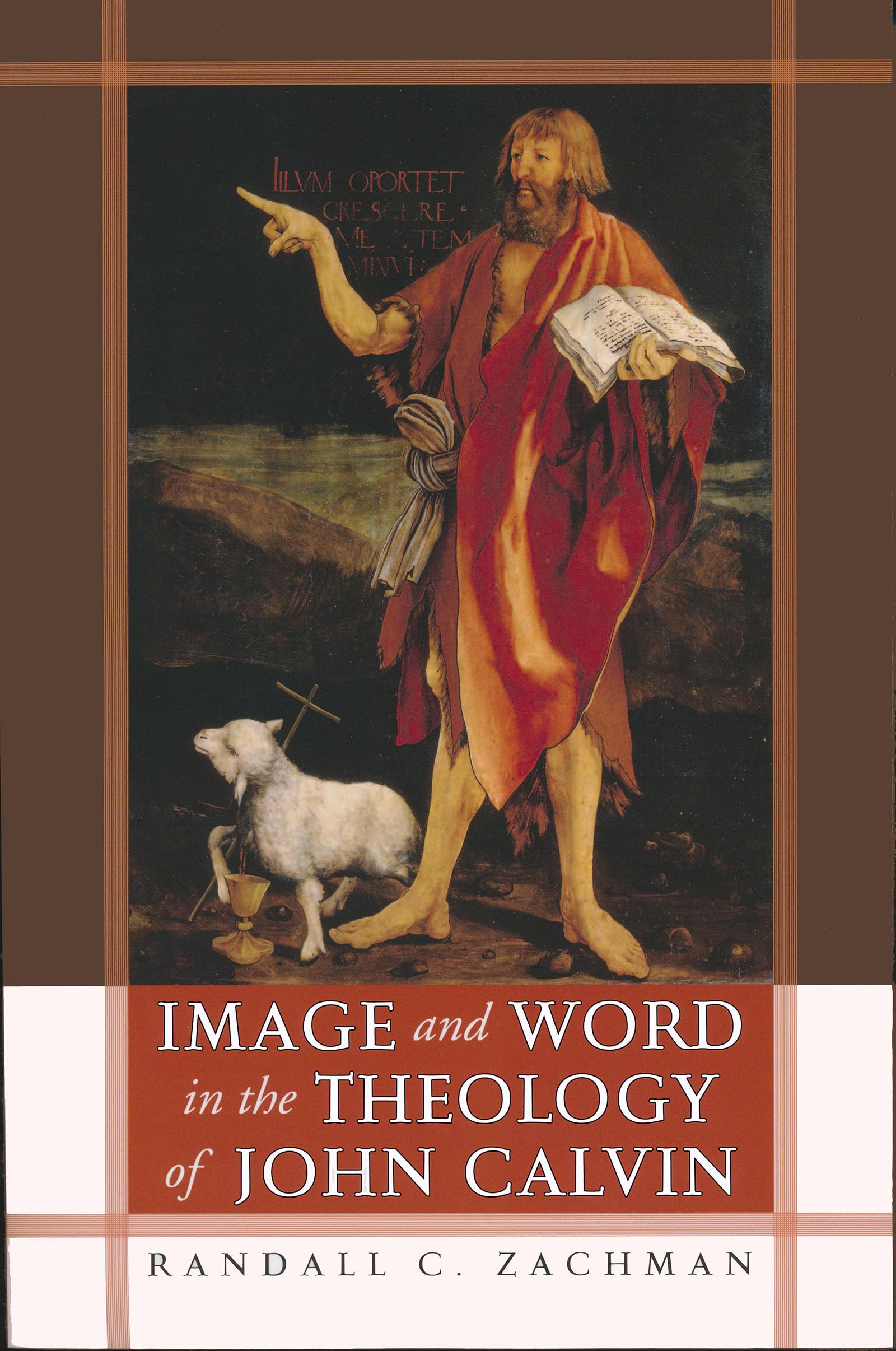



In his groundbreaking new study of the Swiss reformer, Randall C. Zachman reveals and analyzes John Calvin’s understanding of image and word both comprehensively and chronologically, with attention to the way that each theme develops in Calvin’s theology. Most scholars allege that John Calvin (1509–1564) insisted on the essential invisibility of God in order to deny that God could be represented in any kind of visible image. This claim formed one of his foundational arguments against the display of man-made images in worship. Given the transcendence of God, Calvin rejected the human attempt to create signs and symbols of God’s presence on earth, especially the statues, images, and paintings present in Roman Catholic churches. Zachman argues, in contrast, that although Calvin rejects the use of what he calls “dead images” in worship, he does so to focus our attention on the “living images of God” in which the invisible God becomes somewhat visible. Calvin insists that these images cannot rightly be contemplated without the Word of God to clarify their meaning; we are only led to the true knowledge of God when we hold together the living images of God that we see with the Word of God that we hear. This combination of seeing and hearing pervades Calvin’s theology, from his understanding of the self-revelation of God the Creator to his development of the self-manifestation of God the Redeemer in Jesus Christ. According to Zachman, Calvin maintains the same linking of seeing and hearing in our relationships with other human beings: we must always hold together what we see in others’ gestures and actions with what we hear in their words, so that the hidden thoughts of their hearts might be manifested to us. Zachman’s nuanced argument that Calvin holds image and word, manifestation and proclamation, in an inseparable relationship is relevant to all the major themes of Calvin’s theology. It constitutes a highly significant and surprising contribution to our knowledge of the Reformation and an invitation to further study of theological aesthetics. “Lutheran readers may find this book to be a helpful introduction to various themes in Calvin’s thought with a few unexpected turns along the way. . . . Zachman’s work will undoubtedly be important for evangelicals and Calvinists who seek to remain faithful to Calvin’s theology and yet also move in ecumenical and liturgical directions.” ― Concordia Theological Quarterly “This interesting and rich volume by Randall Zachman successfully challenges the common assumption held by both critics and supporters that Calvin had a bias against visual experience. The bulk of the book is dedicated to tracing the interrelationship of Word and image in the writings of Calvin. Zachman’s monograph ought to be read not only by all those who wish to understand image and Word in Calvin’s theology but also by those who wish to understand their relationship in the larger Reformed and Protestant traditions.” ― Calvin Theological Journal “This is a substantial contribution to Calvin scholarship that offers a much needed corrective to Calvin’s views concerning images. It is a carefully researched work that not only rightly shows the deep importance of images in Calvin’s theology but also reveals the man tensions in Calvin’s thought concerning divine manifestations and proclamations.” ― The Journal of Church History “Zachman’s overall thesis is that a main theological concern of the Genevan Reformer was to try ‘to combine what we hear with what we see.’ It is connected with the complaint that Calvin has often been interpreted as a theologian of the Word who excludes the awareness of God’s works and the praise of God’s manifestations in the creation. . . . the result of this ‘unorthodox’ reading of Calvin is impressive and stimulating. It reminds us of an often neglected fact in the history of Calvinist piety: that God the Redeemer is still God the Creator.” ― Scottish Journal of Theology “Zachman’s landmark work, with its copious references to Calvin’s writings and attention to the historical development of his thought, provides Protestants the opportunity to alter the received view of Calvin’s theology as being ‘anti-aesthetic.’ In doing so, he opens the doorway for a thoroughly Protestant and evangelical contribution to the burgeoning discipline of theological aesthetics that connects to both Augustine and Jonathan Edwards.” ― Themelios “The work is focused on the relationship between the ‘theologies’ of manifestation and proclamation in Calvin’s corpus examining Calvin’s understanding of images and words, the visible and auditory, as they are woven together in the fabric of his theological oeuvre. . . . Zachman’s work is a significant contribution to Calvin scholarship and must be considered for its provocative, if unconventional thesis regarding the role of images in Calvin’s theology.” ― Sixteenth Century Journal "This study of Calvin deserves wide reading by scholars, who