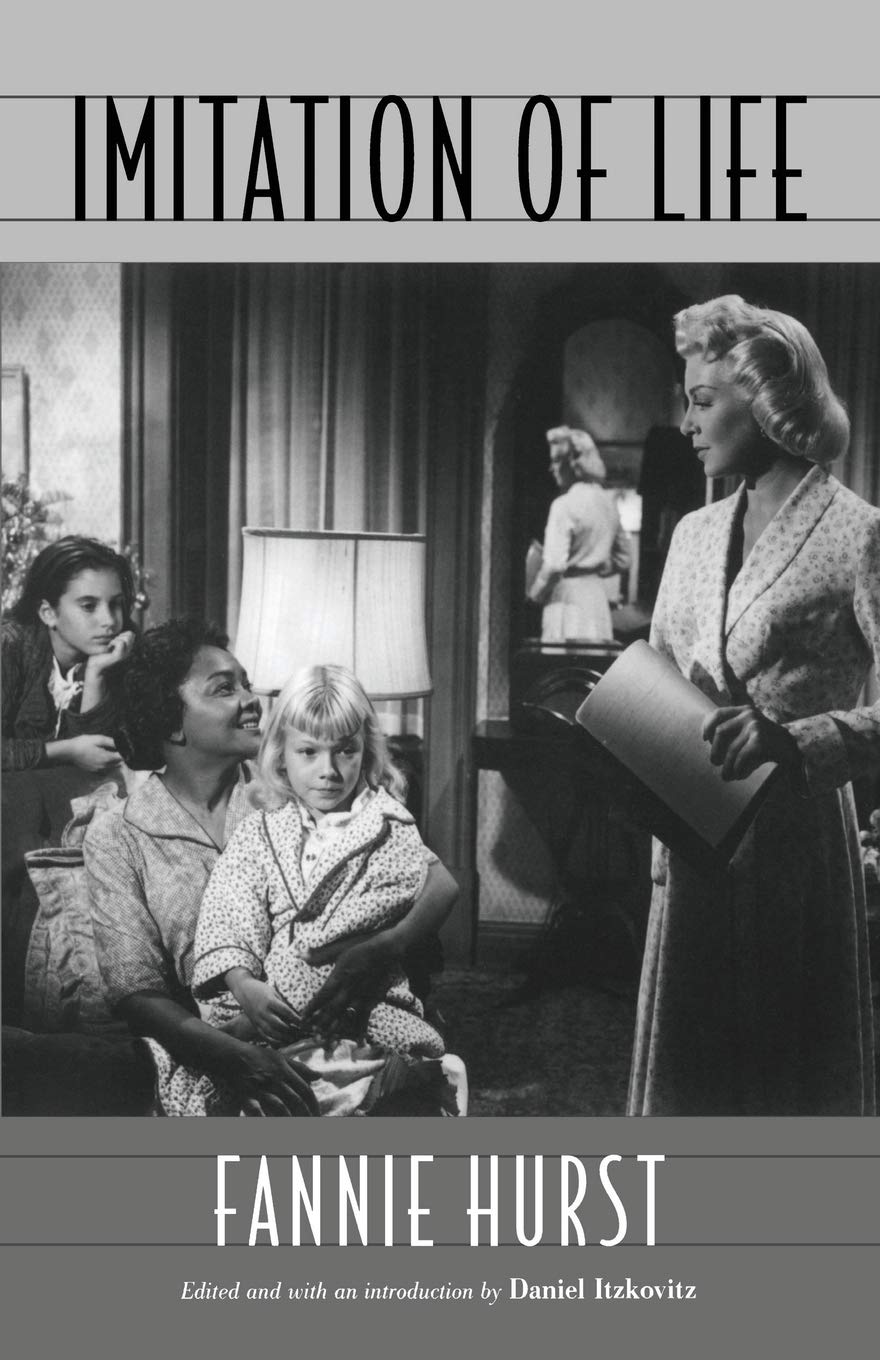



A bestseller in 1933, and subsequently adapted into two beloved and controversial films, Imitation of Life has played a vital role in ongoing conversations about race, femininity, and the American Dream. Bea Pullman, a white single mother, and her African American maid, Delilah Johnston, also a single mother, rear their daughters together and become business partners. Combining Bea’s business savvy with Delilah’s irresistible southern recipes, they build an Aunt Jemima-like waffle business and an international restaurant empire. Yet their public success brings them little happiness. Bea is torn between her responsibilities as a businesswoman and those of a mother; Delilah is devastated when her light-skinned daughter, Peola, moves away to pass as white. Imitation of Life struck a chord in the 1930s, and it continues to resonate powerfully today. The author of numerous bestselling novels, a masterful short story writer, and an outspoken social activist, Fannie Hurst was a major celebrity in the first half of the twentieth century. Daniel Itzkovitz’s introduction situates Imitation of Life in its literary, biographical, and cultural contexts, addressing such topics as the debates over the novel and films, the role of Hurst’s one-time secretary and great friend Zora Neale Hurston in the novel’s development, and the response to the novel by Hurst’s friend Langston Hughes, whose one-act satire, “Limitations of Life” (which reverses the races of Bea and Delilah), played to a raucous Harlem crowd in the late 1930s. This edition brings a classic of popular American literature back into print. “Although it’s a ‘white’ novel, Imitation of Life is certainly a part of the African American canon. No film was more important to me as a ‘colored’ child growing up in West Virginia; the funeral scene has to move even the most stoic viewer to tears. Now this new edition of the novel brings this richly layered story back into public view, where it will, I hope, remain.”—Henry Louis Gates Jr., Harvard University “Daniel Itzkovitz’s brilliant edition of Imitation of Life places this controversial novel at the center of U.S. literary, cinematic, and social history. Fannie Hurst’s novel deserves to be read in its own right, but here its importance as a register of white anxieties about the ethics of American racism and of consumer fantasies for overcoming the particular body are also showcased richly.”—Lauren Berlant, author of The Queen of America Goes to Washington City: Essays on Sex and Citizenship “This new edition of an influential American classic—one of the first books in twentieth-century popular literature to grapple with issues of gender and race—is reason enough to celebrate, but Daniel Itzkovitz’s splendid and insightful introduction reclaims for Fannie Hurst a preeminent position as an essential American literary figure whose work matters today more than ever.”—Michael Bronski, author of The Pleasure Principle: Sex, Backlash, and the Struggle for Gay Freedom "This new edition of an influential American classic--one of the first books in twentieth-century popular literature to grapple with issues of gender and race--is reason enough to celebrate, but Daniel Itzkovitz's splendid and insightful introduction reclaims for Fannie Hurst a preeminent position as an essential American literary figure whose work matters today more than ever."--Michael Bronski, author of "The Pleasure Principle: Sex, Backlash, and the Struggle for Gay Freedom" Fannie Hurst (1889–1968) was a popular writer of many novels and short stories. Among her best-known works are Back Street (1930) and Lummox (1923). Daniel Itzkovitz is Associate Professor of English and Director of American Studies at Stonehill College in North Easton, Massachusetts. He is a coeditor of Queer Theory and the Jewish Question . IMITATION OF LIFE By FANNIE HURST Duke University Press Copyright © 2004 Duke University Press All right reserved. ISBN: 978-0-8223-3324-1 Contents Introduction Daniel Itzkovitz.....................viiImitation of Life.................................1Notes.............................................293 Chapter One It struck Bea, and for the moment diverted her from grief, that quite the most physical thing she had ever connected with her mother was the fact of her having died. She found herself, crying there beside the bier, thinking of her mother's legs. Such willing ones. They were locked now, as they lay stretched horizontally down the center of the parlor, in the rigidity of death. The bengaline dress, for which only four dreamlike weeks ago they had shopped together on Atlantic Avenue, now lay decently over those dear legs. Dreadful counterpane to the physical fact that Adelaide Chipley's breasts and loins and femurs lay dead. There had been so little evidence, during her lifetime, of any aspect of her physical life, other than just the automatic processes of locomotion and eating and sle