Imperial Weather: Meteorology, Science, and the Environment in Colonial Malaya (Intersections, 23)
$65.00
by Fiona Williamson



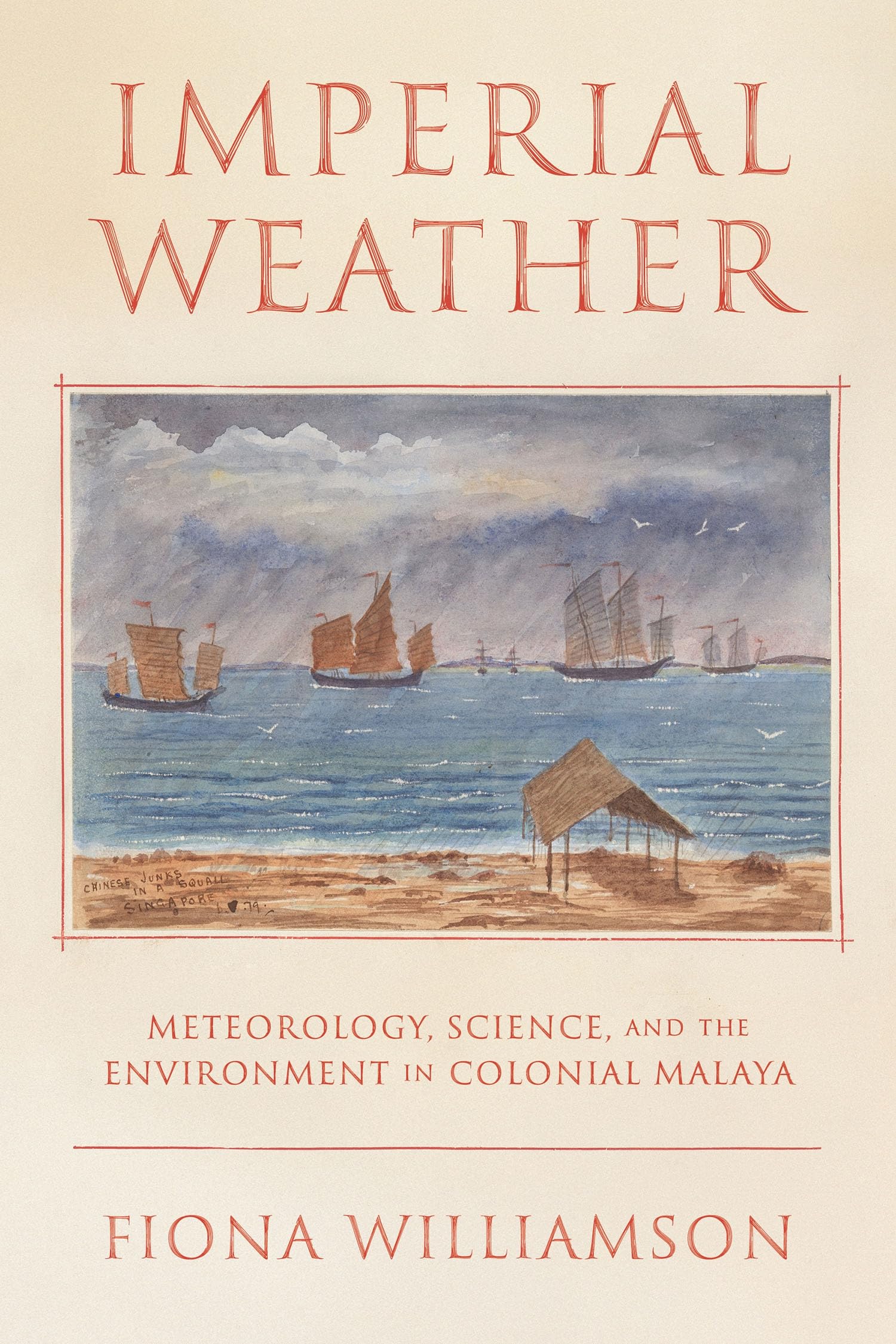
Tropical weather in colonial Malaya presented an unknown atmosphere that manifested in extremes and uncertainties. From 1840 to 1940, the Indigenous landscapes of Singapore and Penang Islands were altered in ways that will never be reclaimed, the natural ecology of much of the peninsula forever changed by the British colonial government. With this book, Fiona Williamson revisits the fraught relationship between climate, weather science, and empire within the Straits Settlements in the long nineteenth century. Her book examines official and scientific responses to local weathers within the multicultural ports and peripheries of Singapore and George Town, Malaysia. The challenges of creating a livable environment in tropical conditions, she explains, frequently pushed the colonial government beyond its capacities, and solutions often came at the expense of nature, which, ironically, made managing the weather more problematic. Imperial Weather offers a deep exploration of various official attempts to understand and apply structure to the previously unknown or uncontrollable through knowledge gathering, institutionalization, and technological and infrastructural change. Drawing from the history of science―especially the history of meteorology―and environmental history, it explores the multiple interests, capacities, and capabilities at play, including the state of scientific knowledge and the economy, funding, and importantly, socioenvironmental needs and practicalities. A significant contribution to the literature in the field of the history of science and technology, as well as Southeast Asian studies and the social history of technology in the region. ― Technology and Culture A thorough and compelling history which adds important nuance to the intertwined histories of meteorology and colonialism. ― H-Net Reviews This book offers a fresh perspective on colonialism in the tropics by uncovering the history of weather science in British Malaya. The story of Malayan meteorology is analyzed in connection with global developments. Yet Williamson remains focused on what made Malaya unique. Far from a narrative of scientific advancement facilitating colonial control, Imperial Weather highlights the uneven and inconsistent nature of scientific knowledge about climate. -- Claire Lowrie, University of Wollongong Imperial Weather is an absorbing exploration of weather sciences, environmental history, and atmospheric research. Fiona Clare Williamson has produced a finely tuned, suspenseful account of the role science, technology, and health played in British-controlled Malaya, highlighting the socionatural forces that shaped and challenged the monoliths of progress, science, and technological development in a colonial space. -- Vladimir Jankovic, The University of Manchester A Fresh Perspective on Colonial-Era Science, Climate, and Empire in Malaysia and Singapore Fiona Williamson is professor of environmental history in the College of Integrative Studies at Singapore Management University. She is a fellow of the Royal Historical Society and copresident of the International Commission for the History of Meteorology.