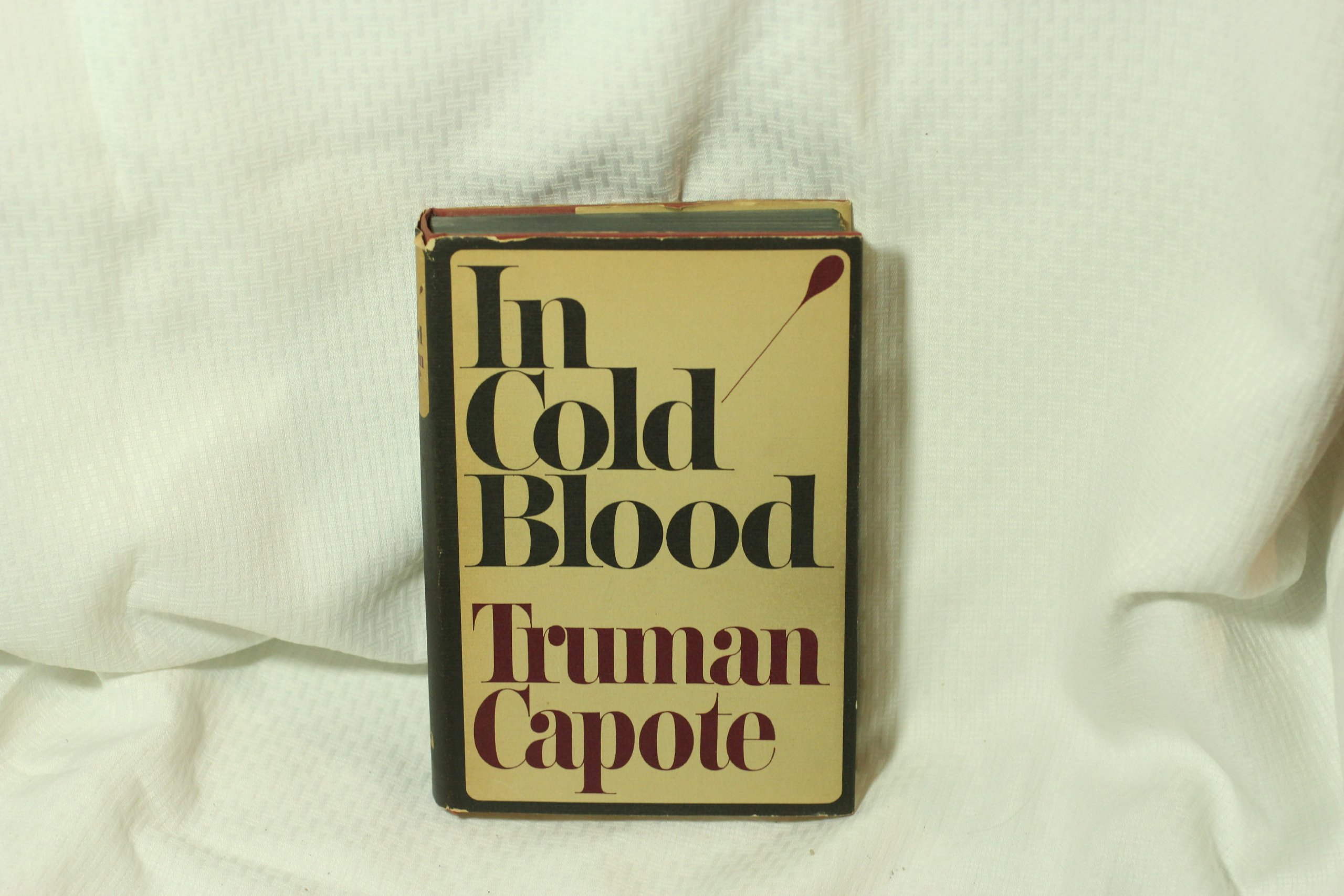



Selected by the Modern Library as one of the 100 best nonfiction books of all time On November 15, 1959, in the small town of Holcomb, Kansas, four members of the Clutter family were savagely murdered by blasts from a shotgun held a few inches from their faces. There was no apparent motive for the crime, and there were almost no clues. Five years, four months and twenty-nine days later, on April 14, 1965, Richard Eugene Hickock, aged thirty-three, and Perry Edward Smith, aged thirty-six, were hanged from the crime on a gallows in a warehouse in the Kansas State Penitentiary in Lansing, Kansa. In Cold Blood is the story of the lives and deaths of these six people. It has already been hailed as a masterpiece. "A masterpiece . . . a spellbinding work." — Life "A remarkable, tensely exciting, superbly written 'true account.' " — The New York Times "The best documentary account of an American crime ever written. . . . The book chills the blood and exercises the intelligence . . . harrowing." — The New York Review of Books On November 15, 1959, in the small town of Holcomb, Kansas, four members of the Clutter family were savagely murdered by blasts from a shotgun held a few inches from their faces. There was no apparent motive for the crime, and there were almost no clues. Five years, four months and twenty-nine days later, on April 14, 1965, Richard Eugene Hickock, aged thirty-three, and Perry Edward Smith, aged thirty-six, were hanged from the crime on a gallows in a warehouse in the Kansas State Penitentiary in Lansing, Kansa. In Cold Blood is the story of the lives and deaths of these six people. It has already been hailed as a masterpiece. Truman Capote was a native of New Orleans, where he was born on September 30, 1924. His first novel, Other Voices, Other Rooms , was an international literary success when first published in 1948, and accorded the author a prominent place among the writers of America's postwar generation. He sustained this position subsequently with short-story collections ( A Tree of Night , among others), novels and novellas ( The Grass Harp and Breakfast at Tiffany's ), some of the best travel writing of our time ( Local Color ), profiles and reportage that appeared originally in The New Yorker ( The Duke in His Domain and The Muses Are Heard ), a true-crime masterpiece ( In Cold Blood ), several short memiors about his childhood in the South ( A Christmas Memory, The Thanksgiving Visitor, and One Christmas ), two plays ( The Grass Harp and House of Flowers and two films ( Beat the devil and The Innocents ). Mr. Capote twice won the O.Henry Memorial Short Story Prize and was a member of the National Institute of Arts and Letters. He died in August 1984, shortly before his sixtieth birthday. I The Last to See Them Alive THE village of Holcomb stands on the high wheat plains of western Kansas, a lonesome area that other Kansans call "out there." Some seventy miles east of the Colorado border, the countryside, with its hard blue skies and desert-clear air, has an atmosphere that is rather more Far West than Middle West. The local accent is barbed with a prairie twang, a ranch-hand nasalness, and the men, many of them, wear narrow frontier trousers, Stetsons, and high-heeled boots with pointed toes. The land is flat, and the views are awesomely extensive; horses, herds of cattle, a white cluster of grain elevators rising as gracefully as Greek temples are visible long before a traveler reaches them. Holcomb, too, can be seen from great distances. Not that there is much to see--simply an aimless congregation of buildings divided in the center by the main-line tracks of the Santa Fe Railroad, a haphazard hamlet bounded on the south by a brown stretch of the Arkansas (pronounced "Ar-kan-sas") River, on the north by a highway, Route 50, and on the east and west by prairie lands and wheat fields. After rain, or when snowfalls thaw, the streets, unnamed, unshaded, unpaved, turn from the thickest dust into the direst mud. At one end of the town stands a stark old stucco structure, the roof of which supports an electric sign--DANCE--but the dancing has ceased and the advertisement has been dark for several years. Nearby is another building with an irrelevant sign, this one in flaking gold on a dirty window--HOLCOMB BANK. The bank closed in 1933, and its former counting rooms have been converted into apartments. It is one of the town's two "apartment houses," the second being a ramshackle mansion known, because a good part of the local school's faculty lives there, as the Teacherage. But the majority of Holcomb's homes are one-story frame affairs, with front porches. Down by the depot, the postmistress, a gaunt woman who wears a rawhide jacket and denims and cowboy boots, presides over a falling-apart post office. The depot itself, with its peeling sulphur-colored paint, is equally melancholy; the Chief, the Super-Chief, the El Capitan go by every day, but these