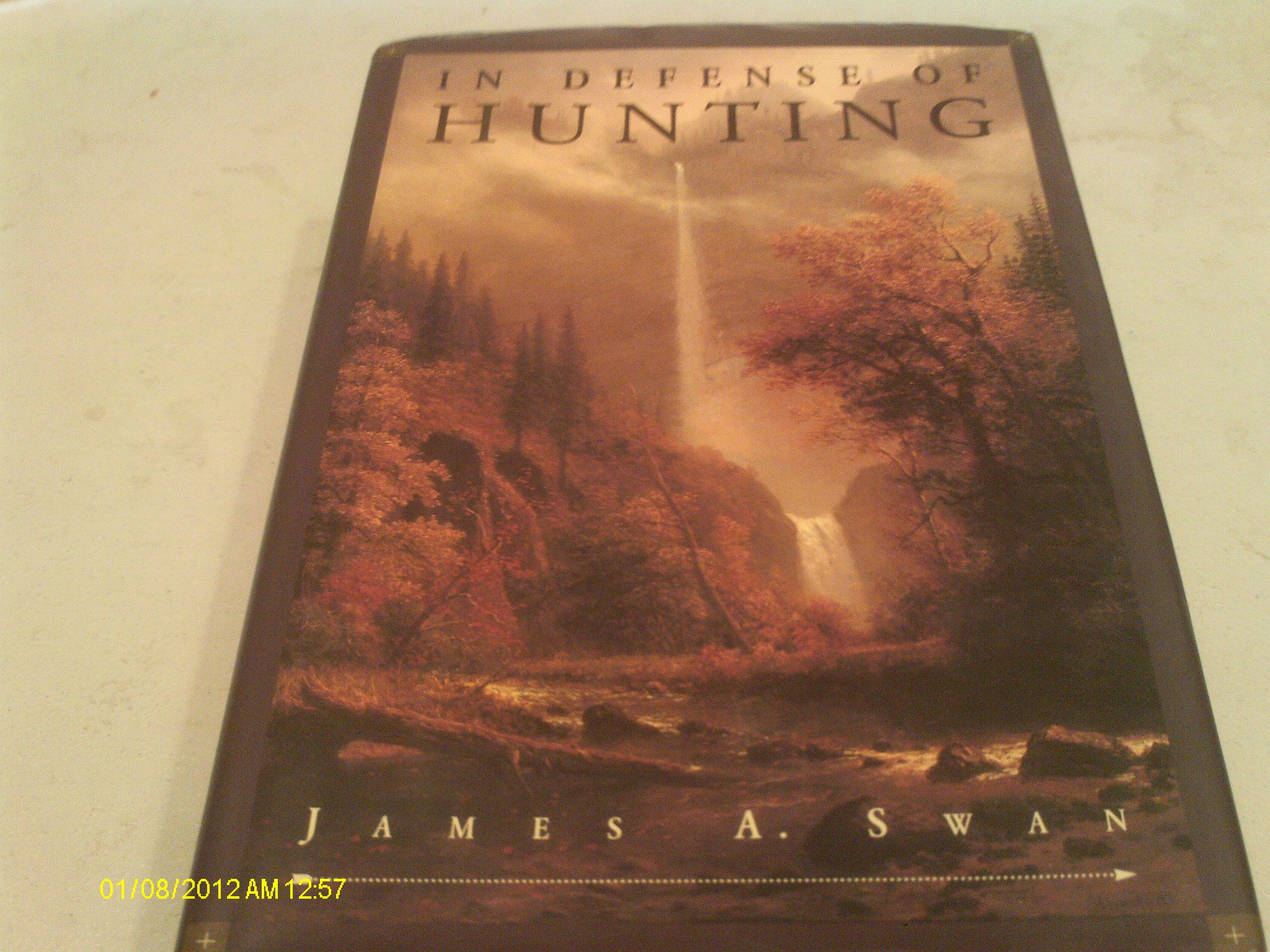



An environmental psychologist explores the morality of hunting, the reasons people hunt, the value of hunting in today's society, and the spiritual nature of the sport To whom does one defend hunting? Swan says that the hunter is an endangered species, besieged by animal rights supporters and hence declining in number. Drawing on solid credentials-he has a Ph.D. in the natural sciences, background in psychotherapy and native culture research, and a track record in publishing as author of six books (e.g., Nature As Teacher and Healer, Random, 1992) plus many environmental articles-Swan argues that understanding why people hunt involves understanding humankind's fundamental nature. Hunting is a spiritual ritual, he claims, an ancestral tie to our human history. He advocates seeking common ground with animal welfare activists in areas such as habitat development and antipoaching. There is much of value here, but some of it is buried in self-help ideas and pages on the feminine side of hunting. For a more personal yet more tightly written philosophy, see Ted Kerasote's Bloodties (LJ 6/15/93). Those who are against hunting might reject this on the title alone; supporters may find it difficult to get through it all. For comprehensive nature collections. Roland Person, Southern Illinois Univ. Lib., Carbondale Copyright 1994 Reed Business Information, Inc. Hunting is on the decline in the U.S. for a number of reasons, including the shrinking rural population and the growing antihunting movement. Swan eloquently defends hunting on moral, ecological, and historical grounds. Hunting, he argues, helps thin populations of animals who have no natural predators--deer, for example, in many parts of this country. He also explains that we have always been hunters; our survival long depended on our skill as trackers and predators. In addition to his own philosophical arguments, Swan attempts to debunk the positions of animal-rights activists and radical feminists who contend that meat eating (and therefore hunting) implies male dominance. Finally, though, he is most persuasive when he writes about the joys of hunting, not the extreme positions of its adversaries. This is a thoughtful, reasonable book that will reinforce some opinions already held and, more importantly, prod those with no stance to investigate further. Wes Lukowsky An uninspired argument for the natural place of hunting in human society and the human psyche. Environmental psychologist Swan (Nature as Teacher and Healer, not reviewed) has written a thorough response to those who denounce hunting as cruelty to animals. Growing up in rural Michigan, he learned the excitement and responsibilities of the hunt from the time he was old enough to handle a BB gun. Animal- rights groups who harass hunters, Swan says, should remember that hunters are frequently the staunchest supporters of conservation and wildlife management. Far from being sadists, he adds, they have experienced the moment when they hold in the sight of their gun the life that will provide their dinner; this awakes in them an awe of the delicate balances that make up the web of nature. He argues that humans are, after all, carnivorous animals, a truth that the buffers of our ``civilized'' world have enabled us to forget. In an age when inner-city children are being slaughtered by predators with AK-47s, the author finds painful irony in activists' frenzied protests against licensed hunting. Swan hurts his strong case with an undisguised contempt for his ideological opponents. Calling animal-rights activists a ``new subspecies of human,'' he never lets a rational voice from the other side balance his position, and he often strays from his subjeect into the ethical questions of vegetarianism and animal testing. He also has an unfortunate tendency to rhapsodize about nature with a hackneyed, fuzzy mysticism that makes him sound like a New Age guru. He would win more converts if he cut out some of the sermons on spirituality and stuck to his lyrical hunting tales. Swan ultimately tells too much and shows too little in his prosaic defense of the elemental necessity of hunting. -- Copyright ©1994, Kirkus Associates, LP. All rights reserved.