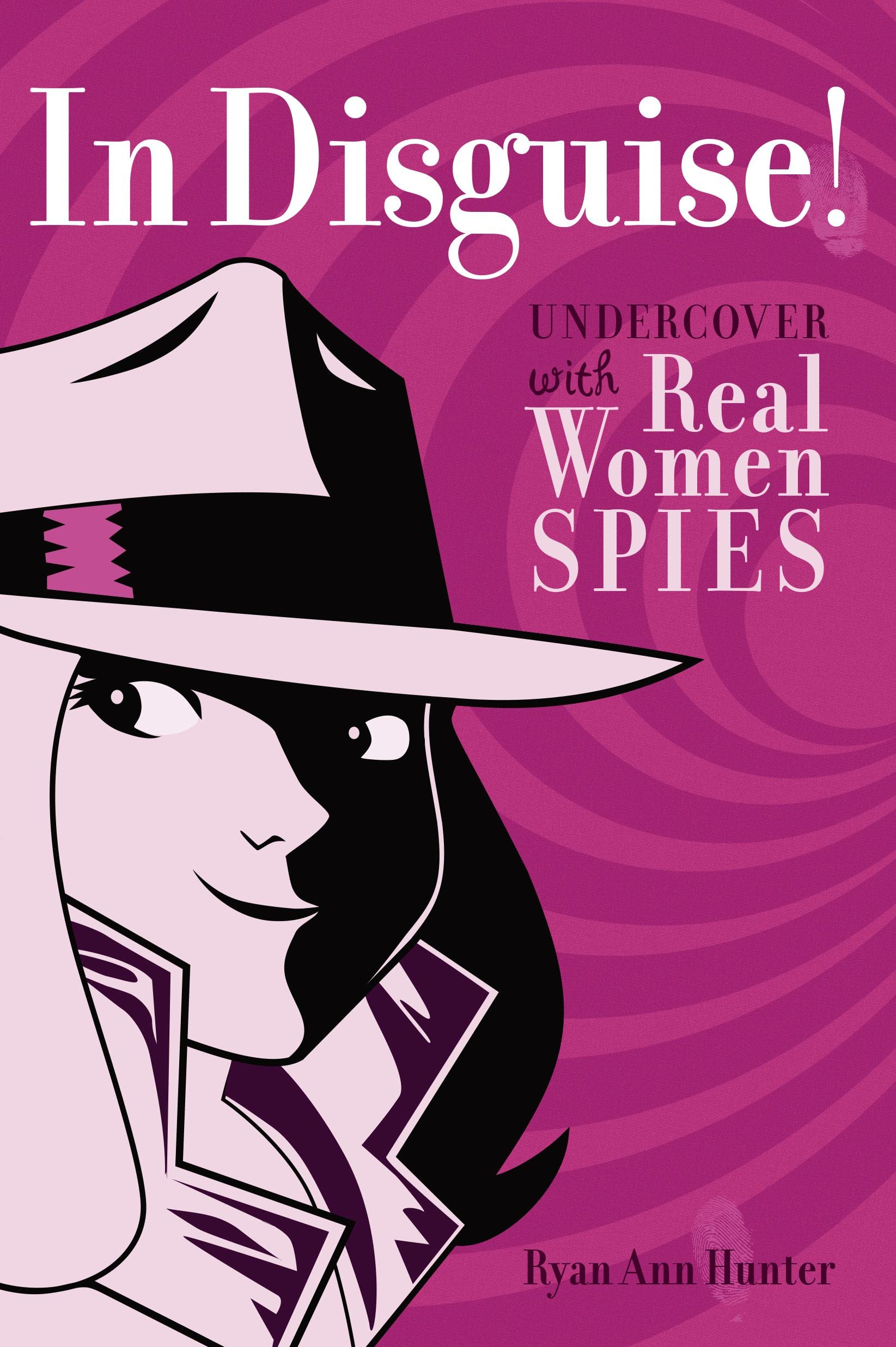



Investigate real-life adventures of espionage in this collection of impressive and inspiring profiles. Spanning more than 300 years and numerous countries, In Disguise! details the lives of some of history’s most daring women, all of whom risked their lives to stand up for their beliefs. Originally published a decade ago, this fully updated and expanded edition of In Disguise! profiles twenty-eight daring international secret agents, from Harriet Tubman, who freed hundreds of slaves during the Civil War, to Eva Wu, who hid secret messages in her hair to aid the Chinese Revolution, to the modern-day exploits of former CIA agent Valerie Plame. With riveting narratives, fun quizzes to determine if you have what it takes to go undercover, secret-agent trivia, and short spotlight bios, In Disguise! is sure to engage and inspire. Gr 7-10-This collection, updated from a 2003 edition, features spies from the 17th century through the modern era. Some stories are noteworthy, including Pauline Cushman's transition from actress to spy and Sarah Emma Edmonds's disguised persona as a man during the Civil War. Others, like Harriet Tubman's brave work on the Underground Railroad, are less compelling. Each entry starts with a short teaser that builds interest while serving as a helpful prereading tool. Several shorter "spotlights" feature brief profiles, events, and inventions while "spycraft" gives instructions for making invisible ink and tips for changing one's appearance. The layout is somewhat claustrophobic with little white space, and while sidebars help break up the text, many of them are unrelated to the content on the page. Visuals include appropriate historical maps and drawings based on photographs or typical styles of the era. There is no index, which might make this book difficult for research. It complements other true-spy accounts, such as Paul Janeczko's The Dark Game: True Spy Stories from Invisible Ink to CIA Moles (Candlewick, 2010) and Penny Colman's Spies! Women in the Civil War (Shoe Tree, 1992) and will appeal to those particularly interested in learning more about espionage.-Carrie Shaurette, Dwight-Englewood School, NJα(c) Copyright 2013. Library Journals LLC, a wholly owned subsidiary of Media Source, Inc. No redistribution permitted. Ryan Ann Hunter is a pen name for Pamela D. Greenwood and Elizabeth G. Macalaster, who have teamed up to write books about bridges, tunnels, skyscrapers, airplanes, robots, the history of flight, and women spies. Their books have garnered several awards, including the Children’s Book Sense Pick, the Chicago Public Library Best of the Best, Parenting magazine Book of the Year award, Oppenheim Toy Portfolio Gold Best Book award, and Austin Young Engineer’s Award. A native of North Carolina, Jeanette Little is an artist and illustrator living and working in Portland, Oregon. She received her BFA in painting from East Carolina University and then studied in the University of Oregon's MFA painting program. Her work has appeared in several publications as well as on national television. She has exhibited across the United States and has pieces in private collections from New York to Los Angeles. In Disguise! APHRA BEHN Ahead of Her Time 1640–1689 I must warn the King, Aphra thought after her meeting with William Scot, another spy. Using the cipher code she had learned before leaving on her secret mission, Aphra sent her urgent warning to Lord Arlington: Beware! The Dutch are planning to sail to England and up the Thames River to sink English ships. You must stop them! —Agent 169 Aphra Johnson wasn’t just any girl. She was born in 1640 in the small town of Wye, near Canterbury, England, and was believed to be the daughter of a barber. As a young girl in the 1600s, Aphra had to follow strict rules. Dancing, card playing, and bright clothing were all banned. Girls were taught to be silent, obedient, and pious. Not Aphra. She was bright, willful, and independent—a girl way ahead of her time. While other girls embroidered and learned to cook, Aphra devoured books. She was hooked on French romances, which were full of emotion, heroism, and daring. Whenever she could, Aphra also read books about history, philosophy, and literature—anything that took her beyond her confining life. Spy Files Queen Elizabeth I had designs of ears and eyes sewn into her gowns to warn would-be enemies that she was listening and watching. Aphra liked to write, and she often composed funny poems. She didn’t have a lot of money to buy books, so she copied poems and plays to have her own library. Many girls spent a lot of time on this activity, making quill pens from the feathers of geese and ravens. They drew lines, practiced their letters, and then erased the lines with bread. At that time, a girl’s education might have included some reading, writing, a little math, and music. Aphra also was exposed to foreign languages from the many immigrants who had their hair cut at