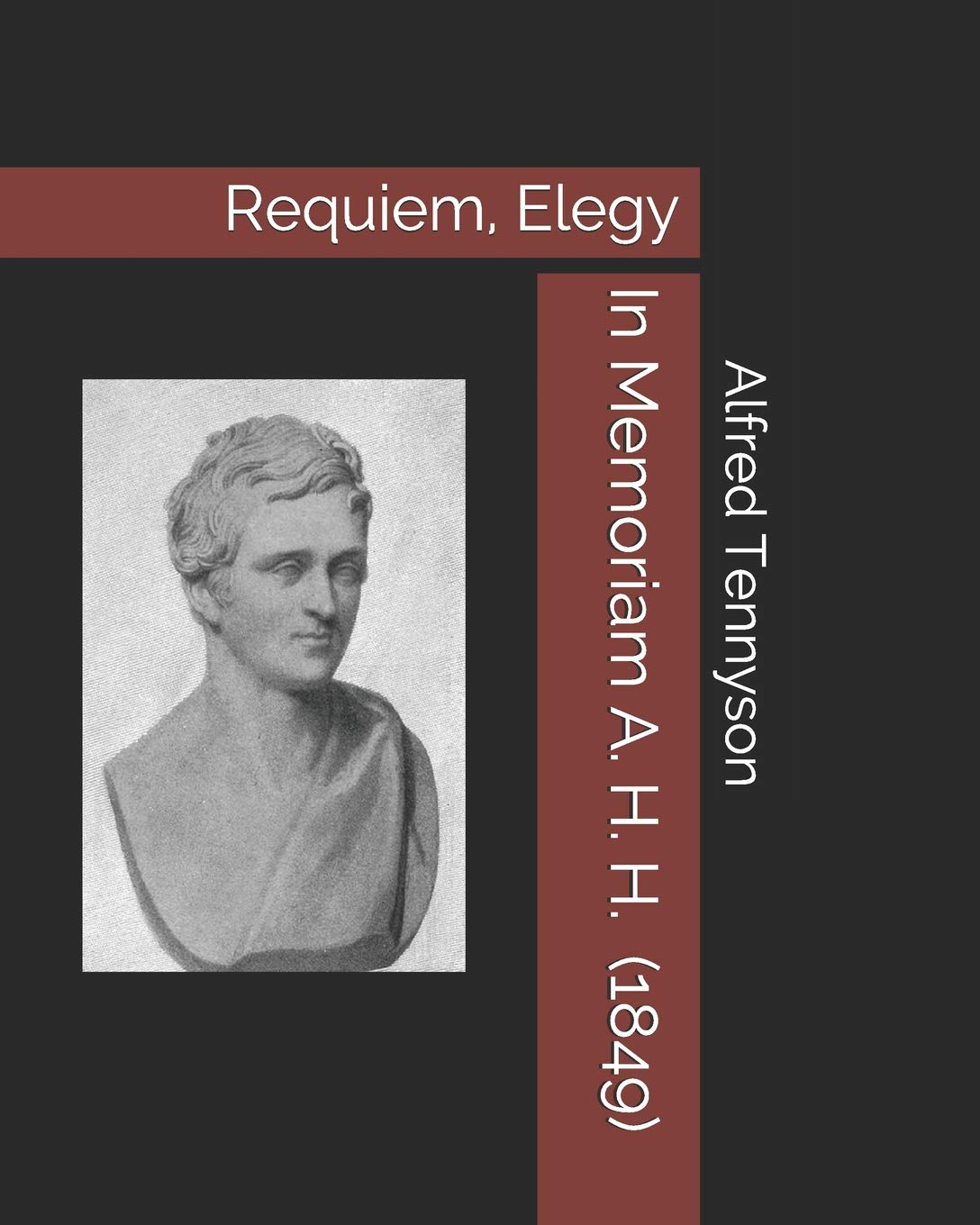



"In Memoriam A.H.H." or simply "In Memoriam" is a poem by the British poet Alfred, Lord Tennyson, completed in 1849. It is a requiem for the poet's beloved Cambridge friend Arthur Henry Hallam, who died suddenly of a cerebral haemorrhage in Vienna in 1833. It contains some of Tennyson's most accomplished lyrical work, and is an unusually sustained exercise in lyric verse. It is widely considered to be one of the great poems of the 19th century.The original title of the poem was "The Way of the Soul", and this might give an idea of how the poem is an account of all Tennyson's thoughts and emotions as he grieves over the death of a close friend. He views the cruelty of nature and mortality in light of materialist science and faith. Owing to its length and its arguable breadth of focus, the poem might not be thought an elegy or a dirge in the strictest formal sense. The poem is not arranged exactly in the order in which it was written. The prologue, for example, is thought to have been one of the last things written. The earliest material is thought to be that which begins "Fair ship, that from the Italian shore
Saileth the placid ocean-plains" and imagines the return of Hallam's body from Italy. Critics believe, however, that the poem as a whole is meant to be chronological in terms of the progression of Tennyson's grief. The passage of time is marked by the three descriptions of Christmas at different points in the poem, and the poem ends with a description of the marriage of Tennyson's sister."In Memoriam" is written in four-line ABBA stanzas of iambic tetrameter, and such stanzas are now called In Memoriam Stanzas. Though not metrically unusual, given the length of the work, the metre creates a tonal effect that often divides readers – is it the natural sound of mourning and grief, or merely monotonous? The poem is divided into 133 cantos (including the prologue and epilogue), and in contrast to its constant and regulated metrical form, encompasses many different subjects: profound spiritual experiences, nostalgic reminiscence, philosophical speculation, Romantic fantasizing and even occasional verse. The death of Hallam, and Tennyson's attempts to cope with this, remain the strand that ties all these together. ..............Alfred Tennyson, 1st Baron Tennyson FRS (6 August 1809 – 6 October 1892) was a British poet. He was the Poet Laureate of Great Britain and Ireland during much of Queen Victoria's reign and remains one of the most popular British poets.Early lifeTennyson was born on 6 August 1809 in Somersby, Lincolnshire, England.[6] He was born into a middle-class line of Tennysons, but also had a noble and royal ancestry (no details supplied).An illustration by W. E. F. Britten showing Somersby Rectory, where Tennyson was raised and began writingHis father, George Clayton Tennyson (1778–1831), was rector of Somersby (1807–1831), also rector of Benniworth (1802–1831) and Bag Enderby, and vicar of Grimsby (1815). Rev. George Clayton Tennyson raised a large family and "was a man of superior abilities and varied attainments, who tried his hand with fair success in architecture, painting, music, and poetry. He was comfortably well off for a country clergyman and his shrewd money management enabled the family to spend summers at Mablethorpe and Skegness on the eastern coast of England". Alfred Tennyson's mother, Elizabeth Fytche (1781–1865), was the daughter of Stephen Fytche (1734–1799), vicar of St. James Church, Louth (1764) and rector of Withcall (1780), a small village between Horncastle and Louth. Tennyson's father "carefully attended to the education and training of his children".
Saileth the placid ocean-plains" and imagines the return of Hallam's body from Italy. Critics believe, however, that the poem as a whole is meant to be chronological in terms of the progression of Tennyson's grief. The passage of time is marked by the three descriptions of Christmas at different points in the poem, and the poem ends with a description of the marriage of Tennyson's sister."In Memoriam" is written in four-line ABBA stanzas of iambic tetrameter, and such stanzas are now called In Memoriam Stanzas. Though not metrically unusual, given the length of the work, the metre creates a tonal effect that often divides readers – is it the natural sound of mourning and grief, or merely monotonous? The poem is divided into 133 cantos (including the prologue and epilogue), and in contrast to its constant and regulated metrical form, encompasses many different subjects: profound spiritual experiences, nostalgic reminiscence, philosophical speculation, Romantic fantasizing and even occasional verse. The death of Hallam, and Tennyson's attempts to cope with this, remain the strand that ties all these together. ..............Alfred Tennyson, 1st Baron Tennyson FRS (6 August 1809 – 6 October 1892) was a British poet. He was the Poet Laureate of Great Britain and Ireland during much of Queen Victoria's reign and remains one of the most popular British poets.Early lifeTennyson was born on 6 August 1809 in Somersby, Lincolnshire, England.[6] He was born into a middle-class line of Tennysons, but also had a noble and royal ancestry (no details supplied).An illustration by W. E. F. Britten showing Somersby Rectory, where Tennyson was raised and began writingHis father, George Clayton Tennyson (1778–1831), was rector of Somersby (1807–1831), also rector of Benniworth (1802–1831) and Bag Enderby, and vicar of Grimsby (1815). Rev. George Clayton Tennyson raised a large family and "was a man of superior abilities and varied attainments, who tried his hand with fair success in architecture, painting, music, and poetry. He was comfortably well off for a country clergyman and his shrewd money management enabled the family to spend summers at Mablethorpe and Skegness on the eastern coast of England". Alfred Tennyson's mother, Elizabeth Fytche (1781–1865), was the daughter of Stephen Fytche (1734–1799), vicar of St. James Church, Louth (1764) and rector of Withcall (1780), a small village between Horncastle and Louth. Tennyson's father "carefully attended to the education and training of his children".