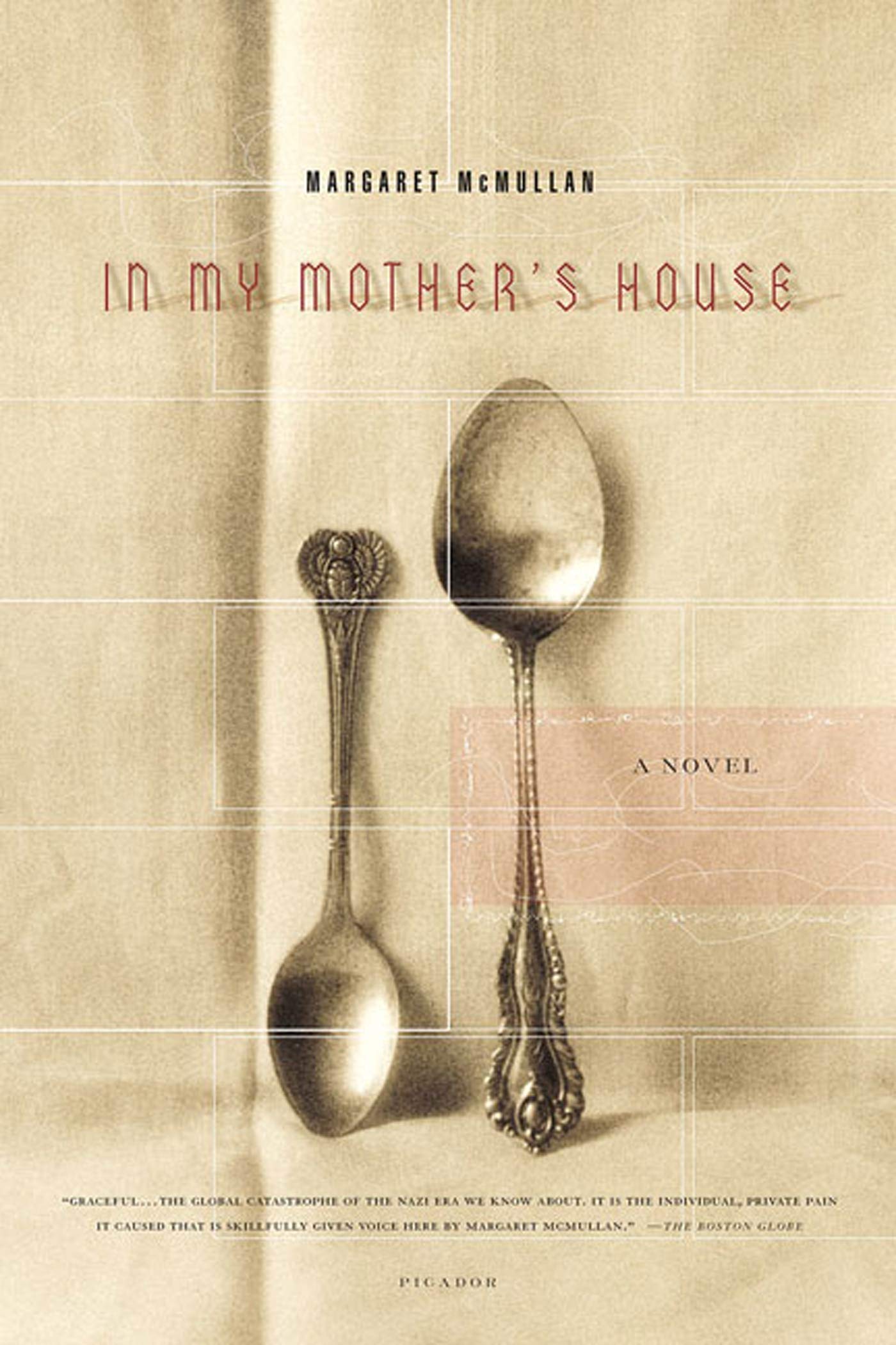



In My Mother's House is a beautiful, haunting, and expertly told novel about a daughter's obsession to understand her mother's commitment to silence about their family's experiences during WWII Vienna. The story of Elizabeth and her mother Jenny is remarkable for its fullness of details: the pieces of family silver the grandmother mails to Jenny, piece by piece, over the years; Jenny's vivid memories of her uncle's viola d'amore lessons; the smell of the wood floors in the family's Vienna home. It's an emotional story of what is inherited from one generation to the next. “Graceful...The global catastrophe of the Nazi era we know about. It is the individual, private pain it caused that is skillfully given voice here by Margaret McMullan.” ― The Boston Globe “The two narrative threads blend into one harmonious story, proving that while we can leave a country, we can't escape our history.” ― Entertainment Weekly “Exquisite. I salute Margaret McMullan's elegantly crafted prose, her beautiful restraint, her emotional honesty, and her storytelling power.” ― Phillip Lopate, author of Portrait of My Body “McMullan's voice shines like old silver, polished rich and clear. It's a story of vision and blindness, speech and silence, and the healing that comes from time--it's a book about love.” ― Beth Lordan, author of And Both Shall Row Margaret McMullan is an English professor at the University of Evansville, Indiana, and the author of the novel When Warhol Was Still Alive . She was nominated for a Pushcart Prize in 2001. Formerly an associate entertainment editor at Glamour , McMullan received her M.F.A. from the University of Arkansas. Her work has appeared in The Chicago Tribune , Southern Accents , TriQuarterly , Michigan Quarterly Review , Boulevard , and The Greensboro Review , among others. In My Mother's House By Margaret McMullan Picador USA Copyright © 2004 Margaret McMullan All right reserved. ISBN: 9780312318253 Prologue Have you ever heard anyone play a viola d'amore? If you play it right-if you can play it the way Uncle Rudi sometimes could-you can feel the sounds echo in the back of your throat. I don't think I ever really told you about my uncle Rudi. He could make extraordinary music. You play the row of strings on top just as you would a violin, but the second row of strings underneath catches and resonates the sounds. The strings underneath are called sympathetic strings and they are tuned in unison with the playing strings. The viola d'amore used to be in great demand in the seventeenth and eighteenth centuries, but now hardly anybody has ever heard of it. It makes a sweet, tender sound, and at night, that sound feels as old as loss. I have heard this little wooden thing fill up a whole hall. It is a beautiful instrument, even in disrepair, and I am glad you have given it to me while I can still see. Before you, before your father, I had another life. Sometimes I feel as though I were another person altogether. You are right. You have a right to know about the viola d'amore, about my other world, because now I know that what had to do with me does have something to do with you. In his Spiritual Exercises, St. Ignatius wants you to go through all the memories that helped shape you. His questions are a lot like yours-he pesters you about your past. I have told you there wasn't much to the life I left behind in Vienna. Still, you pressed me. You wanted the stories. You wanted my memories. I often thought that if I told you everything, I would somehow lose it all over again, and these scraps of memories are really all I have left of a place that is now gone. They are my inheritance and they are my own. You know by now that I am going blind, and as my eyesight diminishes, I find my memory disappearing as well. I have heard it said that you need only close your eyes in order to remember, but I have always found it far more helpful to see. When I look at you, I can recall the yellow house where we once lived much more readily than if I shut my eyes and tried. That yellow house is a vision and a memory I do not look forward to losing. My story of loss may be no good to hear about. I know a woman with a better story than mine. She stayed and hid people from the Nazis in her apartment. She saved lives. You would 0probably prefer her as a mother. Me? What have I ever accomplished? I can't say that I witnessed anything important, and I can't say that I forgive. You don't start by finding God in the ugly unless you're Anne Frank. I did not lose everything and everybody all at once, but bit by bit and one by one, as though I were being conditioned to live alone. I am the only one left. It is freeing in a way. And if someone ever asks you what your mother's maiden name is, leave out the Engel. They all say the same thing anyway: "Engel. Isn't that Jewish?" I want to be careful here. You are not Jewish. I am not Jewish, and, in his heart, your grandfather was not Jewi