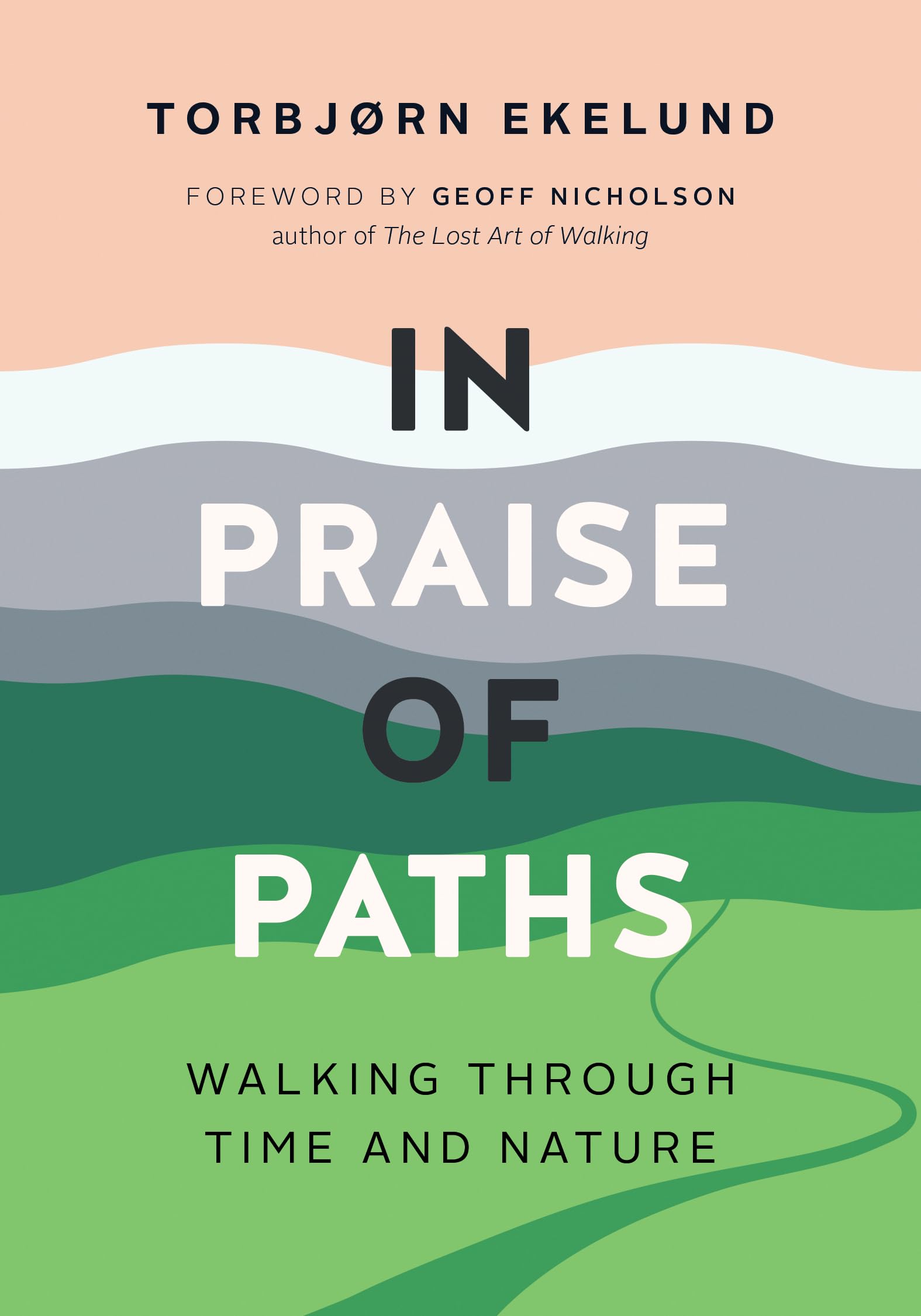



“What [Ekelund is] addressing is the intention to walk one’s way to meaning: the walk as spiritual exercise, a kind of vision quest... A key strategy for finding ourselves, then, is to first get lost.”— The New York Times Book Review An ode to paths and the journeys we take through nature, as told by a gifted writer who stopped driving and rediscovered the joys of traveling by foot. Torbjørn Ekelund started to walk—everywhere—after an epilepsy diagnosis affected his ability to drive. The more he ventured out, the more he came to love the act of walking, and an interest in paths emerged. In this poignant, meandering book, Ekelund interweaves the literature and history of paths with his own stories from the trail. As he walks with shoes on and barefoot, through forest creeks and across urban streets, he contemplates the early tracks made by ancient snails and traces the wanderings of Romantic poets, amongst other musings. If we still “understand ourselves in relation to the landscape,” Ekelund asks, then what do we lose in an era of car travel and navigation apps? And what will we gain from taking to paths once again? “A charming read, celebrating the relationship between humans and their bodies, their landscapes, and one another.” — The Washington Post This book was made possible in part thanks to generous support from NORLA. “What [Ekelund]'s addressing is the intention to walk one’s way to meaning: the walk as spiritual exercise, a kind of vision quest in which the answers we arrive at are less important than the impulse to seek them.” —David Ulin, New York Times “A charming read, celebrating the relationship between humans and their bodies, their landscapes, and one another.” — Washington Post “This lovely book taps into something primeval in us all.” — Star Tribune “[R]ethinking the social, historical, and spiritual needs that are met by putting one foot in front of the other.” — Outside Magazine “[Urges] a return to our ambulatory origins…[N]ever low on zeal.” — Wall Street Journal “[Ekelund] invites his readers to join him on his chosen path, a path that involves regular walking with careful mindfulness. This is an invitation we should all accept.” — The Vancouver Sun “A deeply fascinating meditation on the paths we take through our environment and our lives.” — Erling Kagge, author of Silence: In the Age of Noise and Walking: One Step at a Time “A quiet, reflective read.” — Booklist “An easygoing, gently unfolding memoir, it soothes in difficult times.” —Gail Perry, Winnipeg Free Press Torbjørn Ekelund is a writer, author, and co-founder of Harvest , an online magazine documenting wilderness adventures, environmental issues, and our relationship with nature. He lives in Oslo, Norway. Geoff Nicholson is the author of multiple books including The Lost Art of Walking . His writings have appeared in the New York Times and the Guardian , amongst others, and he is a contributing editor to the Los Angeles Review of Books . We were nomads once. We migrated, never remaining for long in a single location. The world lay open and undiscovered, borderless. We could walk in any direction, follow our will, explore new lands. Now we are sedentary. We live our lives sitting down. Drive the car to the store. Fly if traveling longer distances. Call to have the pizza delivered to our door and purchase automatic lawn mowers, robots to do the work for us while we sit sunning and thinking about more pressing matters than mowing the lawn. The journey has lost its original purpose. It is no longer an essential undertaking to sustain our lives; rather, it has become a form of amusement and recreation. We board an airplane in one corner of the world and disembark in another. We have the ability to put enormous distances behind us without expending any of our own energy or gaining any knowledge about the paths and landscapes that lie unfurled beneath the cloud cover several thousand feet below. A lot has changed and a lot has been lost when checking in at the airport is the most energy-intensive stage of a journey that relocates us from one side of the globe to the other. Our ability to read a landscape used to be indispensable for survival. Now we no longer require any knowledge of navigation and orienteering to get where we want to go. The path is displayed on our smartphones, our GPS, and as we walk we stare down at a lit screen instead of up at the place where we are and the path we are on. Our sense of place has become an aptitude we would prefer to do without. The same is true for our sense of distance. Paths were the first main thoroughfares, and the way in which they meander and wind through the landscape tells us something very fundamental about the people who created them. A path’s line is never accidental. It is not the shortest distance between two points; it is the simplest. It is a result of the intrinsic human inclination to choose the path of least re