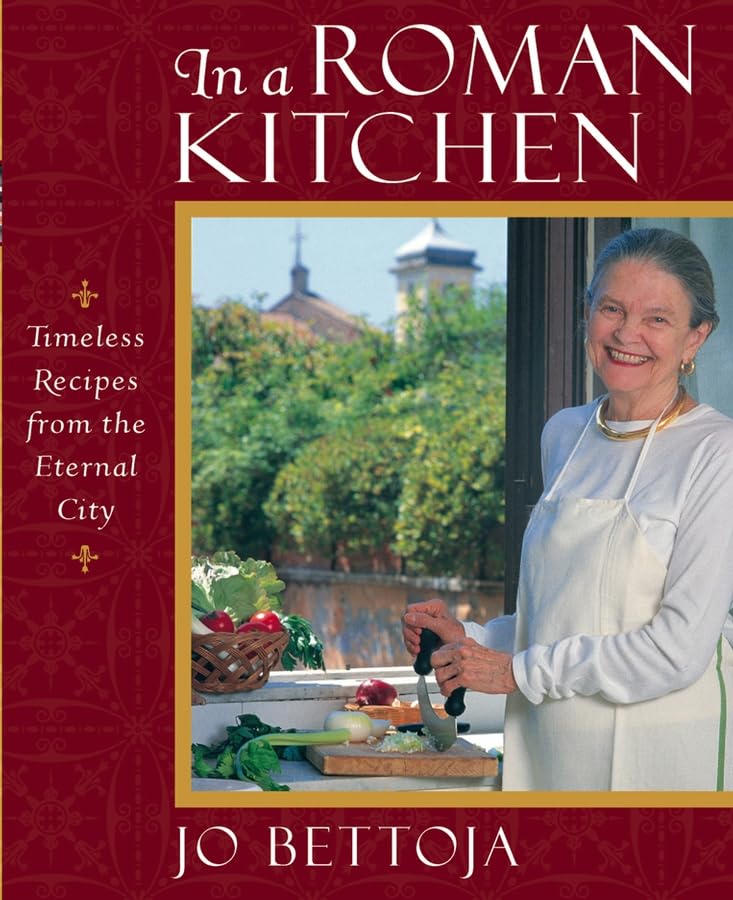



"Not only has Jo Bettoja captured the intensely flavorful, bubbly, textured cuisine of Rome in her delightful book, she has captured the spirit of the Romans in each recipe.This wonderful addition to the world of Italian cookbooks will make you savor Rome with every bite." -Lidia Bastianich, author of Lidia's Italian-American Kitchen and Lidia's Italian Table, and host of the PBS series Lidia's Italian-American Kitchen "Of the major cities, Rome has the biggest heart. Nowhere is this more apparent than in the street markets and at the Roman table. Jo Bettoja takes us there-she cooks with a heart as full of largesse and gusto as that of her adopted city." -Frances Mayes, author of Under the Tuscan Sun "No one can come close to Jo Bettoja in either knowledge or intrinsic understanding of Roman cooking. She has lived in Rome for so long that the waters of the Tiber are mixed with her blood. In a Roman Kitchen is a classic." -Nick Malgieri, author of Great Italian and Perfect Cakes Jo Bettoja, who hails from Savannah, Ga., first visited Rome on a modeling assignment more than 30 years ago. Not only did she fall in love with her future husband, she also fell in love with the city (and its food) and decided to make it her home. In 1976, Bettoja founded Lo Scaldavivande, a now world-famous cooking school in Rome. She has also written two cookbooks. The newest, "In a Roman Kitchen: Timeless Recipes From the Eternal City" (John Wiley, $35), features more than 200 traditional recipes the author gathered from private households in Rome. The book also offers a peek into the daily lives and routines of residents who, as Bettoja notes, no longer enjoy leisurely midday dinners, followed by a nap. Romans these days are out working for a living and spending less and less time in the kitchen, the author explains. That rich lunch has evolved into a pasta and salad quickie, with people now eating their larger dinner in the evening. Still, Romans love their food and spend hours preparing and perfecting dishes with the finest ingredients they can find. An extensive chapter on pasta and rice features plenty of dishes you're not likely to find elsewhere, including a sweet pasta flavored with sugar, ricotta and cinnamon, and a fine spaghettini with salmon caviar. There are no fewer than three classic veal scaloppine recipes, one with braised artichokes, another with lemon, and one "alIa romana," with prosciutto, fresh sage and white wine. There are a number of intriguing vegetable offerings that are nice for spring, particularly fresh fennel baked in milk and fresh peas with lettuce and cream. ( New York Daily News , March 26th, 2003) Winter is the perfect time to retreat to a warm kitchen and explore new cuisines and techniques. All it takes to get started is a great cookbook. Anyone curious about what it's like to live and cook in Rome will love In a Roman Kitchen , by Jo Bettoja, who founded and ran the popular cooking school Lo Scaldovivande. The book's 200-plus recipes follow the progression of a typical Roman meal: antipasti, pasta, main dish, salad, dessert. Classics like Penne all' Arrabbiata and Meatballs in Savory Tomato Sauce are predictable delights. But the surprise stunners are quick, delicious dishes -Spaghetti with Arugula and Angelica's Pasta with Raisins & Pine Nuts-gleaned from modern Romans, who are as pressed for time as the rest of us. ( Fine Cooking , January 2004) From the savory splendor of crisply fried artichokes to the easy indulgence of spaghetti alla carbonara perfectly al dente, the cooking of Rome is every bit as glorious as the citys breathtaking art and architecture. In a Roman Kitchen explores the delights of this rich culinary heritage with a spectacular tour of the markets, ingredients, and classic recipes of the Eternal City. Jo Bettoja, founder of the world-renowned Roman cooking school Lo Scaldavivande, invites readers into her storied kitchen to share over 200 authentic recipes from Roman homes that are sophisticated, yet accessible. Here are the citys classic signature dishesArtichokes, Fava Beans, and Peas (La Vignarola); Eggplant with Uncooked Tomato Sauce; Spareribs and Sausages with Polenta; Roman Roast Suckling Pig; Pasta alla Carbonara; Baked Chicken Cutlets with Parmesan and Lemon; Hazelnut Semifreddoalong with select dishes from other regions of Italy that are popular in the homes and restaurants of Rome. Bettoja begins with favorite Roman starters, such as Bresaola with Arugula and Parmesan Cheese, Fava Beans with Pecorino, and assorted crostini and antipasto salads. She recalls the grand meals of times gone by, including a couple of recipes for the famous Timballo, pasta and rich meat sauce baked in a pastry crust. But Bettoja also presents simple, quick recipesno less Roman but designed for the contemporary Italian home, which is as pressed for time as homes are everywhere else in the world. In a Roman Kitchen also includes chapters on soups; fish and other