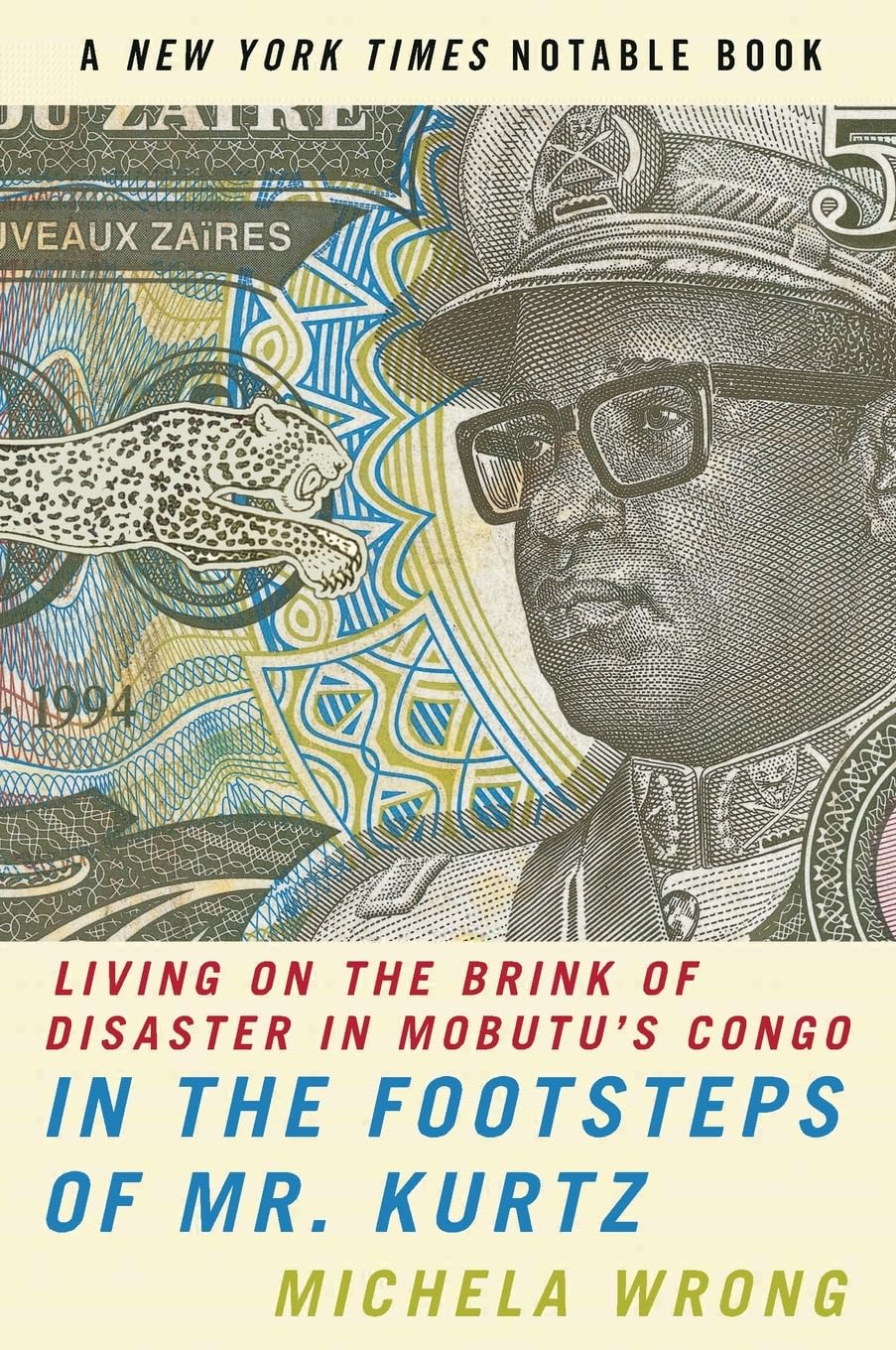
In the Footsteps of Mr. Kurtz: Living on the Brink of Disaster in Mobutu's Congo
$15.50
by Michela Wrong



Known as "the Leopard," the president of Zaire for thirty-two years, Mobutu Sese Seko, showed all the cunning of his namesake -- seducing Western powers, buying up the opposition, and dominating his people with a devastating combination of brutality and charm. While the population was pauperized, he plundered the country's copper and diamond resources, downing pink champagne in his jungle palace like some modern-day reincarnation of Joseph Conrad's crazed station manager. Michela Wrong, a correspondent who witnessed Mobutu's last days, traces the rise and fall of the idealistic young journalist who became the stereotype of an African despot. Engrossing, highly readable, and as funny as it is tragic, In the Footsteps of Mr. Kurtz assesses the acts of the villains and the heroes in this fascinating story of the Democratic Republic of Congo. “A Gripping, gracefully penned, conscience-wrenching account of Mobutu’s tyranny … [with] a combination of powerful anecdote, fine research, mesmerizing reportage, and subtle understanding.” - Foreign Affairs “Fascinating … Wrong writes [a] firsthand, first-rate account … [that] is a few cuts above because she presents Mobutu’s tale as simply that―a good tale … The details are what gives her story its juice.” - New York Times Book Review Known as "the Leopard," the president of Zaire for thirty-two years, Mobutu Sese Seko, showed all the cunning of his namesake -- seducing Western powers, buying up the opposition, and dominating his people with a devastating combination of brutality and charm. While the population was pauperized, he plundered the country's copper and diamond resources, downing pink champagne in his jungle palace like some modern-day reincarnation of Joseph Conrad's crazed station manager. Michela Wrong, a correspondent who witnessed Mobutu's last days, traces the rise and fall of the idealistic young journalist who became the stereotype of an African despot. Engrossing, highly readable, and as funny as it is tragic, In the Footsteps of Mr. Kurtz assesses the acts of the villains and the heroes in this fascinating story of the Democratic Republic of Congo. Michela Wrong has worked as a foreign correspondent for Reuters, the BBC, and the Financial Times . She has written about Africa for Slate.com and is a frequent commentator on African affairs in the media. Her first book, In the Footsteps of Mr. Kurtz , won the James Stern Silver Pen Award for Nonfiction. She lives in London. In the Footsteps of Mr. Kurtz Living on the Brink of Disaster in Mobutu's Congo By Wrong, Michela Perennial Copyright © 2004 Michela Wrong All right reserved. ISBN: 0060934433 Chapter One You can check out any time you like, but you can never leave Kinshasa, 17 May 1997 Dear Guest, Due to the events that have occurred last night, most of our employees have been unable to reach the hotel. Therefore, we are sorry to inform you that we will provide you only with a minimum service of room cleaning and that the laundry is only available for cleaning of your personal belongings. In advance, we thank you for your understanding and we hope that we will be able soon to assure our usual service quality. The Management At 3 a.m. on Saturday morning, a group of guests who had just staggered back to their rooms after a heavy drinking session in L'Atmosphère, the nightclub hidden in the bowels of Kinshasa's best hotel, heard something of a fracas taking place outside. Peering from their balconies near the top of the Tower, the modern part of the hotel where management liked to put guests paying full whack, they witnessed a scene calculated to sober them up. Drawing up outside the Hotel Intercontinental, effectively barring all exits, were several military armoured cars, crammed with members of the Special Presidential Division (DSP), the dreaded elite unit dedicated to President Mobutu's personal protection and held responsible for the infamous Lubumbashi massacre. A black jeep with tinted windows had careered up to the side entrance and its owner -- Mobutu's own son Kongulu, a DSP captain -- was now levelling his sub-machine gun at the night receptionist. Kongulu, who was later to die of AIDS, was a stocky, bearded man with a taste for fast cars, gambling and women. He left unpaid bills wherever he went with creditors too frightened to demand payment of the man who had been nicknamed 'Saddam Hussein' by Kinshasa's inhabitants. Now he was in full combat gear, bristling with grenades, two gleaming cartridge belts criss-crossed Rambo-style across his chest. And he was very, very angry. Screaming at the receptionist, he demanded the room numbers of an army captain and another high-ranking official staying at the Intercontinental, men he accused of betraying his father, who had fled with his family hours before rather than face humiliation at the hands of the rebel forces advancing on the capital. Up in Camp Tsha Tshi, the barracks on the hill which housed Mobutu's dese