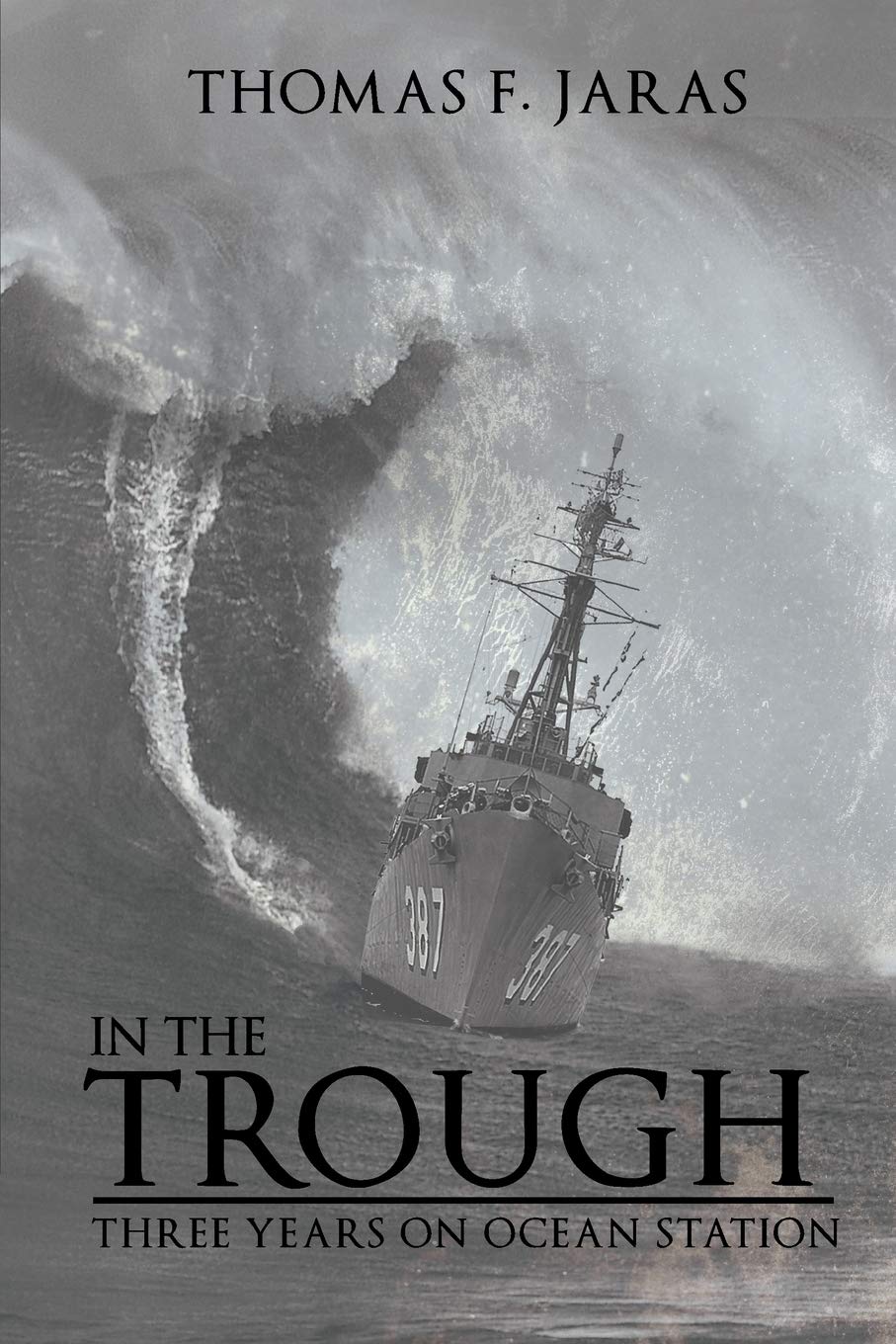



A few months out of college, followed by a sixteen-week course on how to be a naval officer, author Thomas F. Jaras found himself standing bridge watches on the USS Vance in the middle of nowhere, providing navigational aid for aircraft flying to the polar ice. Now, almost fifty years later, Jaras recalls the three years he spent aboard the Vance in the 1960s, on the ramparts of the Cold War. In his memoir, In the Trough, Jaras attempts to understand his love-hate relationship with the USS Vance, an insignificant radar picket ship that supported Operation Deep Freeze in the Antarctic Ocean for a year and then spent two years on the Pacific Distant Early Warning Line. He describes life on an endurance ship afloat in midocean, battling eighty-foot walls of water crashing over the bridge. In the Trough chronicles Jaras's transition from a boy to man as he dreamed of life ashore during long weeks at sea that were punctuated by short, intense visits to terra firma. Young, inexperienced, and naïve, he feared the best years of his life were being wasted at sea. He searched desperately for women, love, and a normal existence while ashore for precious short stints in Tahiti, New Zealand, Tasmania, Australia, Japan, and Hawaii. Despite three stressful, unhappy, and difficult years at sea, Jaras acknowledges a tearful departure but promised himself to never go to sea again. In the Trough Three Years on Ocean Station By Thomas F. Jaras iUniverse LLC Copyright © 2013 Thomas F. Jaras All rights reserved. ISBN: 978-1-4917-0653-4 Contents Preface....................................................................ixAcknowledgments............................................................xiiiChapter 1: Arrival in Paradise (July 21–August 23, 1961)...................1Chapter 2: Underway (August 24–September 10, 1961).........................19Chapter 3: New Zealand (September 10–16, 1961).............................33Chapter 4: First Antarctic Patrol (September 16–October 13, 1961)..........45Chapter 5: Comrades (October 13–December 14, 1961).........................71Chapter 6: Land of the Snipes..............................................93Chapter 7: The New Regime (December 14, 1961–January 17, 1962).............115Chapter 8: Life at Sea.....................................................131Chapter 9: Tasmania (January 17–March 3, 1962).............................149Chapter 10: Heading Home (March 3–April 6, 1962)...........................161Chapter 11: Back with the Squadron (April 6–July 6, 1962)..................173Chapter 12: North Pacific Station (July 6–September 26, 1962)..............185Chapter 13: Winter at Sea (September 26, 1962–April 18, 1963)..............209Chapter 14: Japan (April 18–July 13, 1963).................................247Chapter 15: My Department (July 13–September 7, 1963)......................263Chapter 16: The New Vance (September 7, 1963–January 9, 1964)..............283Chapter 17: New Ship, Old Station (January 9–May 26, 1964).................293Chapter 18: Request Permission to Go Ashore (May 26–July 9, 1964)..........305Epilogue...................................................................315 CHAPTER 1 Arrival in Paradise July 21–August 23, 1961 War is God's way of teaching Americans geography. —Ambrose Bierce,journalist and writer (1842–1913) Cold War Living In 1949, while I was dreaming of the cute brown-haired girl inthe front row of Miss Lang's fifth-grade class at St. Jerome'sElementary School, the Soviets went and exploded their firstatomic bomb. We, meaning we Slovenian and Irish residentson Cleveland's east side, had lost our leading position in theworld now that someone besides us had a nuclear capability.But had we really lost our dominant world position? The commies'bomb achievement led to a second problem. The problemreminded me of the man who built a boat in his basementand then found the finished product too large to get out of thehouse. The Soviets had the bomb, but they lacked a deliverysystem capable of threatening the continental United States.Not understanding this fine point about delivery systems, wewent about the urgent business of stockpiling canned foodsand dreaming about home bomb shelters that only the wealthycould afford. We glossed over the tricky business of how toavoid breathing radioactive fallout. We avoided thinking toohard about what there were no answers for—similar to theapproach our parish priest advised when we expressed religiousdoubts. We let ourselves be guided by government or thechurch, the organizations with all the facts. By 1954, when I was painting rooms at the East Shore Motelafter school at Collinwood High, the Soviets took advantageof my being preoccupied and introduced a new long-rangebomber capable of delivering nuclear warheads to our cities.The boat was out of the basement and threatening to sail. Thenews didn't stir up the neighborhood because we were alreadyfrightened just knowing the So