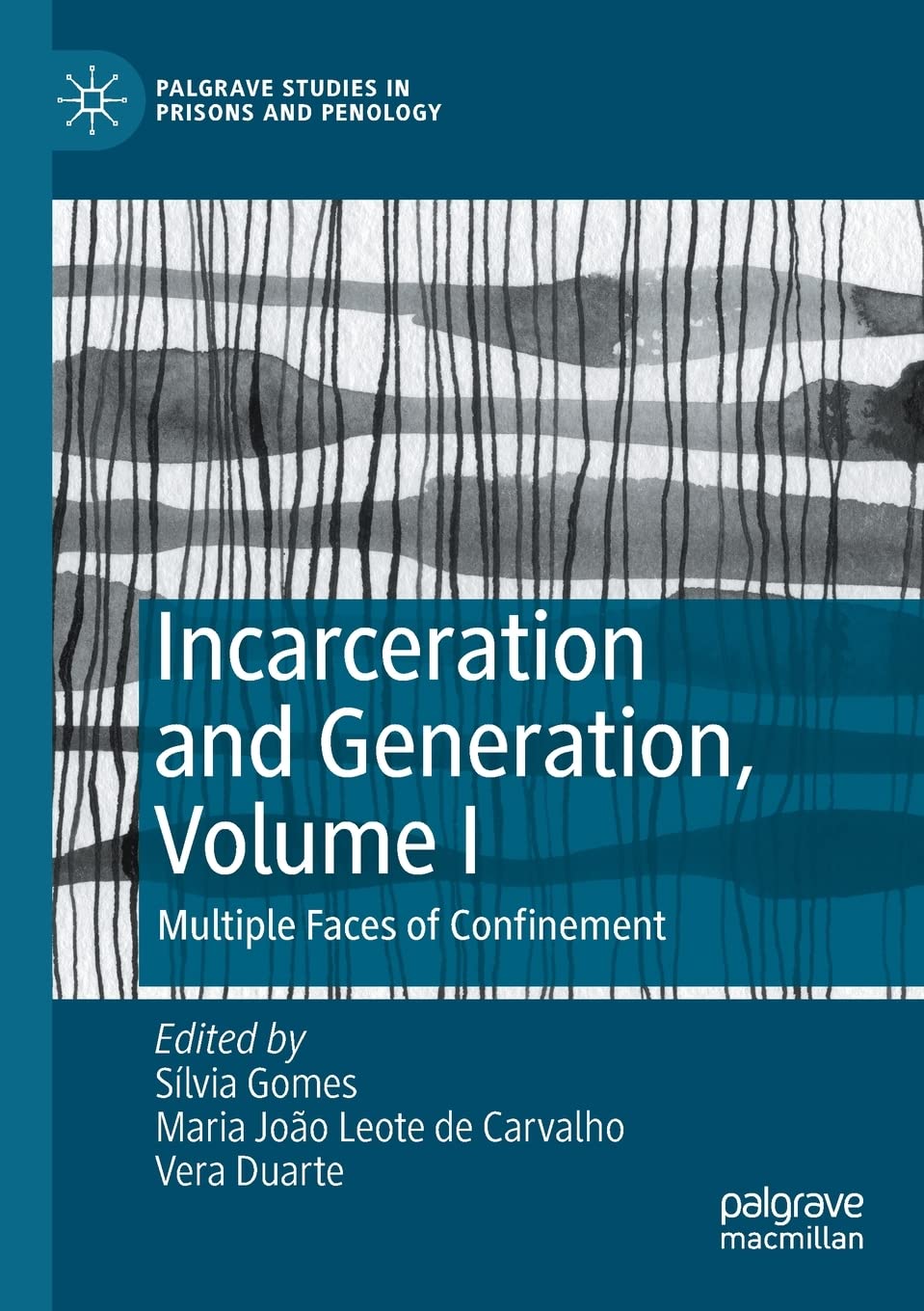
Incarceration and Generation, Volume I: Multiple Faces of Confinement (Palgrave Studies in Prisons and Penology)
$104.70
by Silvia Gomes



This two-volume, edited collection lays the groundwork for an international exploration of incarceration and generation, cover a range of geographic, judicial and administrative contexts of incarceration from contributors across a range of subjects. Volume I explores an array of experiences, dynamics, cultures, interventions and impacts of incarceration in specific generations: childhood, youth and emerging adulthood, adulthood and older age. It covers topics such as: the expansion of the penal landscape; deprivation of liberty regarding children, the problem of unaccompanied migrant children; the incarceration of young adults and adults, exploring its impacts within and beyond incarceration and the consequences of imprisoning older populations. Volume II examines intergenerational relations issues within different contexts of incarceration. This collection discusses public policies and the role of the state and the citizen deprived of liberty. It speaks to academics in criminology,sociology, psychology, and law, and to practitioners and policymakers interested in incarceration. “Long underdeveloped and overlooked, the intense generational effects and relations of incarceration take center stage in this two-volume tour de force. International, comprehensive, rigorous, and engaged, this contribution gives the study of punishment a vital framework from which to conceptualize a new form of generation studies in critical relation to an expanding penal landscape.” ( Michelle Brown , University of Tennessee, USA)“In the face of the pervasive use of detention as a form of management and control of a variety of populations, and given the persistent reality of penal and non-penal incarceration in the lives of many people over the years and across generations, this is a timely edited collection. Covering several jurisdictions and cultural contexts, and combining different disciplinary perspectives, the two volumes offer an illuminating angle to assess the impacts of incarceration by examining how it is lived in diverse life stages and how it becomes present in intergenerational and intragenerational relations.” ( Manuela Ivone Cunha , Universidade do Minho, Portugal) “Incarceration impacts not only the individual, but also their families and society. Because incarceration rates are so high, it is vital to understand the impact of incarceration. This book presents a well-rounded perspective on the impact of incarceration on our society, from intergenerational transmission to the impact of criminalising migrants, in countries around the world, including Cameroon, Mexico, Brazil, and other countries in Latin America, Norway, Spain, Portugal, England, and Canada. It’s an excellent source for anyone interested in the impact of prisons in several ways, especially from a more international and multidisciplinary perspective.” ( Sytske Besemer , expert on intergenerational transmission, currently a UX researcher for the integrity team at Facebook, USA) “Incarceration and Generation is the result of a truly international and interdisciplinary cooperation, with a broad comparative scope, pluralist in methodology, and strongly motivated by the commitment of contributing to the effectiveness of human rights in situations of detention. It makes us rediscover the reality of imprisonment by inquiring its impact on that essential characteristic of humans as living beings: the fact that they grow and age. Scrutinizing the consequences of imprisonment on people at different moments through their lifespan, and on the relationship between different generations, this work enriches the scholarship about prisons, and, at the same time, takes part in a broader and indispensable reflection about the human condition nowadays.” ( Pierre Guibentif , Maison des Sciences de l'Homme (MSH), Université Paris-Saclay, France) This two-volume, edited collection lays the groundwork for an international exploration of incarceration and generation. Volume I explores an array of experiences, dynamics, cultures, interventions and impacts (in its different forms) of incarceration in specific generations: childhood, youth and emerging adulthood, adulthood and older age. It covers topics such as: the expansion of the penal landscape; the abolition of measures involving deprivation of liberty regarding children, the problem of unaccompanied migrant children; the incarceration of young adults and adults, exploring its impacts within and beyond incarceration; and the consequences of imprisoning older populations. Volume II examines intergenerational relations issues within different contexts of incarceration. Both volumes cover a range of geographic, judicial, and administrative contexts of incarceration from contributors across a range of subjects. This collection discusses public policies and the role of the stateand the citizen, in particular when a citizen is deprived of liberty. It speaks to academics in criminology, sociology, psychology, and law, and to