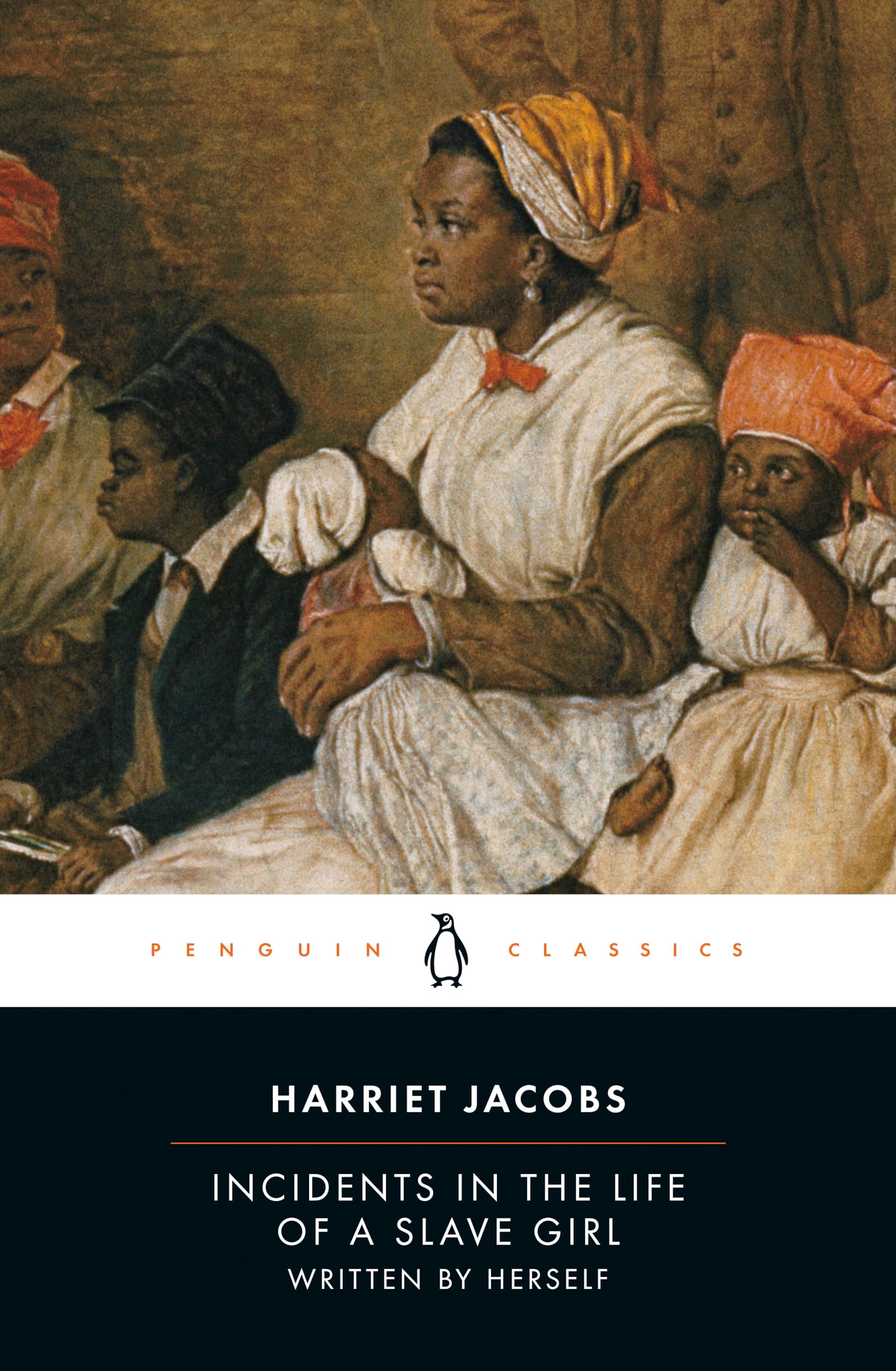
Incidents in the Life of a Slave Girl: Written by Herself (Penguin Classics)
$9.50
by Harriet Jacobs



One of the central firsthand accounts of slavery in America A haunting, evocative recounting of her life as a slave in North Carolina and of her final escape and emancipation, Harriet Jacobs's classic narrative, written between 1853 and 1858 and published pseduonymously in 1861, tells firsthand of the horrors inflicted on slaves. In writing this extraordinary memoir, which culminates in the seven years she spent hiding in a crawl space in her grandmother's attic, Jacobs skillfully used the literary genres of her time, presenting a thoroughly feminist narrative that portrays the evils and traumas of slavery, particularly for women and children. For more than seventy years, Penguin has been the leading publisher of classic literature in the English-speaking world. With more than 1,700 titles, Penguin Classics represents a global bookshelf of the best works throughout history and across genres and disciplines. Readers trust the series to provide authoritative texts enhanced by introductions and notes by distinguished scholars and contemporary authors, as well as up-to-date translations by award-winning translators. Nell Irvin Painter is the author of Sojourner Truth: A Life, A Symbol and Standing at Armageddon, the United States, 1877-1919 , The Narrative of Hosea Hudson and Exodusters: Black Migration to Kansas After Reconstruction . She is Edwards Professor of History at Princeton University, where she currently heads the program in African-American Studies. Excerpt Chapter One Childhood. I was born a slave; but I never knew it till six years of happy childhood had passed away. My father was a carpenter, and considered so intelligent and skilful in his trade, that, when buildings out of the common line were to be erected, he was sent for from long distances, to be head workman. On condition of paying his mistress two hundred dollars a year, and supporting himself, he was allowed to work at his trade, and manage his own affairs. His strongest wish was to purchase his children; but, though he several times offered his hard earnings for that purpose, he never succeeded. In complexion my parents were a light shade of brownish yellow, and were termed mulattoes. They lived together in a comfortable home; and, though we were all slaves, I was so fondly shielded that I never dreamed I was a piece of merchandise, trusted to them for safe keeping, and liable to be demanded of them at any moment. I had one brother, William, who was two years younger than myself - a bright, affectionate child. I had also a great treasure in my maternal grandmother, who was a remarkable woman in many respects. She was the daughter of a planter in South Carolina, who, at his death, left her mother and his three children free, with money to go to St. Augustine, where they had relatives. It was during the Revolutionary War; and they were captured on their passage, carried back, and sold to different purchasers. Such was the story my grandmother used to tell me; but I do not remember all the particulars. She was a little girl when she was captured and sold to the keeper of a large hotel. I have often heard her tell how hard she fared during childhood. But as she grew older she evinced so much intelligence, and was so faithful, that her master and mistress could not help seeing it was for their interest to take care of such a valuable piece of property. She became an indispensable personage in the household, officiating in all capacities, from cook and wet nurse to seamstress. She was much praised for her cooking; and her nice crackers became so famous in the neighborhood that many people were desirous of obtaining them. In consequence of numerous requests of this kind, she asked permission of her mistress to bake crackers at night, after all the household work was done; and she obtained leave to do it, provided she would clothe herself and her children from the profits. Upon these terms, after working hard all day for her mistress, she began her midnight bakings, assisted by her two oldest children. The business proved profitable; and each year she laid by a little, which was saved for a fund to purchase her children. Her master died, and the property was divided among his heirs. The widow had her dower in the hotel, which she continued to keep open. My grandmother remained in her service as a slave; but her children were divided among her master's children. As she had five, Benjamin, the youngest one, was sold, in order that each heir might have an equal portion of dollars and cents. There was so little difference in our ages that he seemed more like my brother than my uncle. He was a bright, handsome lad, nearly white; for he inherited the complexion my grandmother had derived from Anglo-Saxon ancestors. Though only ten years old, seven hundred and twenty dollars were paid for him. His sale was a terrible blow to my grandmother; but she was naturally hopeful, and she went to work with renewed energy, trusting in time to