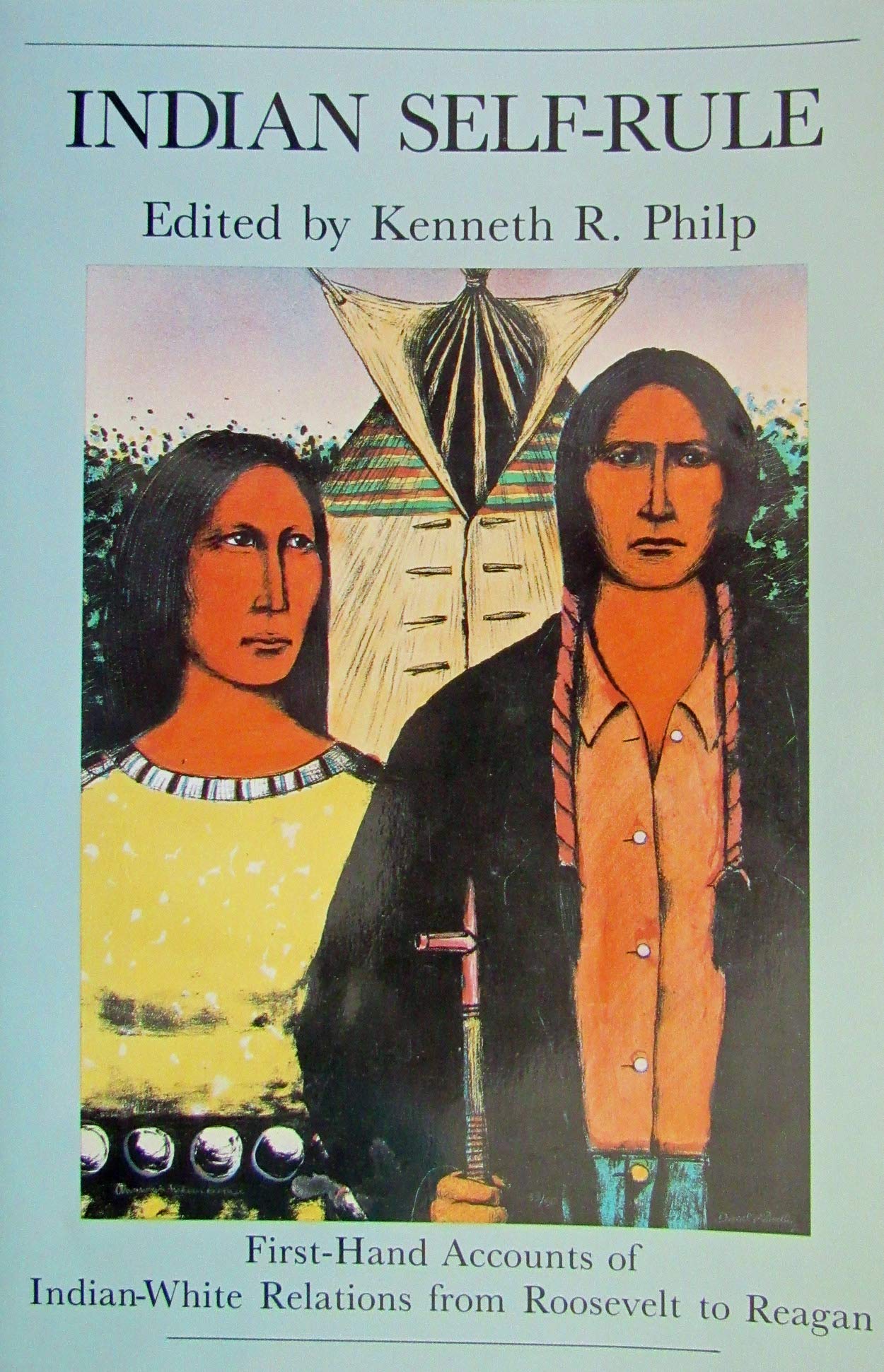
Indian Self Rule: First-Hand Accounts Of Indian-White Relations From Roosevelt To Reagan
$31.95
by Kenneth Philp



Indian Self-Rule is a record of the rarest of occasions, for never before have so many individuals who played an important role in Indian-white relations had the chance to meet and exchange views. The contributors include Indian leaders and activists from a wide cross-section of America's varied native communities; government officials who formulated and administered federal policy, often receiving the blame, rightly or wrongly, when things went wrong; lawyers and other professionals who represent and serve native Americans in courtrooms, corporate offices, and elsewhere; and scholars - historians, anthropologists, political scientists, and others - who study Indians and Indian issues, usually from relatively remote university corridors. Their purpose was to review the fifty years of Indian history since the Indian Reorganization Act was passed during Franklin Delano Roosevelt's New Deal administration. That legislation sought to recast federal Indian policy, redirecting it away from dictatorial assimilation policies toward more self-government for Indians and new respect for their cultural heritage. Other important changes and events have occurred in the subsequent fifty years, including a tribal termination policy, a resurgence of Indian activism, millions of dollars in Indian claims settlements, and the assertion of tribal control over vast energy-rich resources. The common theme that has run through them all has been Indians' struggle for greater control over their own lives and affairs. The result has been a fitful, uneven progression toward self-determination and self-rule, conditions other Americans take for granted. This book is a compilation of papers, comments, and discussions presented at the Conference on Indian Self-Rule held in Sun Valley, Idaho, in August 1983. The chapters are divided into four categories: (1) the Indian New Deal, 1928-45, (2) Termination, 1945-60, (3) Self-Determination, 1960-76, and (4) Indian Self-Rule. Each chapter includes accounts from various panels which included Indian spokespersons, federal policymakers, anthropologists, political scientists, and other scholars. Of particular interest are the Indian participants' first-hand recollections of the effects of the changing federal policies on Indian life. Recommended for academic and large public libraries. Smaller collections can skip. Ruth H. Dukelow, Lib. of Michigan, Lansing Copyright 1985 Reed Business Information, Inc. Indian Self-Rule: First-Hand Accounts of Indian-White Relations from Roosevelt to Reagan is a comprehensive and methodical review of fifty years of Native American history since the Indian reorganization act. This important collection, skillfully edited by Kenneth Philp, is an important and critical collection, a necessary reference source for anyone interested in the modern Native American experience on reservations, in courtrooms, state legislatures, federal agencies, and the halls of Congress. -- Midwest Book Review [This] is a comprehensive and methodical review of fifty years of Native American history since the Indian reorganization act. This important collection, skillfully edited by Kenneth Philp, is an important and critical collection, a necessary reference source for anyone interested in the modern Native American experience on reservations, in courtrooms, state legislatures, federal agencies, and the halls of Congress -- Reviewer's Bookwatch, October 1995 Kenneth R. Philp is professor of history at the University of Texas at Arlington. Used Book in Good Condition