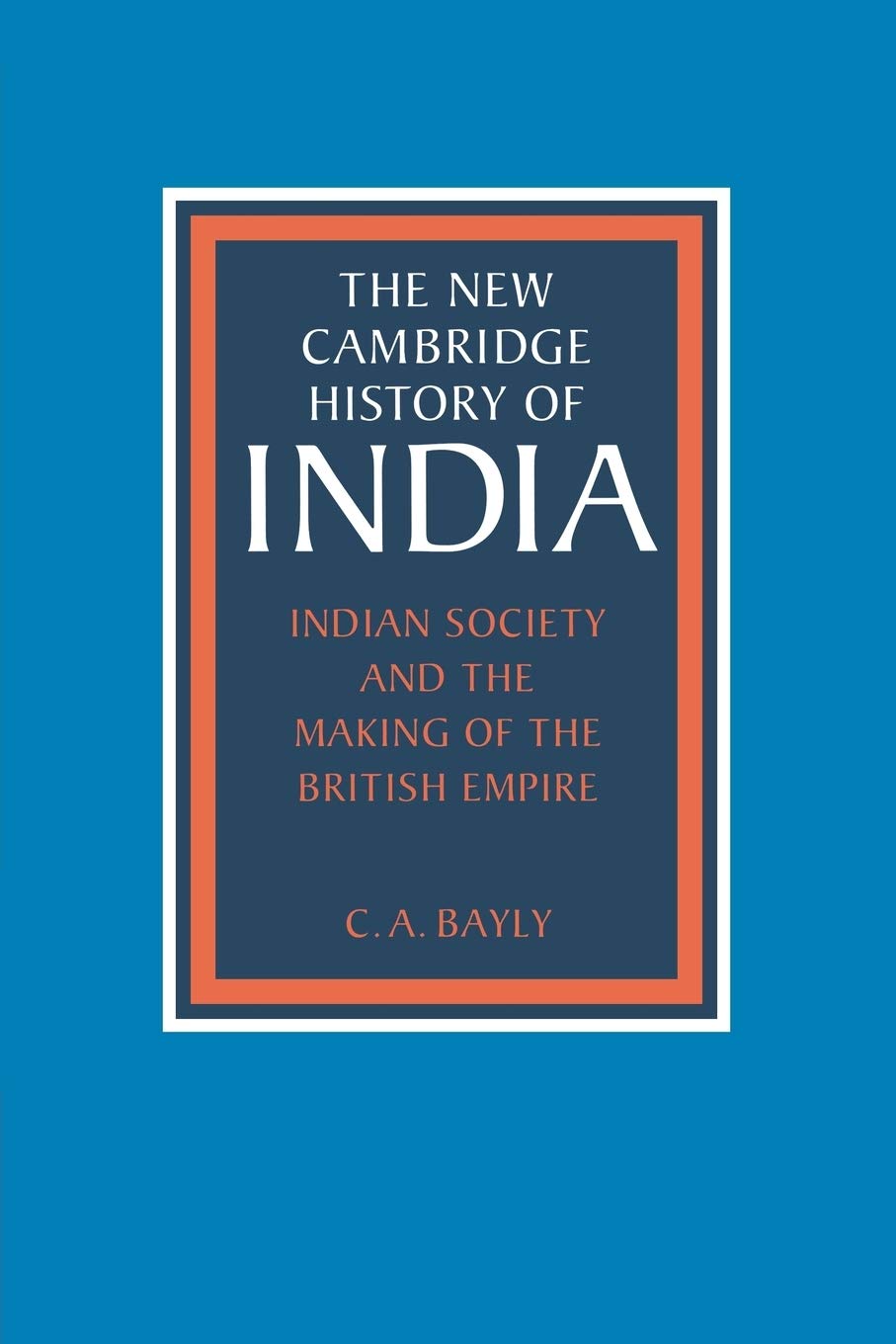
Indian Society and the Making of the British Empire (The New Cambridge History of India)
$24.13
by C. A. Bayly



This volume provides a synthesis of some of the most important themes to emerge from the recent proliferation of specialized scholarship on the period of India's transition to colonialism and seeks to reassess the role of Indians in the politics and economics of early colonialism. It discusses new views of the "decline of the Mughals" and the role of the Indian capitalists in the expansion of the English East India Company's trade and urban settlements. It considers the reasons for the inability of indigenous states to withstand the British, but also highlights the relative failure of the Company to transform India into a quiescent and profitable colony. Finally it deals with changes in India's ecology, social organization, and ideologies in the early nineteenth century, and the nature of Indian resistance to colonialism, including the Rebellion of 1857. "The entire Cambridge series, judging from the quality of these two examples, will prove essential reading for some time to come, for both specialists in Indian history and scholars in related fields. Both authors have clearly demonstated their control over the state of scholarship in their respective areas. These two authors, and the series editors as well, are to be commended for a fine start to what should prove to be a major contribution to the study of Indian history." Michael H. Fisher, Public Affairs "Bayly packs a wealth of information and comment into the limited compass of his book, and many distinct strands of interest find a place." V.G. Kiernan, Victorian Studies "C.A. Bayly, among the most brilliant younger scholars in the field, has produced a book of wonderful intricacy and sophistication. Broad in scope and grand in conception, his study is a masterly synthesis of recent scholarship and amazingly complex interpretations of India's past." American Historical Review This volume reassesses the role of Indians in the politics and economics of early colonialism.