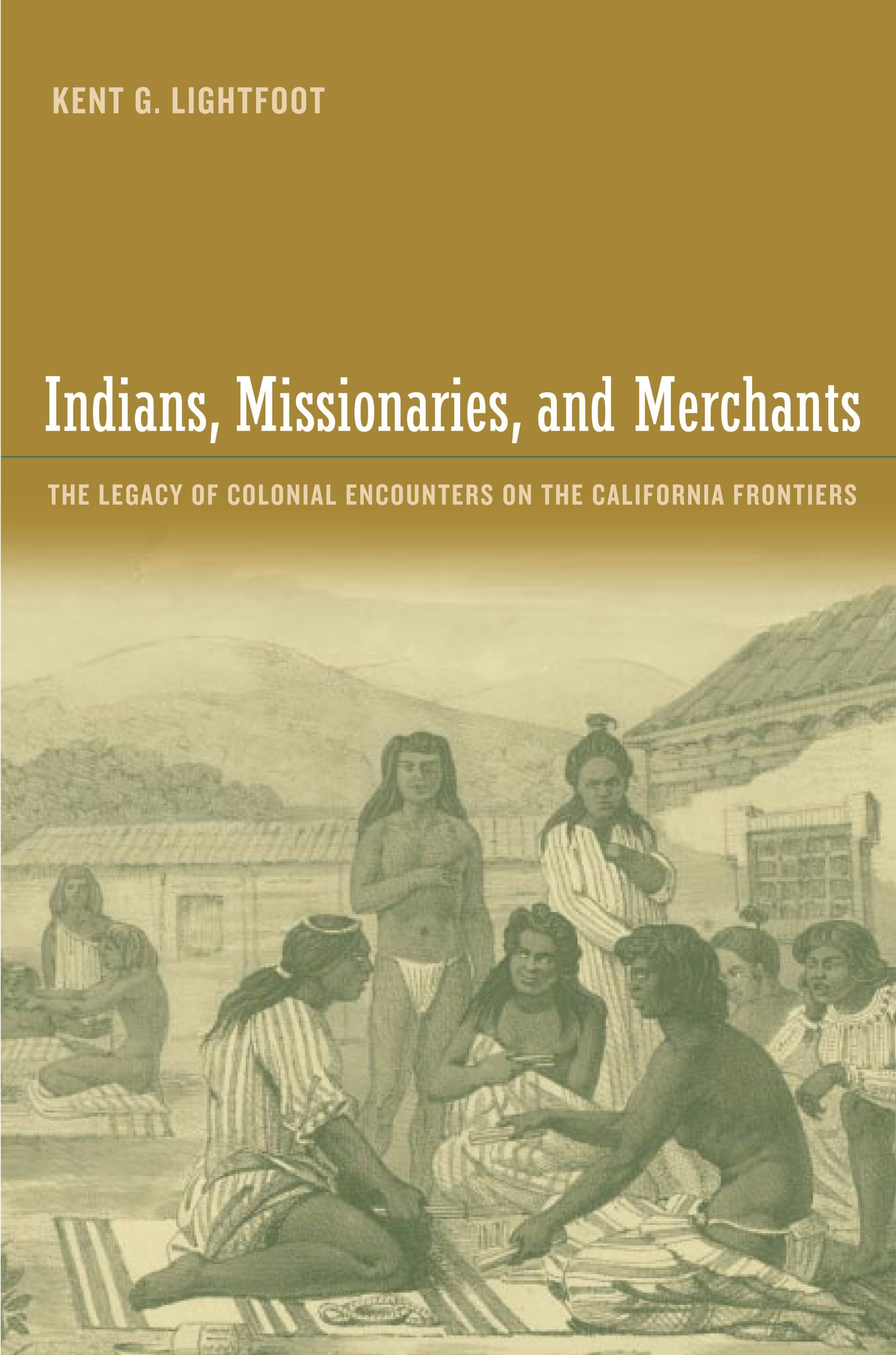
Indians, Missionaries, and Merchants: The Legacy Of Colonial Encounters On The California Frontiers
$28.70
by Kent G. Lightfoot



California’s earliest European colonists―Russian merchants and Spanish missionaries―depended heavily on Native Americans for labor to build and maintain their colonies, but they did so in very different ways. This richly detailed book brings together disparate skeins of the past―including little-known oral histories, native texts, ethnohistory, and archaeological excavations―to present a vivid new view of how native cultures fared under these two colonial systems. Kent Lightfoot’s innovative work, which incorporates the holistic methods of historical anthropology, explores the surprising ramifications of these long-ago encounters for the present-day political status of native people in California. Lightfoot weaves the results of his own significant archaeological research at Fort Ross, a major Russian mercantile colony, into a cross-cultural comparison, showing how these two colonial ventures―one primarily mercantile and one primarily religious―contributed to the development of new kinds of native identities, social forms, and tribal relationships. His lively account includes personal anecdotes from the field and a provocative discussion of the role played by early ethnographers, such as Alfred Kroeber, in influencing which tribes would eventually receive federal recognition. Indians, Missionaries, and Merchants takes a fascinating, yet troubling, look at California’s past and its role in shaping the state today. “Lightfoot . . . gives us an excellent history of cross-cultural influences in old California.” ― Westerners International Published On: 2011-10-01 "This is a remarkable contribution by an extraordinary anthropologist." David Hurst Thomas, author of Skull Wars "A groundbreaking work that will be welcomed by both scholars and the general reader who wishes to understand the role of California's past in shaping its future." Robert L. Hoover, Professor Emeritus, California Polytechnic State University "This is essential reading for every California historian and archaeologist and a superb choice for undergraduate classrooms. Lightfoot's authoritative account gives a long-silenced voice to the many Indians of California." Jeanne E. Arnold, editor of The Origins of a Pacific Coast Chiefdom "This is a remarkable contribution by an extraordinary anthropologist."―David Hurst Thomas, author of Skull Wars "A groundbreaking work that will be welcomed by both scholars and the general reader who wishes to understand the role of California's past in shaping its future."―Robert L. Hoover, Professor Emeritus, California Polytechnic State University "This is essential reading for every California historian and archaeologist and a superb choice for undergraduate classrooms. Lightfoot's authoritative account gives a long-silenced voice to the many Indians of California."―Jeanne E. Arnold, editor of The Origins of a Pacific Coast Chiefdom Kent G. Lightfoot is Professor of Anthropology at the University of California, Berkeley, and author of Prehistoric Political Dynamics: A Case Study from the American Southwest (1984), among other books. Indians, Missionaries, and Merchants The Legacy of Colonial Encounters on the California Frontiers By Kent G. Lightfoot University of California Press Copyright © 2006 Kent G. Lightfoot All right reserved. ISBN: 9780520249981 Chapter One Dimensions and Consequences of Colonial Encounters Voices of the past become muted over time. Such is the case with thetelling of California's colonial history. We accentuate Spanishrecollections that indelibly mark the contemporary landscape with MissionRevival buildings, reconstructed missions and presidios, place names, andeven Taco Bell restaurants. But the full diversity and significance of thestate's colonial past has been lost in the hustle and bustle of ourtwenty-first-century world. An eerie silence pervades the memories ofthousands of native peoples and Russian colonists who, like the Spanish,participated in the creation of the California frontiers. We tend toforget that this state was forged at the crossroads of the world, for itwas here that the extensive colonial domains of Imperial Spain and TsaristRussia first touched on the Pacific coast. The roots of our modern ethnicdiversity can be traced back to this colonial encounter among Indians,Spaniards, Mexicans, Russians, Native Alaskans, and many other peoples. As the site of one of the last major colonial expansions of the SpanishCrown in the late 1700s, California became the northernmost province of avast empire that stretched across much of southern North America, CentralAmerica, and South America. By 1812, California was also the southernmostfrontier of an extensive Russian mercantile enterprise centered in theNorth Pacific (see map 1). With the coming of the Russians, the fertilecoastal shores of central California were transformed into the borderlandsof two distinctive colonial domains. A chain of Franciscan missions andpresidios, exten