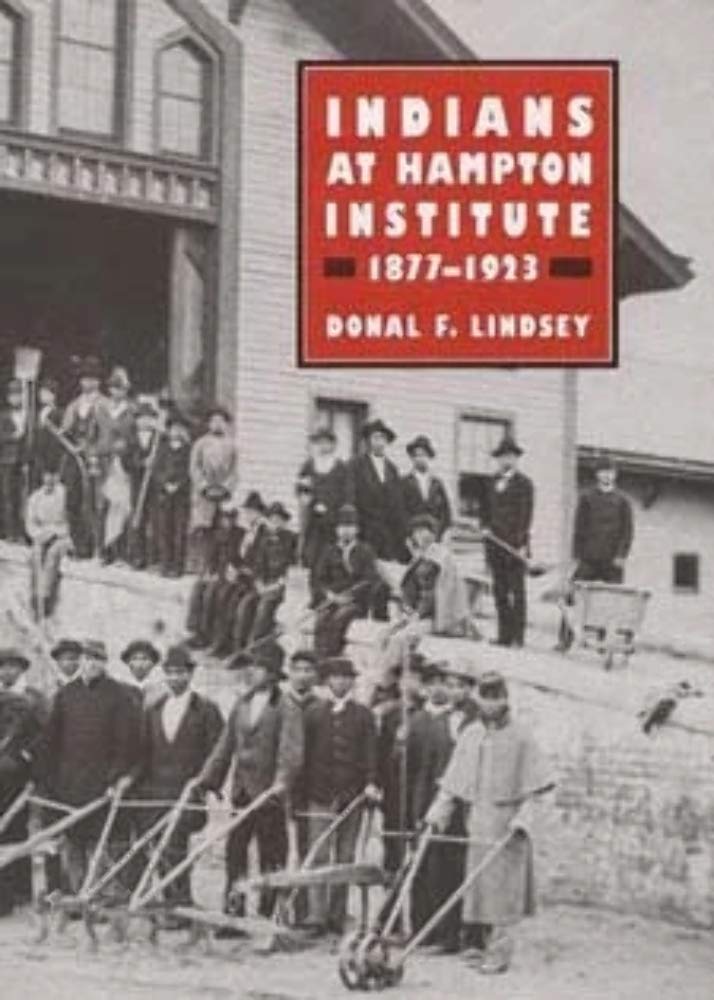
Indians at Hampton Institute, 1877-1923 (Blacks in the New World)
$54.00
by Donal F. Lindsey



Reform and racism at the famed industrial school Founded in 1868, Hampton Institute educated almost 1400 members of sixty-five Native American peoples. Donal F. Lindsey examines the interactions among Indigenous people, Blacks, and whites at the nation’s premier industrial school for racial minorities. Lindsey's analysis traces the rise and decline of the program for Indigenous Americans while analyzing the program’s impact on the campaign for Native education. Lindsey also examines how the two marginalized races at Hampton viewed each other and white society. Though integration prevailed in much of student life, it resulted in even greater accommodation to a racist society. The weaknesses and strengths attributed to one race were used with “tender violence” to remake the other, in a program in which the powerful and the powerless remained so regardless of segregation or integration. "For students of race and culture, this book contains vital information and analysis on the origins of a multicultural society. . . . Lindsey shows the complicated way that one black institution, while still under white control, devised to manage the education and socialization of African and Native American students, not for their needs but in the interests of the broader Anglo-American society." -- American Historical Review In Indians at Hampton Institute, Donal F. Lindsey examines the complex and changing interactions among Indians, blacks, and whites at the nation's premier industrial school for racial minorities. He traces the rise and decline of the Indian program in the late nineteenth and early twentieth centuries, analyzing its impact in the U.S. campaign for Indian education. Donal F. Lindsey is a member of the history department at the State University of New York-College at Oswego.