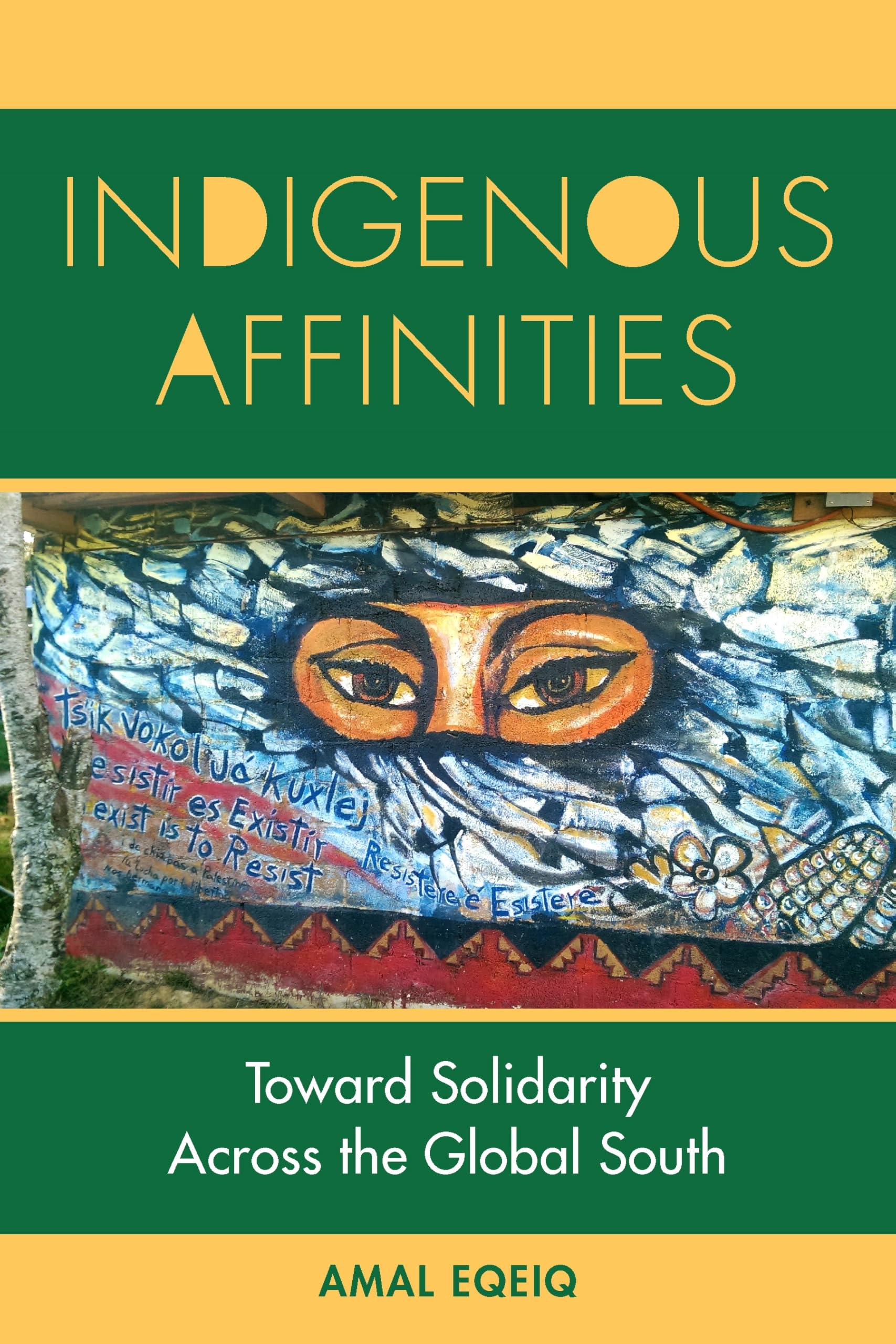



Reveals how Mayan and Palestinian narratives connect through shared Indigenous struggles, proposing ‘affinity’ as a framework for global solidarity Inspired by and committed to global Indigenous solidarity and South-South encounters, Indigenous Affinities examines the multifaceted connection between Chiapas and Palestine. In tracing unseen threads that connect parallel geographies of struggle found in contemporary Mayan and Palestinian narratives, Indigenous Affinities proposes affinity as a new conceptual framework. Eqeiq shows how―despite emerging from distinct historical processes of minoritization, subalternization, and racialization―Mayan and Palestinian written, visual, and performance texts articulate a common configuration of Indigeneity. These seemingly unrelated connections, Eqeiq contends, can be read through shared histories of land struggle, practices of autonomy, quests for liberation, and collective resistance to racial capitalism, military oppression, and colonial violence. Eqeiq examines murals that offer a visual testimony to common struggles and transnational connection, explores fragmented bilingualisms that have propelled language revival and revitalization, highlights a shared concern with borders, and documents the performative commemorations of massacres. Reading such sites together in the complexities and specificities of disparate contexts, Indigenous Affinities illuminates how the lens of affinity can elucidate solidarity and resistance within the Global South. Indigenous Affinities shows how we might develop a South-South dialogue that circumvents or even short-circuits the usual dynamics of knowledge production. A brilliant, nuanced book that will set the standard for comparative work in global Indigenous studies for years to come ---Paul Worley, Appalachian State University From a profound intellectual interest in peoples’ lives, histories, struggles, and creations, Eqeiq focuses on the solidarities around dispossessed collectivities and their encounters and exchanges across continents. While Indigenous studies has grown into a vibrant field in North America, the book’s comparative dimension remains unique, especially in including Palestinian experience. ---Najat Rahman, University of Montreal Eqeiq’s book movingly establishes relations of affinity between Palestinian (Arabic) and Mayan (Tsotsil) language, literature, and community memory, while also showing how we might understand Indigenous affinity across a range of seemingly unrelated languages and social contexts. ---Manu Karuka, author of Empire’s Tracks: Indigenous Nations, Chinese Workers, and the Transcontinental Railroad “ Indigenous Affinities shows how we might develop a South-South dialogue that circumvents or even short-circuits the usual dynamics of knowledge production. A brilliant, nuanced book that will set the standard for comparative work in global Indigenous studies for years to come”― Paul Worley , Appalachian State University “From a profound intellectual interest in peoples’ lives, histories, struggles, and creations, Eqeiq focuses on the solidarities around dispossessed collectivities and their encounters and exchanges across continents. While Indigenous studies has grown into a vibrant field in North America, the book’s comparative dimension remains unique, especially in including Palestinian experience.”― Najat Rahman , University of Montreal “Eqeiq’s book movingly establishes relations of affinity between Palestinian (Arabic) and Mayan (Tsotsil) language, literature, and community memory, while also showing how we might understand Indigenous affinity across a range of seemingly unrelated languages and social contexts.”― Manu Karuka , author of Empire’s Tracks: Indigenous Nations, Chinese Workers, and the Transcontinental Railroad Inspired by and committed to global Indigenous solidarity and South-South encounters, Indigenous Affinities examines the multifaceted connection between Chiapas and Palestine. In tracing unseen threads that connect parallel geographies of struggle found in contemporary Mayan and Palestinian narratives, Indigenous Affinities proposes affinity as a new conceptual framework. Eqeiq shows how―despite emerging from distinct historical processes of minoritization, subalternization, and racialization―Mayan and Palestinian written, visual, and performance texts articulate a common configuration of Indigeneity. These seemingly unrelated connections, Eqeiq contends, can be read through shared histories of land struggle, practices of autonomy, quests for liberation, and collective resistance to racial capitalism, military oppression, and colonial violence. Eqeiq examines murals that offer a visual testimony to common struggles and transnational connection, explores fragmented bilingualisms that have propelled language revival and revitalization, highlights a shared concern with borders, and documents the performative commemorations of massacres. Reading such sit