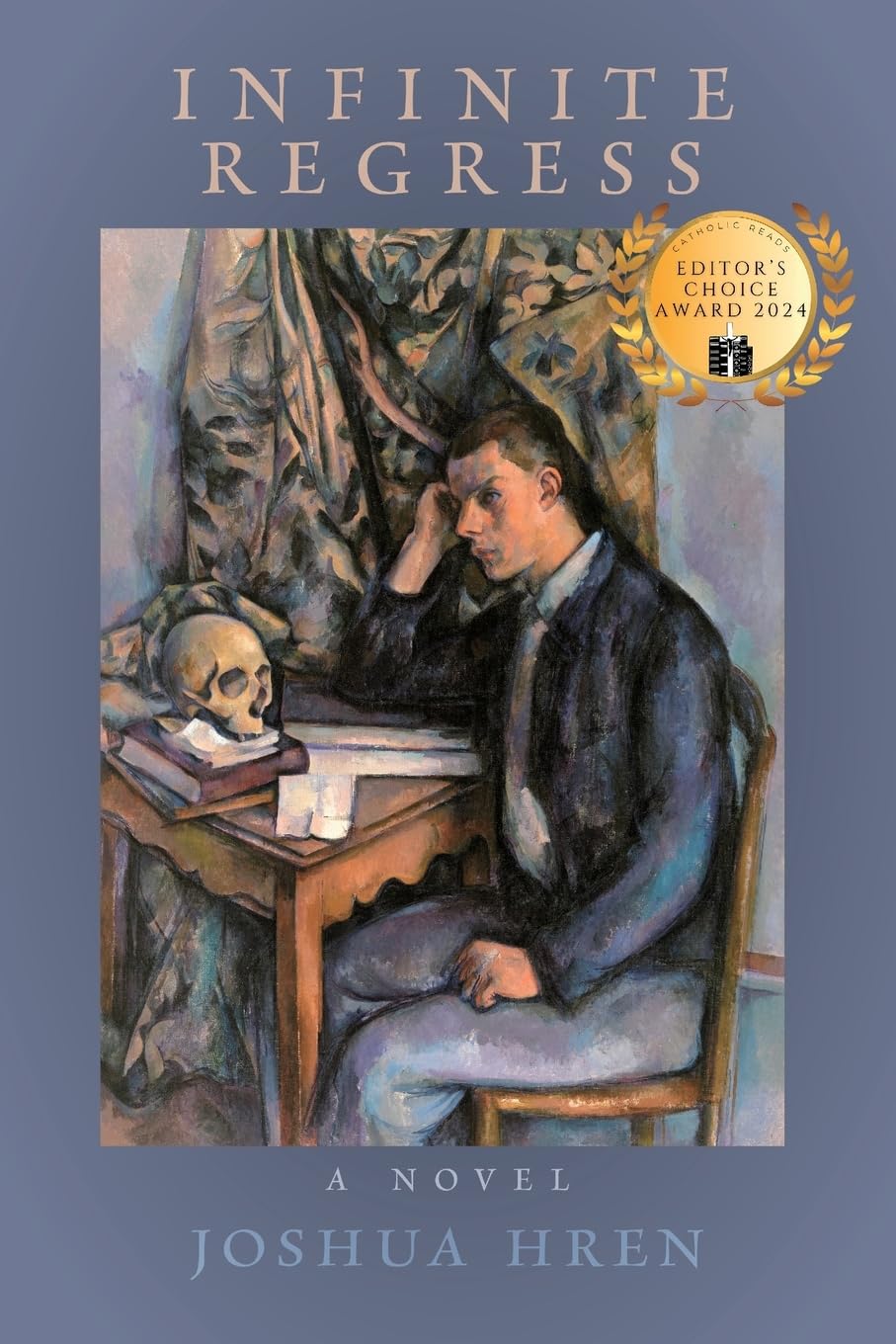



In the years since his graduation from St. Marquis University, Blake Yourrick has fled his family and Milwaukee, rotating from job to dead-end job—working the Bakken oilfields in Dakota and even signing on as the night caretaker of a rural abbey graveyard. Deep in student debt and estranged from his misanthropic, alcoholic father, Blake is haunted by the memory of his mother’s death—and by his relationship with his college mentor, a defrocked priest named Theo Hape, who is known for his adventurous theological ideas as well as for the uncanny , seductive power he wields over his students. When Hape, learning of his former charge’s desperate straits, proposes a perverse exchange of services, Blake finds himself tempted to test the professor’s radical theories in real life. What follows is a metaphysical duel reminiscent of the novels of Dostoevsky and Bernanos, pitting a modern-day anti-Christ against a reckless but resilient young man and his well-meaning, dysfunctional kin. "A rare bird . . . not just a brilliant novel but, in the truest sense, a divine comedy." — The Los Angeles Review of Books " Infinite Regress is easily the best Catholic novel since Beha's What Happened to Sophie Wilder. We few, we happy few, who follow the world of Catholic fiction like it's a major league championship, welcome a new frontrunner." — The Catholic Weekly "The novel's most canny feature: penetratingly funny satires of the shallowness of contemporary American life. It surpasses C.S. Lewis's The Screwtape Letters in its originality, cunning, speed, and penetration into the mystery of evil and the tensions within the human soul." — The University Bookman "This novel wants those readers who turn to fiction for wisdom as a hermit turns to silent prayer on a mountaintop." — The American Conservative "The truth is much more complex and messy and, like Shūsaku Endō, Joshua Hren has become a master of depicting the intricacy of the faith and doubt, as well as the virtue and sin, that plague the human heart." — CWR " . . . a masterful story . . ." —U.S. Catholic "What an intense read! The novel keeps asking the reader, 'How do you live if you're going to die?' Infinite Regress faces the evils and tragedies of our current cultural moment with prophetic eyes. The novel is soaked with the influence of Dostoevsky: Fyodor Karamazov, Stavrogin, Ivan, and others bubble up into the 21st century with American problems and counterparts. Through complex and bitterly human characters, Hren draws readers into deep dialogues about what we believe and how we live those beliefs—especially in light of good, evil, and our fated mortality. Faith is tested by fire and rises up to purge us of the mess we make with our choices. Infinite Regress is a memento mori that does not hold back from scouring its readers with truth." — JESSICA HOOTEN WILSON , author of Giving the Devil His Due: Flannery O'Connor and The Brothers Karamazov "Joshua Hren's unique creative voice—and deep-seeing eyes—offer a probing portrait of America in the twilight of the West. Infinite Regress is essentially about how redemption may be found there at the impoverished bottom (sometimes in surprising disguises), even in a polluted atmosphere of lies and addictions. His vivid characters struggle through deceits and self-deceptions, accommodations with half-life, while fighting to maintain their humanity in the face of apparent hopelessness. But the novel is not without comedy—and even follows the commedia, as forgiveness comes about through a communio of persons pointing toward a future in which hope may be reborn." — MICHAEL D. O'BRIEN , author of Sophia House, The Island of the World, and many others JOSHUA HREN is founder of Wiseblood Books and co-founder of the MFA program at the University of St. Thomas. He regularly publishes in such journals as First Things and America, National Review and Commonweal, Public Discourse and LOGOS . Joshua's books include: the short story collections This Our Exile and In the Wine Press ; the book of poems Last Things, First Things, & Other Lost Causes ; Middle-earth and the Return of the Common Good: J.R.R. Tolkien and Political Philosophy ; How to Read ( and Write ) Like a Catholic ; and Contemplative Realism: A Theological-Aesthetical Manifesto.