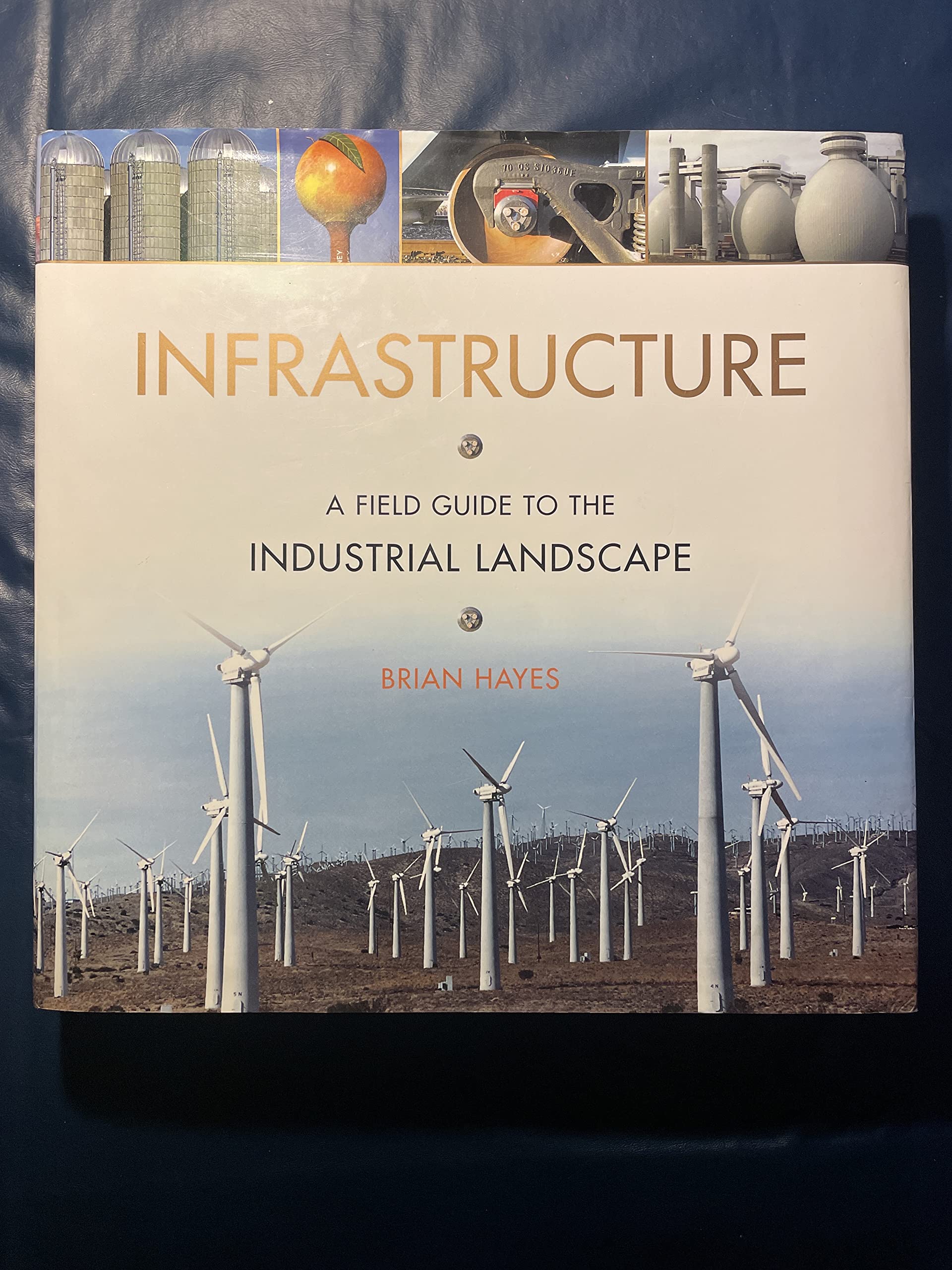



A companion to the man-made landscape that reveals how our industrial environment can be as dazzling as the natural world. Replete with the author's striking photographs, Infrastructure is a unique and spectacular guide, exploring all the major "ecosystems" of our modern industrial world, revealing what the structures are and why they're there, and uncovering beauty in unexpected placesawakening and fulfilling a curiosity you didn't know you had. Covering agriculture, resources, energy, communication, transportation, manufacturing, and waste, this is the "Book of Everything" for the industrial landscape. The objects that fill our everyday environment are streetlights, railroad tracks, antenna towers, highway overpasses, power lines, satellite dishes, and thousands of other manufactured items, many of them so familiar we hardly notice them. Larger and more exotic facilities have transformed vast tracts of the landscape: coal mines, nuclear power plants, grain elevators, oil refineries, and steel mills, to name a few. Infrastructure is a compelling and clear guide for those who want to explore and understand this mysterious world we've made for ourselves. 500 color illustrations. We are surrounded by the hardware of the modern world, but how much of it do we even notice, much less understand? This unique and fascinating book covers the parts of the landscape that are often overlooked despite their ubiquity--objects such as utility poles, power lines, cell phone towers, highway overpasses, railroad tracks, factories, and other man-made mechanical marvels. And they are not just in urban areas, but include out of the way "ecosystems" such as mines, dams, wind farms, power plants, grain operators, steel mills, and oil refineries. In Infrastructure , Brian Hayes offers clear explanations of the systems that keep the modern world running, including agriculture, energy supplies, shipping, air transportation, and the various ingenious methods of recycling and managing the waste we generate. Subtitled "A Field Guide to the Industrial Landscape," the book is laid out like a nature guide, with comprehensive details and photographs on every page. "There can be just as much of interest happening on a factory rooftop as there is in the forest canopy, just as much to marvel at in the operation of a strip-mining dragline as in the geological carving of a river canyon," writes Hayes. A mine may not be as scenic as a mountain peak, but he argues it can hold as much fascination. His "chief aim is simply to describe and explain the technological fabric of society, not to judge whether it is good or bad, beautiful or ugly." In this he does an impressive job. He tells us how things work and why they are located where they are, and answers dozens of practical questions in the process. He also walks us through how raw materials such as coal, timber, petroleum, and water are converted and transported for use in our homes and businesses. Readers won't view the industrial landscape that same way after poring over this remarkable book. -- Shawn Carkonen Field guides to nature abound, and they are invaluable for pinning down the name of a songbird or hawk that flashes by. Now a veteran science writer has crisscrossed the U.S. photographing and writing a different sort of vade mecum, one to the built environment--the electric-power substations and cargo cranes, cell phone towers, tank farms and derricks that show themselves on highways and country roads, unsung structures as much in need of identification and explanation as any bird. In the original, highly readable Infrastructure: A Field Guide to the Industrial Landscape, Brian Hayes adapts the form of the field guide to "everything that isn't nature," as he writes. "There can be just as much of interest happening on a factory rooftop as there is in the forest canopy." The book seeks not just to identify common sights of the technological landscape but to explain how these sights fit together, starting with raw materials like coal, water and food, moving through interconnecting networks like roadways and the electric-power grid, and ending with what he calls the nether end of the industrial economy, waste disposal. "You might as well get to know what it's called and what it does," he writes of this landscape. "It's all around you.... If you would pull off the highway to admire a mountain vista ... you might also consider pausing for a mine or a power plant." Camera in hand, Hayes spent 1992 to 2004 compiling much of the material for the book, supported in part by the Sloan Foundation's program on public understanding of technology. A technophile, he hopes to change some common attitudes toward the industrial landscape--"In the presence of nature we hold our breath ... in the presence of industry we hold our nose," he writes. He undertakes this task partly through hundreds of photographs taken from airplanes, cars, and the public side of many a chain-link fence, partly through