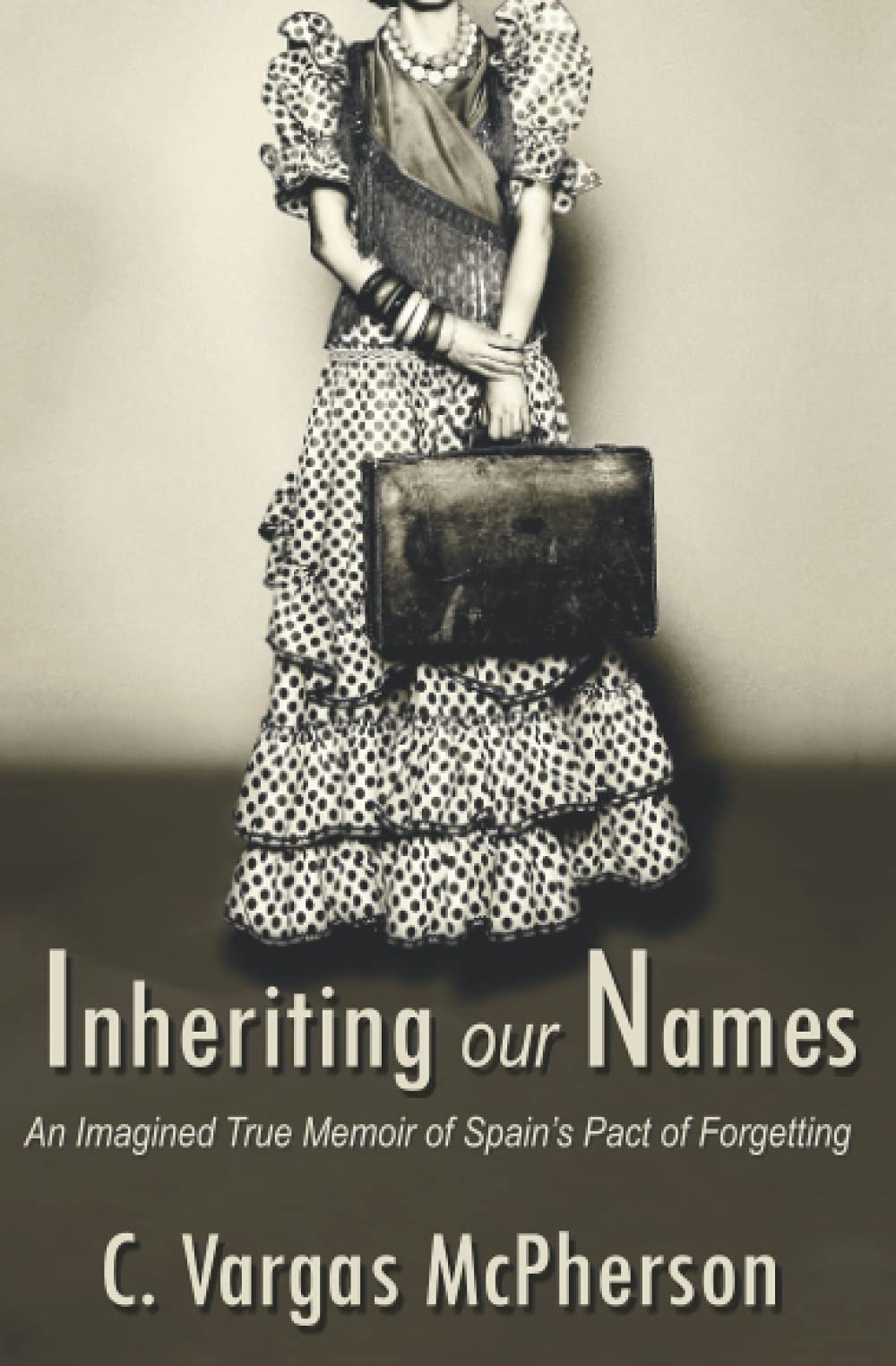
Inheriting Our Names: An Imagined True Memoir of Spain's Pact of Forgetting
$10.22
by C. Vargas-McPherson



2021 Grand Prize Winner in Winning Writers North Street Book Prize "Vargas-McPherson is raising up and empowering marginalized voices in remembering and dissecting a moment in history that is often overlooked. While exploring the intersecting experiences over multiple generations, she uncovers familial connections and explores the devastating effects of intergenerational trauma. While many wars have garnered mass amounts of attention from the world, others have not. There have been countless genocides, civil wars, political uprisings, etc. that have caused horrible atrocities in the lives of citizens, and the rest of the world has all but turned a blind eye to them. Vargas-McPherson has put a spotlight on an experience that has shaped the lives of many, but that has hardly been explored in media. Inheriting our Names is an important book for marginalized voices, bringing to light the experiences of a people often ignored." — The BookLife Prize. "The focus on parentage and ancestry feels very Gothic, and the inclusion of Gothic visual elements supports that material quite well. It's all very delicate, like a stained-glass window—it's amazing to find so much lightness in a story about decades of brutality and trauma." — Annie Mydla, The Yearbook of Joseph Conrad Studies (2017), Avant Literary Journal (2017), and in Polish translation in Tajemni wspólnicy: czytelnik, widz i tłumacz (Secret Sharers: Reader, Viewer and Translator, 2017). "I love that this book is described as "an imagined true memoir" and, indeed, it is both searingly honest and richly imagined. I was utterly engrossed by this lyrical, profound story of secrets and revelations, trauma and transformation, and am so glad to have discovered this writer." — Abigail DeWitt author of three novels: LILI (WW Norton), DOGS (Lorimer Press), and NEWS OF OUR LOVED ONES In the winter of 1936, the year the Spanish Civil War erupts in Seville, Vargas McPherson’s grandfather trembles against the cemetery wall in front of a firing squad. Her grandmother holds her dying first born daughter. Rations are once again cut. And into this profoundly censured grief, Vargas McPherson’s mother is born. Silenced through shame, cultural tradition, and Spain’s official Pact of Forgetting, her family has unknowingly bequeathed these overwhelming and unnamed tragedies they could not carry themselves. Each of us carry untold stories from before we were born and in Vargas McPherson’s luminous memoir, she seeks to reclaim and name her family’s secret history. Traveling to Seville, Vargas McPherson reimagines her family’s lives during the brutality of the Spanish Civil War and the Franco dictatorship. There, she uncovers layers of religious mysticism, class struggle, and the catastrophic losses uncannily reflected in the names of her family. Unearthing each of the names, she embraces and holds space for the pain endured by her grandmother and mother and arrives at her own transformational truth, releasing her inheritance of grief. A sweeping epic, rich with sensual and palpable prose, Inheriting Our Names is a searingly poignant and transcendent memoir of family, war, and transgenerational grief. "Inheriting Our Names , C. Vargas McPherson's lyrical account of the Spanish Civil War's impact on her family, is subtitled An imagined true memoir of Spain's pact of forgetting. This paradoxical description expresses the dual consciousness of living with traumatic memories that one's society refuses to acknowledge. These fraught political silences are paralleled by personal bereavements that disrupt mother-daughter bonding for two generations. On both the political and the personal level, then, Inheriting Our Names underscores the importance of remembering history so we will not repeat it. The Spanish Civil War is given scant attention in classrooms and historical dramas, as the Nazis tend to steal the spotlight. Yet through this book I discovered chilling similarities to our current situation in America, where reactionary religion and foreign authoritarian governments also collaborated to put a demagogue in power. There's also an analogy to our fraught debates about how—or even whether—to teach painful truths about racism and colonization. Vargas McPherson notes that in 1977, two years after Franco died, Spain passed the Law of Amnesty, which limited what could be written or spoken about the atrocities of his government. 'While those who fought for the nationalist cause were glorified by Franco's regime and the Roman Catholic Church, the bodies of those who opposed Franco are buried in countless unmarked shallow graves all over Spain.' In 2007, the country enacted the Law of Historical Memory, which finally acknowledged and condemned the Nationalists' violence, gave descendants the right to look for the victims' remains, and established a Truth Commission. Inheriting Our Names is part of that opening-up project." — Jendi Reiter author of AN INCOMPLETE LIST OF