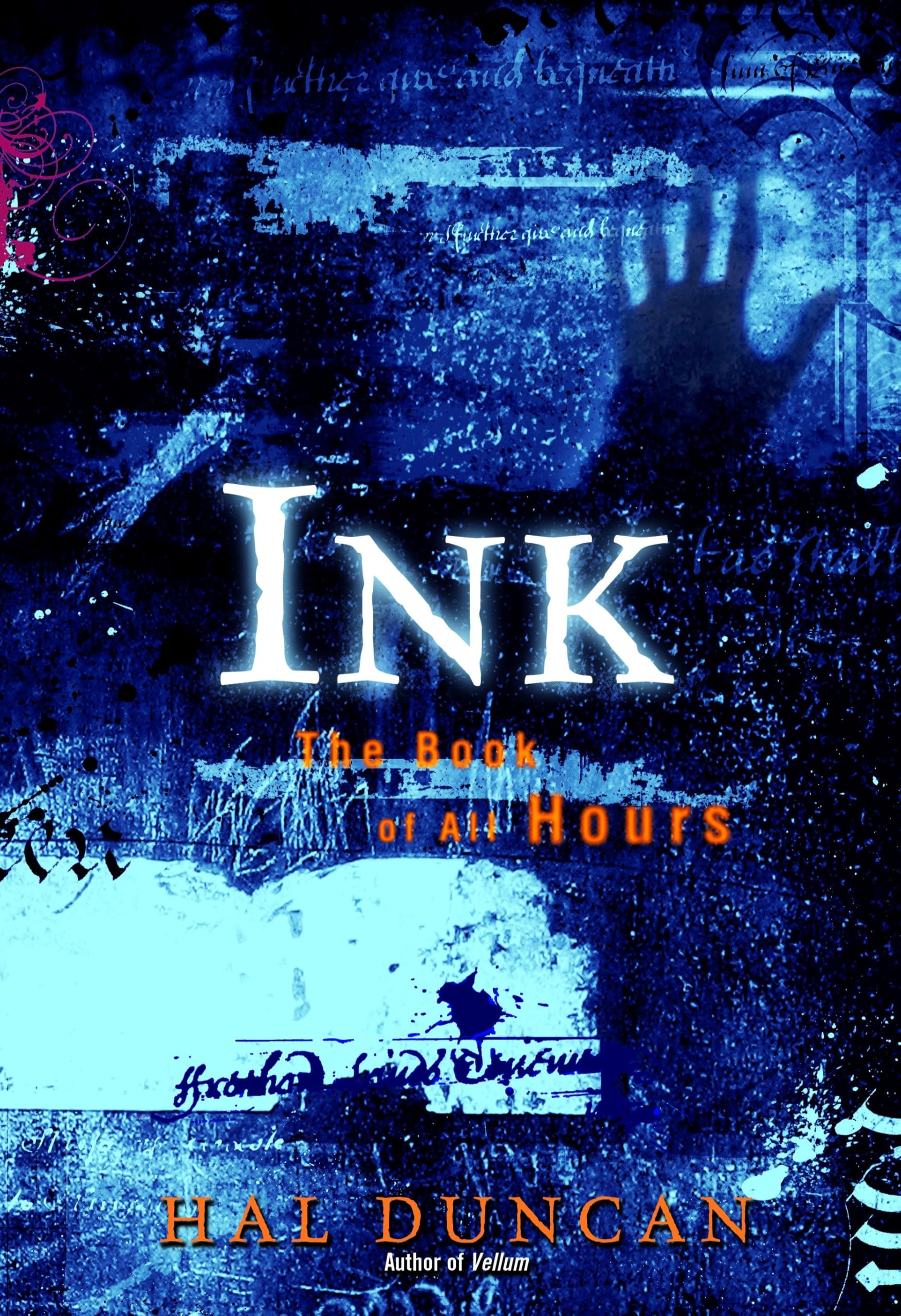



Hal Duncan shattered the boundaries between genres with his stunning debut novel, Vellum, which shocked with the boldness of its ideas, seduced with the sensual beauty of its prose, and astonished with its imaginative sweep. Now Duncan returns with another epic tour de force that surpasses all expectations. Once, in the depths of prehistory, they were human. But in a moment of brutal transfiguration, they became unkin, beings who possessed the power to alter reality by accessing the Vellum: a realm of eternity containing every possibility, every paradox, every heaven . . . and every hell. The Vellum became a battleground where forces of order and chaos fought across time and space. The ultimate weapon in that bloody war spanning through history and myth, dreams and memory, was The Book of All Hours, a legendary tome within which the blueprint for all reality is inscribed, a volume long lost amid the infinite folds of the Vellum. Until, in 2017, it was found by Reynard Carter, a young man with the blood of unkin in his veins. Until Phreedom Messenger and her brother, Thomas, were swept up in an archetypal dance of death and rebirth. Until a hermit named Seamus Finnan found the courage to re-forge his broken soul, and a self-proclaimed angel called Metatron unleashed a plague of AI bitmites. Now, in the aftermath of the apocalypse, several survivors search desperately for the remnants of themselves scattered across the Vellum like torn pages, determined to use the blood of the unkin to rewrite The Book of All Hours, and to forge a new destiny for themselves and all humanity. Reality will never be the same. In the sequel to Vellum (2005), the Covenant has been broken, but the angel and demon unkin still compete for power over the worlds of the Vellum. Playing out against a backdrop of futurism and fascism and little pockets of stagnant order--havens, where the bitmites make all the things humans have ever dreamed up possible--the split parts of Mad Jack, Joey Narcosis, Phreedom, and the rest of their crew seek to rewrite the Book of All Hours and bring the angels and demons to their knees for good. Duncan's multilayered storytelling--a mad ride through alternate histories of the twentieth century and beyond--makes for a complex and tangled narrative whose strands are slowly woven together to a satisfying denouement. As in Vellum , Duncan draws on classical sources in Ink , this time Euripides' Bacchae and some of Virgil's pastoral works, to great effect. Ink delivers beautifully on the promise of Vellum , with an excellent mixture of adventure, danger, and the fantastic. Regina Schroeder Copyright © American Library Association. All rights reserved Praise for Hal Duncan and Vellum “Readers who enjoy the likes of Jeff VanderMeer and Theodore Sturgeon will appreciate the burning energy and imaginative prose.” —BookPage “A revelation–the opening gambit in the career of a mind-blowing colossal talent whose impact will be felt for decades.” —Jeff VanderMeer, author of Shriek: An Afterword “Very impressive, very moving book. I’ll be looking for . . . the second volume.” —The San Diego Union-Tribune “A mind-blowing read.” — SFX , starred review “Vellum is more than a novel; it’s a vision.” —Jeffrey Ford, author of The Girl in the Glass “Like nothing you’ve ever read before.” —Cinefantastique “Duncan’s sprawling masterpiece is essentially . . . an inspirational guide . . . in the tradition of William Burroughs’s The Ticket That Exploded , Grant Morrison’ s The Invisibles , and John Twelve Hawk’s The Traveler –only better. . . . It’s exhilarating as hell.” —Rain Taxi “It’s been a long time since I’ve come across a book like Vellum, the astonishing first novel by Hal Duncan. Actually, I don’t think there is a book like it.” —The Magazine of Fantasy & Science Fiction Hal Duncan is the author of Vellum, which was a finalist for both the William H. Crawford Award and the Locus Award for Best First Novel. He is a member of the Glasgow SF Writers’ Circle. He lives in the West End of Glasgow. One Harlequin In Hell A tantric tarantula. Doom. That one’s for King Finn, I think as the smoked-glass windows of the brown-brick 1960s monster of a multistory shatter in a bloom of black smoke and green flame, and I almost flinch—but only almost—as the shock wave blasts across my back, billowing my armored longcoat out in front of me. The reflection in the mirror steel of the Zippo, inscribed with the circle-A of Anarchy, is a peachy sight in the rush-hour night of winter Kentigern, my very own fireworks display. The building was asking for it anyway, I reckon; the only thing the fascists do worse than politics is architecture, and in the Little Black Book of Jack Flash tattooed on my skin, well, bad taste is a fine reason for revolution. I click the lighter open, snik it lit and suck a hash cheroot into a fwoosh of life, then clunk the silvery lighter shut and turn, wait. One elephant