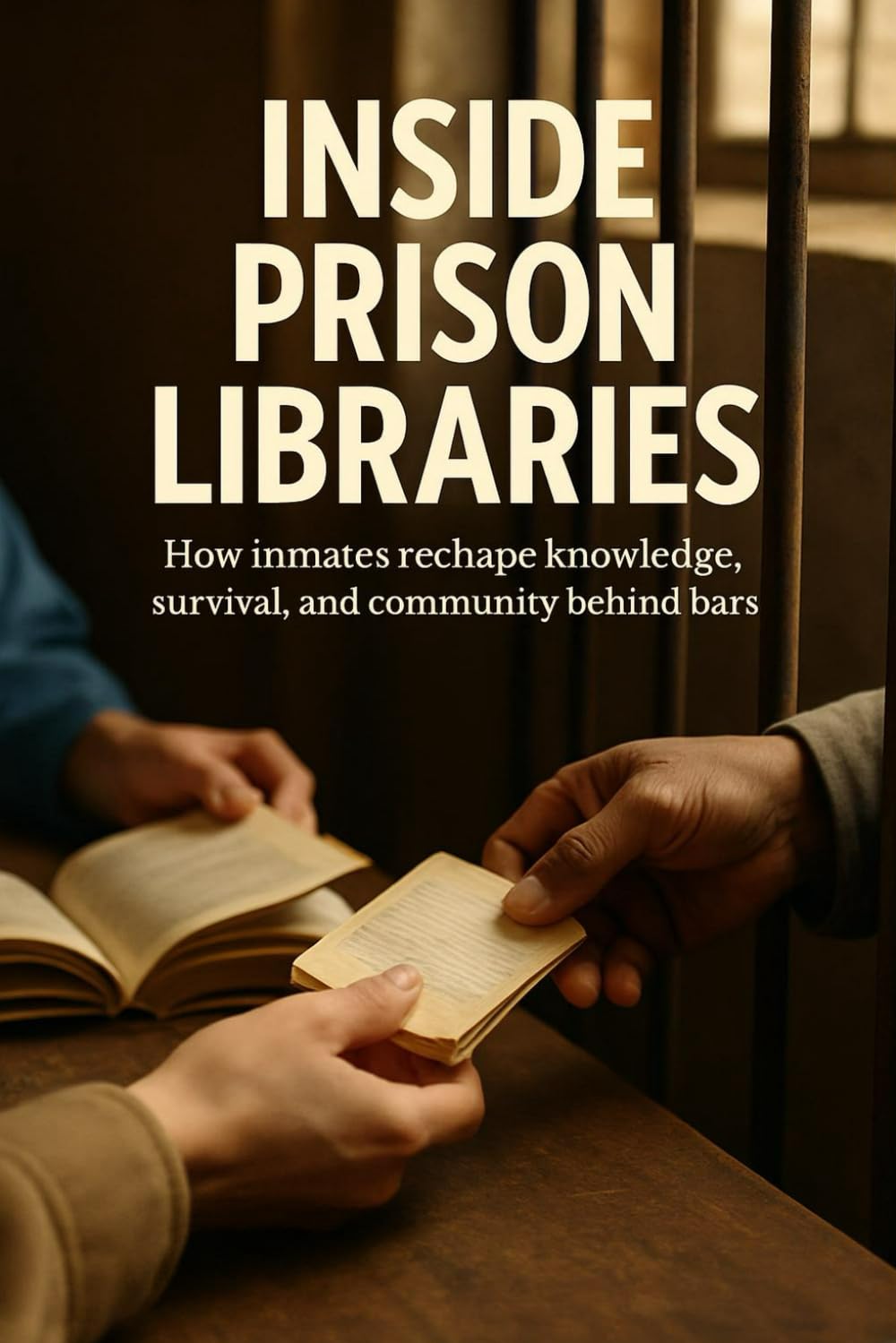
Inside Prison Libraries: How inmates reshape knowledge, survival, and community behind bars
$10.99
by Joyce Kalicki



Have you ever wondered what a library looks like where sentences outnumber silence? If you crave a rare window into the lives, strategies, and surprising humanity inside correctional institutions, this book meets you there. Inside Prison Libraries begins by naming the tension many readers feel: prisons as places of punishment versus places of unexpected learning. You are seen—curious, unsettled, and ready to understand how books become tools of survival and social order. This book takes you onto the library floor: the morning crush, the informal hierarchies, and the improbable librarians—convicts, ex-convicts, and residents who curate culture and commerce among stacks. You will meet Dice, Fat Kat, Ty, and others whose habits, rituals, and nicknames map a living social network. Each portrait reveals how reading, recitation, and reference reshape identity and power inside the institutional walls. Next, we follow practical scenes: inmates using legal manuals, hustlers seeking self-help, artists composing lyrics, and memoirists drafting survival narratives. Observe the micro-economies and the moral tradeoffs—what is shared freely, what is commodified, and how staff, volunteers, and caseworkers navigate safety and access. These moments reveal policy gaps and surprising opportunities for rehabilitation and humane engagement. Finally, the book offers actionable insights for librarians, program designers, and researchers: low-cost reading programs that build trust, simple catalog adaptations for low-literacy populations, and small listening stations that create dignity. You’ll find vivid examples and replicable practices that show books can do more than inform; they can change behavior, reduce isolation, and forge unexpected alliances among people society often writes off. • real inmate profiles → emotional empathy and clearer policy choices • practical library practices → safer, rehabilitative programming • program case studies → measurable pathways to reduced recidivism Who should read this book? Scholars of prisons and criminal justice, librarians, reentry practitioners, volunteers, and readers of immersive nonfiction. If you work in corrections or design community programs—or if you simply want a humane, rigorous account of people remaking themselves with books—this is written for you. The narrative provides both the human detail and the systemic takeaways you need now. Turn the page and join a guided tour of an overlooked institution: the prison library. Read the stories, borrow the methods, and leave with concrete steps you can apply today—whether advocating for a new program, reshaping a policy, or simply understanding how reading rebuilds lives in the toughest environments. Start the journey: open to the first portrait now.