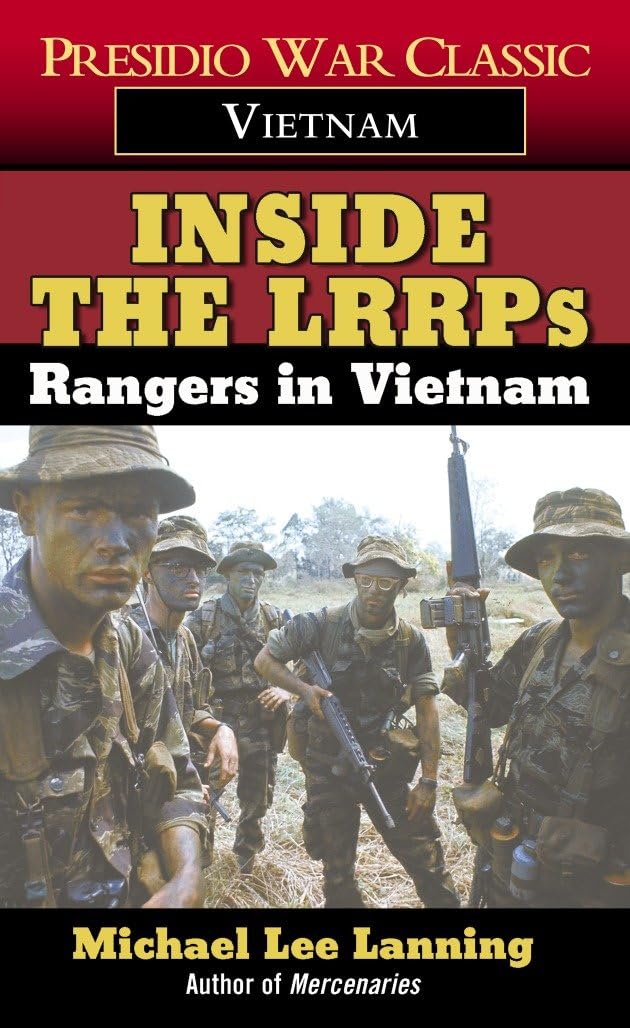



Vietnam was a different kind of war, calling for a different kind of soldier. The LRRPs--Long Range Reconnaissance Patrols--were that new breed of fighting man. They operated in six-man teams deep within enemy territory, and were the eyes and ears of the units they served. This is their story--of perseverence under extreme hardship and uncommon bravery--and how they carried out the war's most hazardous missions. Vietnam was a different kind of war, calling for a different kind of soldier. The LRRPs--Long Range Reconnaissance Patrols--were that new breed of fighting man. They operated in six-man teams deep within enemy territory, and were the eyes and ears of the units they served. This is their story--of perseverence under extreme hardship and uncommon bravery--and how they carried out the war's most hazardous missions. Vietnam was a different kind of war, calling for a different kind of soldier. The LRRPs--Long Range Reconnaissance Patrols--were that new breed of fighting man. They operated in six-man teams deep within enemy territory, and were the eyes and ears of the units they served. This is their story--of perseverence under extreme hardship and uncommon bravery--and how they carried out the war's most hazardous missions. Col. Michael Lee Lanning retired from the U.S. Army as a lieutenant colonel after more than twenty years’ service. During his assignment to Vietnam, he served as both an infantry platoon leader and a company commander in the 199th Infantry Brigade (Light). He is the author of many books, including Inside the LRRPs , Inside Force Recon , and Inside the Crosshairs . All in a Day's Work Vietnam was a different kind of war from America's previous conflicts, one that required different tactics and a different kind of soldier. One of the most successful innovations of the war was the formation of Long Range Reconnaissance Patrols--LRRPs, pronounced {Lurps," which were redesignated Rangers in 1969. Operating for a week at a time in six-man teams deep within enemy territory, often beyond the range of friendly artillery fire or other support, they were the eyes and ears of the units they served. While best known for the timely intelligence provided by their reconnaissance, their enemy body count often rivaled or exceeded combat units of far greater numbers. When a live prisoner was needed for interrogation, it was the LRRPs who were assigned this most difficult, hazardous mission. To state it quite simply, the LRRPs may very well have been the most effective use of manpower in the war. Although their designation changed several times, only thirteen LRRP units saw action in Southeast Asia. Each of the recon units was similarly manned and equipped, and each followed the same basic tactical procedures. However, there was no centralized command or control of the total LRRP force. Each LRRP unit operated independently of the others, answering only to the command to which it was assigned. This command relationship, combined with the vastly different areas of operation--which varied from river deltas and lowland rice paddies to mountain jungles--made each LRRP unit unique. The only constant was the men who volunteered for this exceptional duty--the valorous thread of humanity that bound all LRRP units together as brothers of the same cloth. LRRP missions were characterized by extreme hardship, extraordinary attention to detail, absolute professionalism, and uncommon bravery. The following three stories are typical of the accomplishments of the recon men in Vietnam. Thomas P. Dineen, Jr., from Annapolis, Maryland, was a Specialist 4 in E Company, 50th Infantry (LRP) of the 9th Infantry Division, working out of Tan An in the Delta in 1968. Dineen recalls, "Early one morning at the company base camp in September, the team leader called us together to issue his warning order for the next mission. He included a detailed schedule of what we would do in preparation and told each of us exactly what weapons and equipment we should pack. He concluded that the assistant team leader would conduct an inspection as soon as we were ready to ensure we had followed his orders. "Returning to the team hooch, I gathered my pistol belt, web-carrying harness, first-aid pouch, knife, strobe light, six frag grenades, three smoke grenades, two white phosphorous grenades, two Claymore mines, compass, canteens, map, thirty loaded magazines, and my M-16 rifle. I then carefully assembled the gear and taped all parts that might reflect light, or rattle, with flat, black tape. Disassembling my rifle, I cleaned and lubricated each part as I put it back together. After again oiling the bolt, I placed a magazine of rounds into the weapon and manually pumped the cartridges through the breech. It worked properly, so I reloaded the magazine and taped it end-to-end with another magazine so I could reload quickly if things got hot. "When I was satisfied that everything was in order, I emptied my pockets of all mission noness