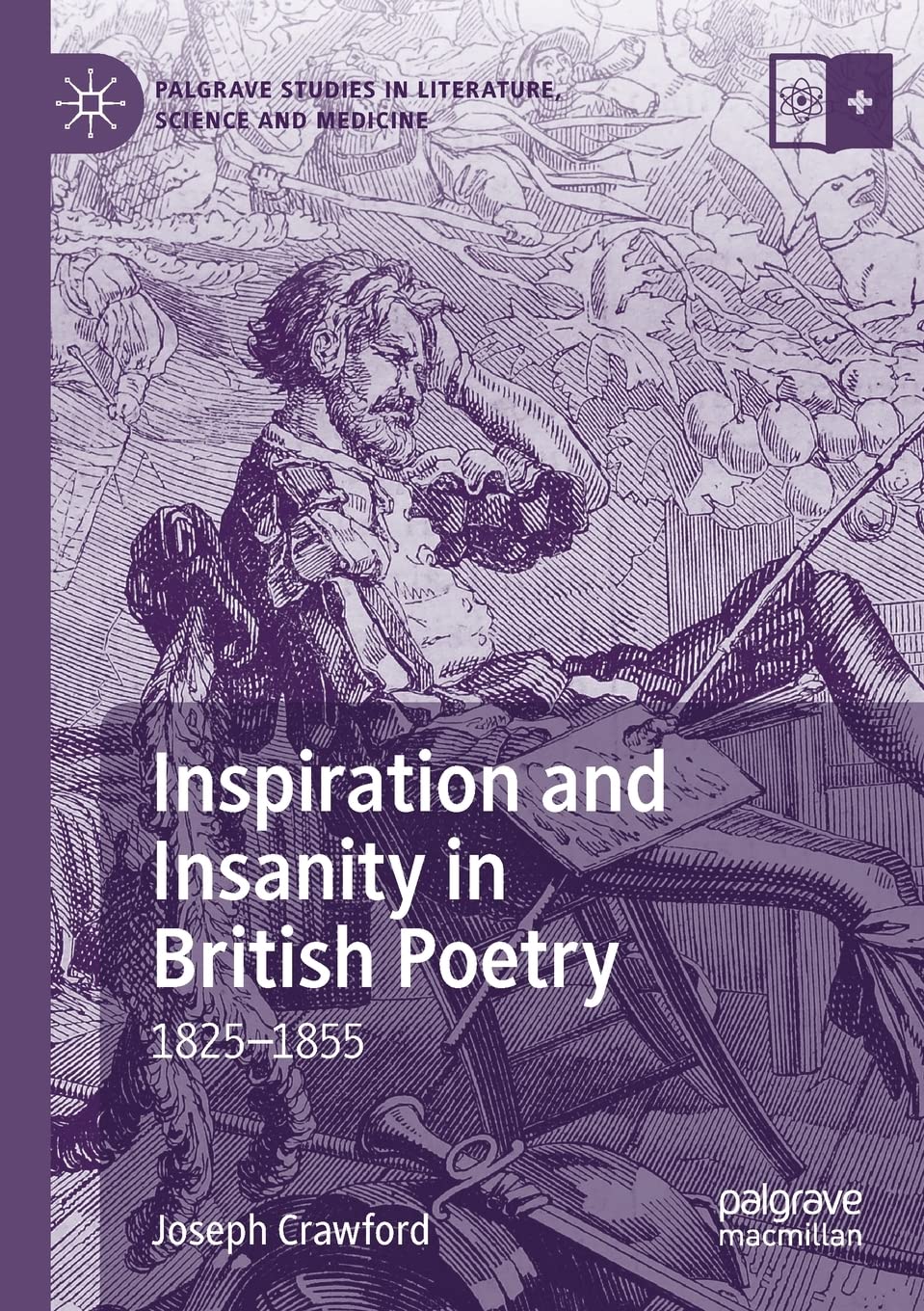
Inspiration and Insanity in British Poetry: 1825–1855 (Palgrave Studies in Literature, Science and Medicine)
$54.99
by Joseph Crawford



This book explores the ways in which poetic inspiration came to be associated with madness in early nineteenth-century Britain. By examining the works of poets such as Barrett, Browning, Clare, Tennyson, Townshend, and the Spasmodics in relation to the burgeoning asylum system and shifting medical discourses of the period, it investigates the ways in which Britain’s post-Romantic poets understood their own poetic vocations within a cultural context that insistently linked poetic talent with illness and insanity. Joseph Crawford examines the popularity of mesmerism among the writers of the era, as an alternative system of medicine that provided a more sympathetic account of the nature of poetic genius, and investigates the persistent tension, found throughout the literary and medical writings of the period, between the Romantic ideal of the poet as a transcendent visionary genius and the ‘medico-psychological’ conception of poets as mere case studies in abnormal neurological development. “This is a beautifully-written, timely study; it turns to a theme upon which much remains to be said and, while we have had readings of the moral management system and mesmerism, we are offered a new setting for them here in association with the power of poetic exploration and literary genius.” (Andrew Mangham, University of Reading, UK) This book explores the ways in which poetic inspiration came to be associated with madness in early nineteenth-century Britain. By examining the works of poets such as Barrett, Browning, Clare, Tennyson, Townshend, and the Spasmodics in relation to the burgeoning asylum system and shifting medical discourses of the period, it investigates the ways in which Britain’s post-Romantic poets understood their own poetic vocations within a cultural context that insistently linked poetic talent with illness and insanity. Joseph Crawford examines the popularity of mesmerism among the writers of the era, as an alternative system of medicine that provided a more sympathetic account of the nature of poetic genius, and investigates the persistent tension, found throughout the literary and medical writings of the period, between the Romantic ideal of the poet as a transcendent visionary genius and the ‘medico-psychological’ conception of poets as mere case studies in abnormal neurological development. Joseph Crawford is Senior Lecturer in English Literature at the University of Exeter, UK. His previous books include Raising Milton’s Ghost (2011) , Gothic Fiction and the Invention of Terrorism (2013) , and The Twilight of the Gothic (2014) .