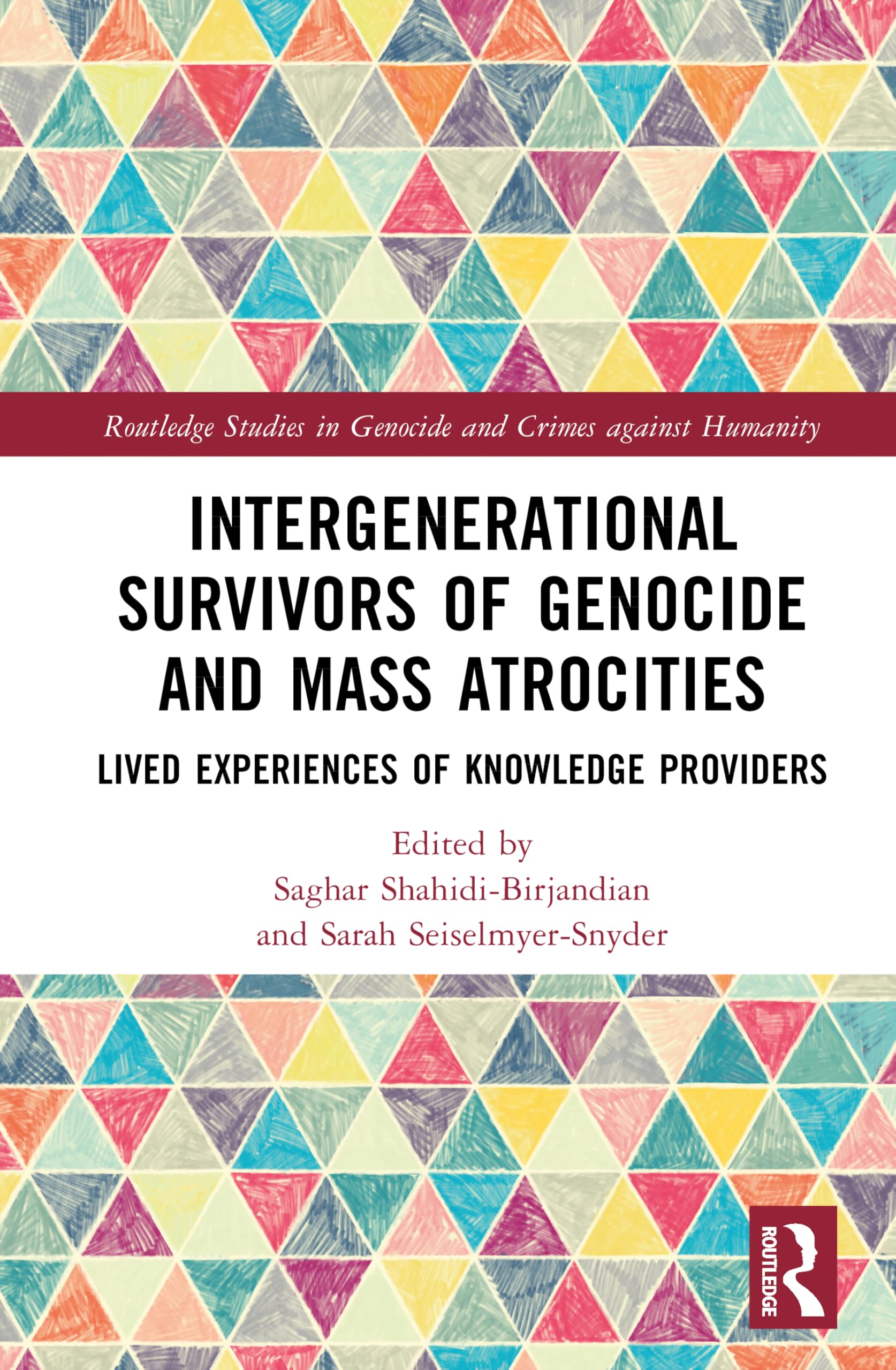
Intergenerational Survivors of Genocide and Mass Atrocities: Lived Experiences of Knowledge Providers (Routledge Studies in Genocide and Crimes
$200.00
by Saghar Shahidi-Birjandian



This unique volume brings together intergenerational survivors of genocide and mass atrocities, who are actively engaged in producing knowledge related to their lived and inherited experiences, to share their stories. Centering survivor positionality as a source of epistemic insight rather than bias, the book examines how intergenerational experiences shape scholarship, pedagogy, advocacy, healing, and atrocity prevention practice. Contributors reflect on the benefits, risks, and ethical tensions of this focal positionality while offering concrete recommendations to reduce harm and strengthen support across academic, humanitarian, and policy domains. Organized thematically, the volume explores personal and communal ways of knowing atrocity, identity, and moral inheritance, and the structural conditions under which survivor-scholars work. The book is divided into three parts, including teachings about one’s own lived experiences, narratives about positionality and identity, and navigating and improving conditions for intergenerational survivors in knowledge production. Exploring how intergenerational experiences impact the production of knowledge on atrocity violence, this book will appeal to scholars and students of genocide and mass atrocity prevention, memory studies, transitional justice, peacebuilding, and related interdisciplinary fields. "The authors-intergenerational survivors in this volume, ask what it means to connect through trauma and call us to action now, without dropping intimate questions of personal and communal wellbeing and healing. This is an essential, unique and addictive read, branching out well beyond the academic niche of genocide and mass atrocity studies. All those interested in questions of justice, real-world grounded practice and scholarship should pick this book up. " - Luisa Calvete Portela Barbosa, SOAS University of London "This remarkable and innovative volume examines how genocide and mass violence rebounds across generations and informs not just lived experience but the contours of scholarly knowledge about these phenomena. The chapters are personal, powerful, and leave the reader both with keen insights and in awe of human resilience." - Alex Hinton, Distinguished Professor and Director, Center for the Study of Genocide and Human Rights, Rutgers University, Newark Dr. Saghar Shahidi-Birjandian is the Founder of Collaborative Structural Change, a Founding Partner of Mediated Solutions, and Research Associate at SOAS, University of London. As a scholar-practitioner, Saghar’s work focuses on context-sensitive, survivor-centered problem analysis for strategy development in transitional justice and atrocity prevention, with publications in Genocide Studies and Prevention and the Journal of Intervention and Statebuilding . Dr. Sarah Snyder is a Visiting Scholar at Rutgers University's Center for the Study of Genocide and Human Rights, a lecturer at Goodwin University, and a founding member of Collaborative Structural Change. She published Trauma Beyond Time: Temporal Constructs in Holocaust Testimonies , examining intergenerational trauma and memory in Holocaust survivors and their descendants.